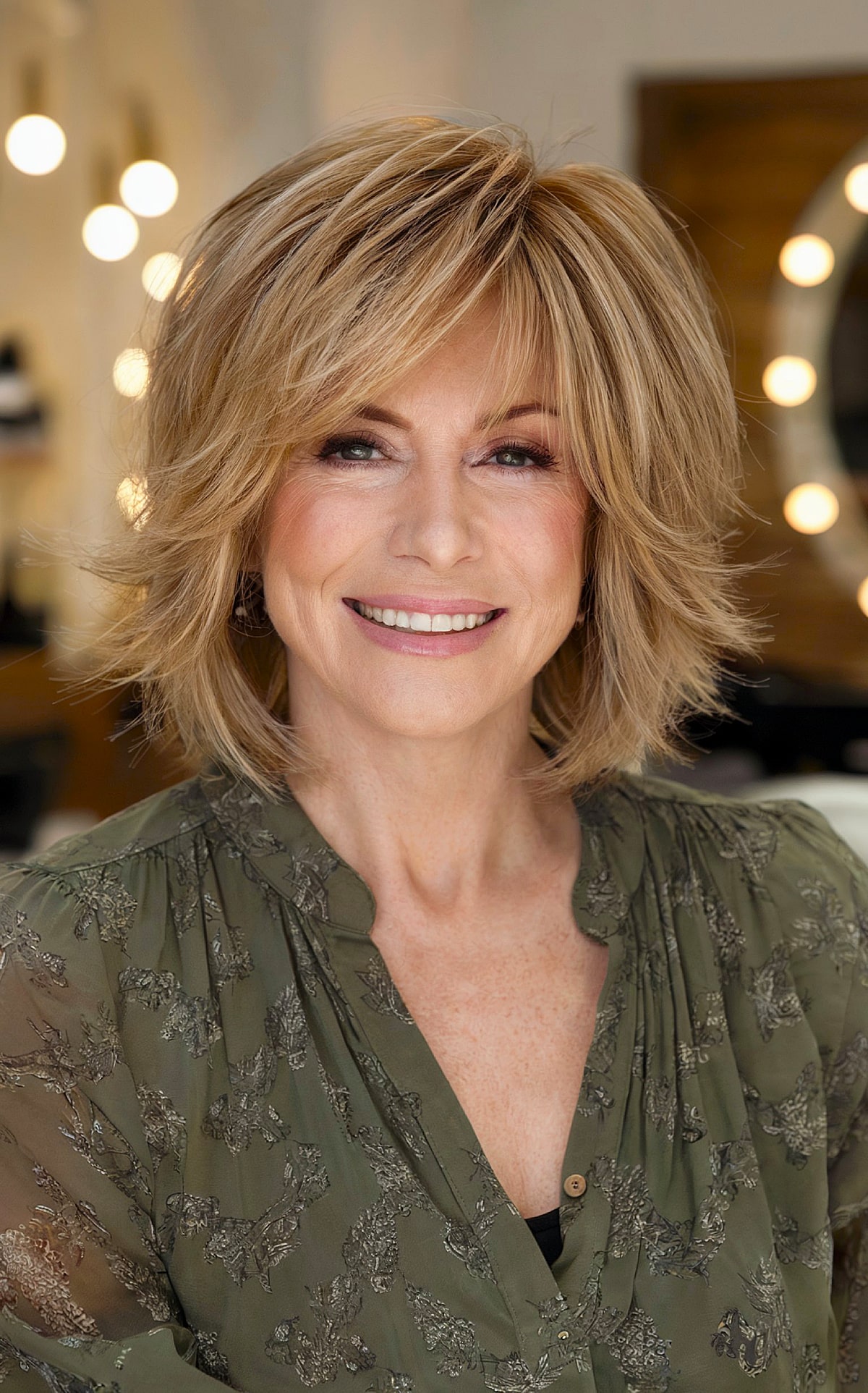
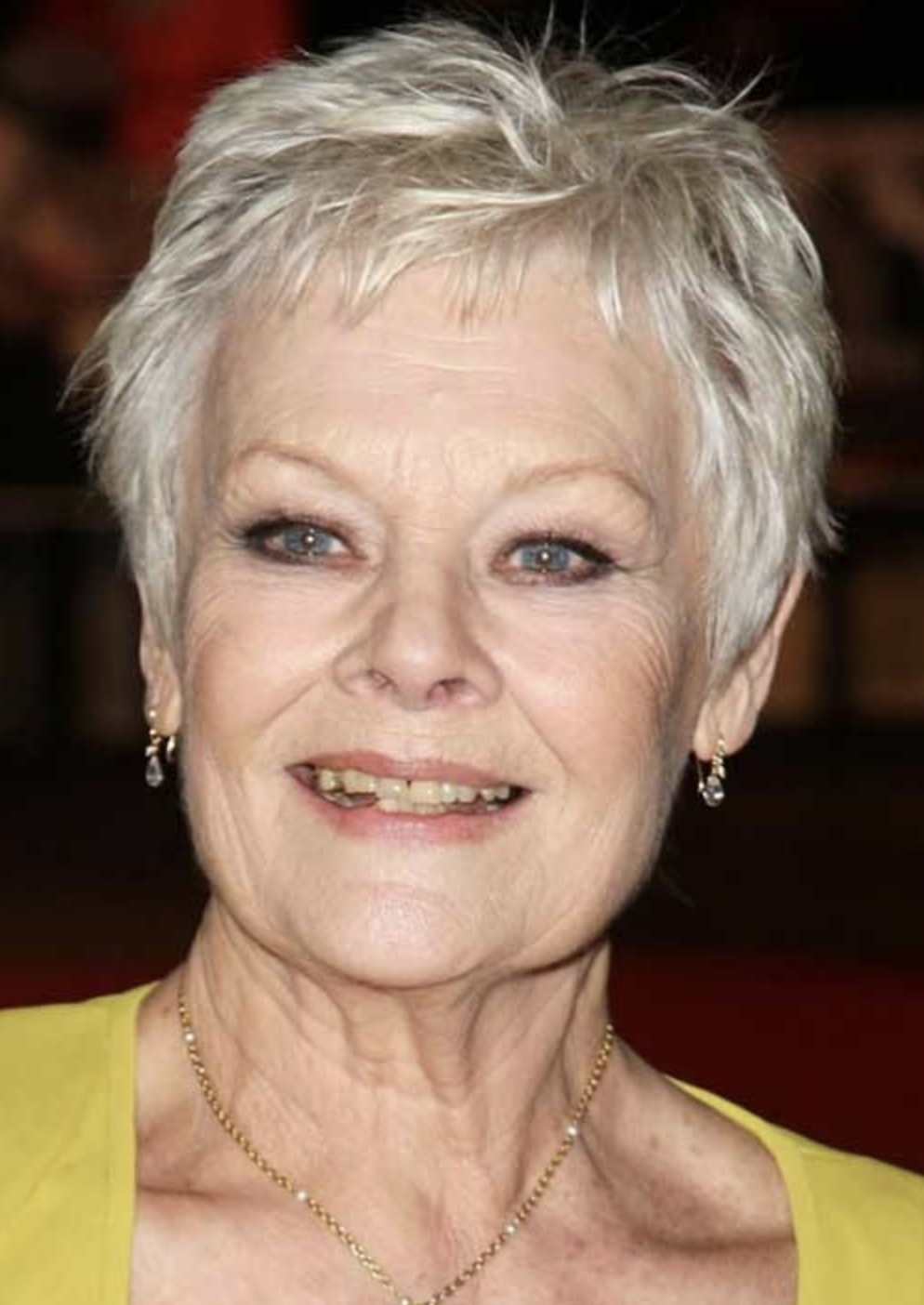
A chin-length or slightly longer hairstyle, featuring a blunt cut and often styled with a sleek, straight finish or soft waves, offers a timeless and versatile look. This coiffure, frequently seen on women of all ages, provides a range of styling options from classic to contemporary.
This style’s enduring popularity stems from its ability to flatter a variety of face shapes and hair textures. It offers a wash-and-go convenience for busy lifestyles, while still providing a polished appearance suitable for professional and social settings. Historically, the style gained prominence in the 1920s as a symbol of female empowerment and has remained a fashionable choice ever since, evolving with contemporary trends.
Further exploration will cover variations such as the angled bob, the layered bob, and the asymmetrical bob, along with guidance on styling techniques and product recommendations. Suitable face shapes and hair textures for this cut will also be discussed.
1. Length
Length is a defining characteristic of the short bob, significantly impacting its overall appearance and suitability for different face shapes and lifestyles. A true short bob generally falls above the shoulders, typically grazing the jawline or reaching just below the chin. This length creates a clean, modern silhouette, emphasizing the neck and facial features. Variations within this length range exist, allowing for personalization. For instance, a chin-length bob offers a classic, sophisticated look, while a slightly longer, jaw-skimming bob provides more versatility for styling.
The choice of length within the short bob spectrum should consider factors such as face shape, hair texture, and desired maintenance level. A shorter length can add volume and lift to fine hair, while a slightly longer length might better balance a longer face shape. Shorter bobs typically require more frequent trims to maintain their shape, a crucial factor in the decision-making process. A longer short bob, nearing shoulder length, can be more forgiving and require less frequent salon visits.
Understanding the impact of length is essential for achieving a flattering and manageable short bob. Careful consideration of individual features and lifestyle preferences, combined with consultation with a stylist, ensures a successful outcome. The interplay between length and other elements, such as shape and texture, further refines the final look and its adaptability to various styling options.
2. Shape
Shape is a critical element in defining the character of a short bob. It dictates how the cut frames the face and contributes to the overall aesthetic, ranging from classic to contemporary. The shape is determined by the cutting technique employed, which establishes the silhouette and movement of the hair. Several distinct shapes exist within the short bob category, each offering a unique look and feel. A blunt bob, for example, features a single, sharp length all around, creating a strong, graphic line. This shape can be particularly striking on straight hair, emphasizing its sleekness and shine. Conversely, a layered bob incorporates varying lengths, adding texture and volume to the hair. Layering can soften the overall look and create movement, particularly beneficial for thicker hair or those seeking a more dynamic style.
An A-line bob, another popular shape, features shorter hair at the back gradually lengthening towards the front. This angled cut creates a diagonal line, adding a sense of drama and elongation to the face. The A-line bob is versatile, working well with various hair textures and face shapes. A graduated bob, similar to the A-line, offers stacked layers at the back, creating volume and a rounded shape. This shape works particularly well for fine hair, providing lift and fullness. Understanding the nuances of these shapes, and how they interact with individual hair characteristics, is crucial for achieving the desired result. The chosen shape significantly impacts styling options, from sleek and polished to tousled and textured.
Careful consideration of face shape and hair texture is paramount when selecting a short bob shape. A blunt cut can accentuate a strong jawline, while layered bobs can soften angular features. The choice of shape should also align with lifestyle and maintenance preferences. A blunt bob requires more frequent trims to maintain its crisp line, while a layered bob offers greater flexibility and can be more forgiving between salon visits. Ultimately, the ideal shape harmonizes with individual features, lifestyle, and desired aesthetic, creating a flattering and personalized look.
3. Texture
Texture plays a crucial role in the success of a short bob, influencing how the cut sits, styles, and maintains its shape. Understanding the interplay between hair texture and cut is vital for achieving a flattering and manageable style. This involves considering natural texture straight, wavy, curly and its impact on volume, movement, and overall appearance. The following facets explore this relationship in greater detail:
-
Natural Hair Texture
Natural hair texture significantly impacts how a short bob behaves. Straight hair tends to showcase the clean lines and angles of the cut, while wavy hair adds softness and movement. Curly hair, depending on the tightness of the curl, can create volume and a rounded silhouette. Choosing a bob shape that complements natural texture is crucial for achieving a style that is both flattering and easy to manage.
-
Impact on Styling
Texture directly influences styling options and the products used. Straight hair offers a blank canvas for sleek, polished looks or textured, tousled styles. Wavy hair can be enhanced with texturizing products for a beachy vibe or straightened for a more refined appearance. Curly hair requires products that define and control curls, minimizing frizz and maximizing shape retention.
-
Considerations for Fine Hair
Fine hair often benefits from layering and texturizing techniques within the short bob to create the illusion of fullness and prevent the cut from appearing flat. Blunt cuts, while visually striking, can sometimes emphasize the fineness of the hair. Strategic layering can add volume and movement, making fine hair appear thicker and more dynamic.
-
Considerations for Thick Hair
Thick hair can be challenging to manage in a short bob without proper shaping and texturizing. Thinning shears or layering techniques can remove bulk and create a more manageable shape. This prevents the hair from appearing too heavy or overwhelming the facial features. A skilled stylist can tailor the cut to balance thickness while maintaining the desired silhouette.
By considering the interplay between hair texture and cut, individuals can achieve a short bob that is not only stylish but also suits their specific hair characteristics and lifestyle. A successful short bob relies on a harmonious balance between the chosen shape, length, and the inherent texture of the hair, creating a look that is both flattering and easy to maintain.
4. Styling
Styling is integral to the versatility and enduring appeal of short bob haircuts for women. It dictates the final look, transforming the cut from classic and sleek to textured and contemporary. A well-styled bob enhances the cut’s shape, complements individual features, and reflects personal style. Several factors influence styling choices, including hair texture, face shape, and desired aesthetic. Straight hair offers a blank canvas for sleek, polished looks achieved with straightening tools and smoothing serums. Wavy hair can be enhanced with texturizing sprays and diffusers for a tousled, beachy effect, or straightened for a more refined appearance. Curly hair in a bob requires products that define and control curls while minimizing frizz, often involving leave-in conditioners or curl creams.
Product selection significantly impacts the final result. Mousses and volumizing sprays add body and lift to fine hair, while heavier creams and pomades provide control and definition for thicker hair. Heat styling tools, such as flat irons and curling wands, offer further versatility, allowing for the creation of waves, curls, or sleek, straight styles. However, heat protection sprays are crucial to minimize damage from these tools. The choice of styling products and techniques should align with the desired look and hair texture. For instance, a sleek, polished bob requires smoothing serums and a flat iron, while a textured, tousled bob benefits from texturizing sprays and a diffuser. Real-life examples include the use of a round brush and hairdryer to create volume and curve at the ends of a classic bob, or the application of a texturizing product and finger-styling for a more undone, contemporary look.
Understanding the relationship between styling and the short bob empowers individuals to personalize the cut and achieve diverse looks. It reinforces the bob’s adaptability, showcasing its potential to transition seamlessly from day to night or adapt to various social settings. Mastering styling techniques and selecting appropriate products are essential for maximizing the short bob’s versatility and achieving a look that complements individual features and personal style. This understanding addresses the practical challenges of managing and maintaining a short bob, ultimately ensuring a consistently stylish and flattering appearance.
Short Bob Womens Haircuts
This exploration has delved into the multifaceted nature of short bob womens haircuts, emphasizing the interplay between length, shape, texture, and styling. From the classic blunt cut to the dynamic angled bob, the versatility of this style accommodates diverse preferences and individual features. The impact of hair texture on styling choices and the importance of selecting appropriate products have been underscored. Understanding these elements allows for a personalized approach, ensuring a harmonious balance between cut and individual characteristics.
The enduring popularity of the short bob transcends fleeting trends, solidifying its position as a timeless hairstyle. Its adaptability and capacity for personalization ensure continued relevance in the evolving landscape of hairstyling. Careful consideration of the factors discussed empowers informed decisions, resulting in a truly flattering and personalized embodiment of this classic cut.