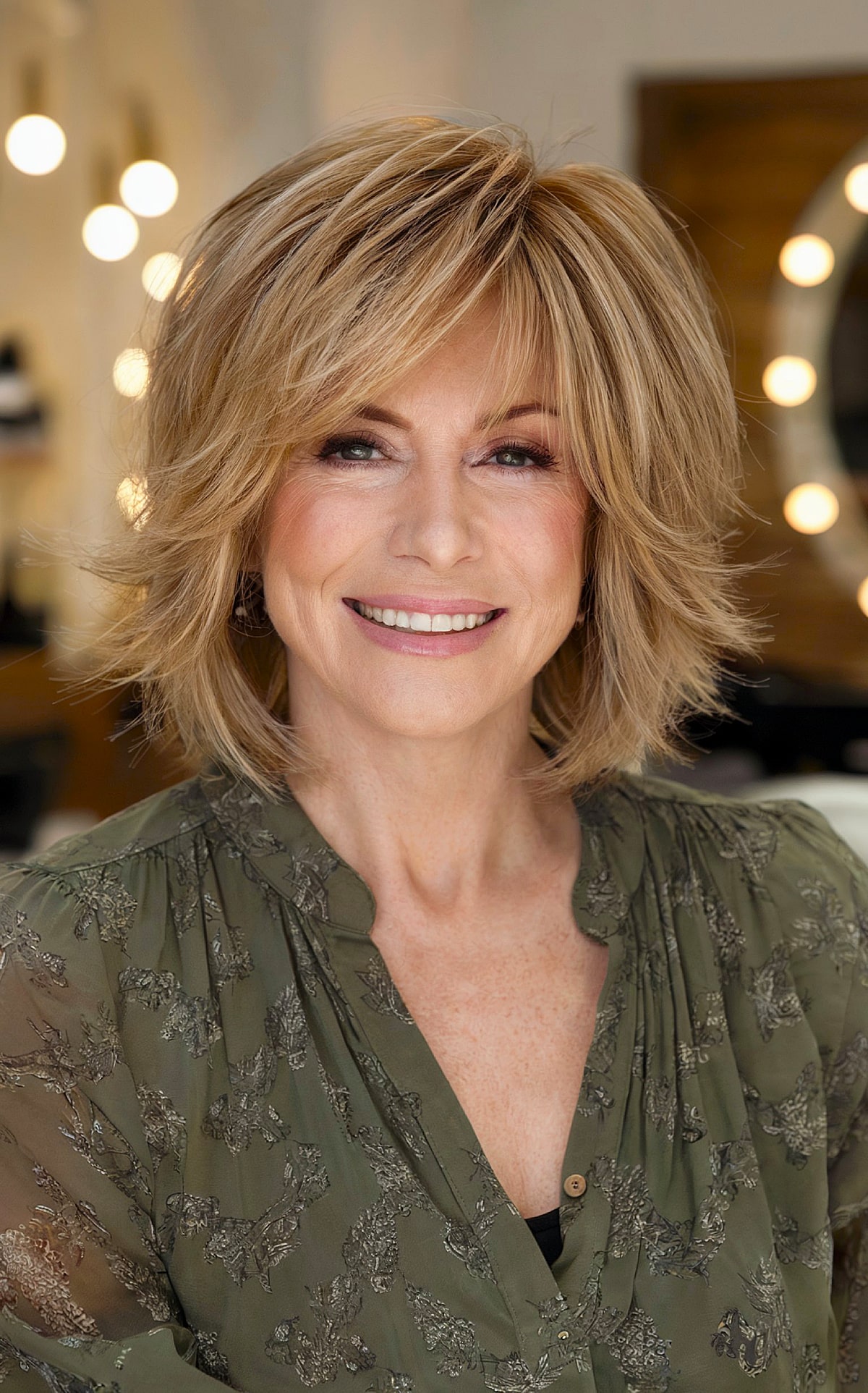
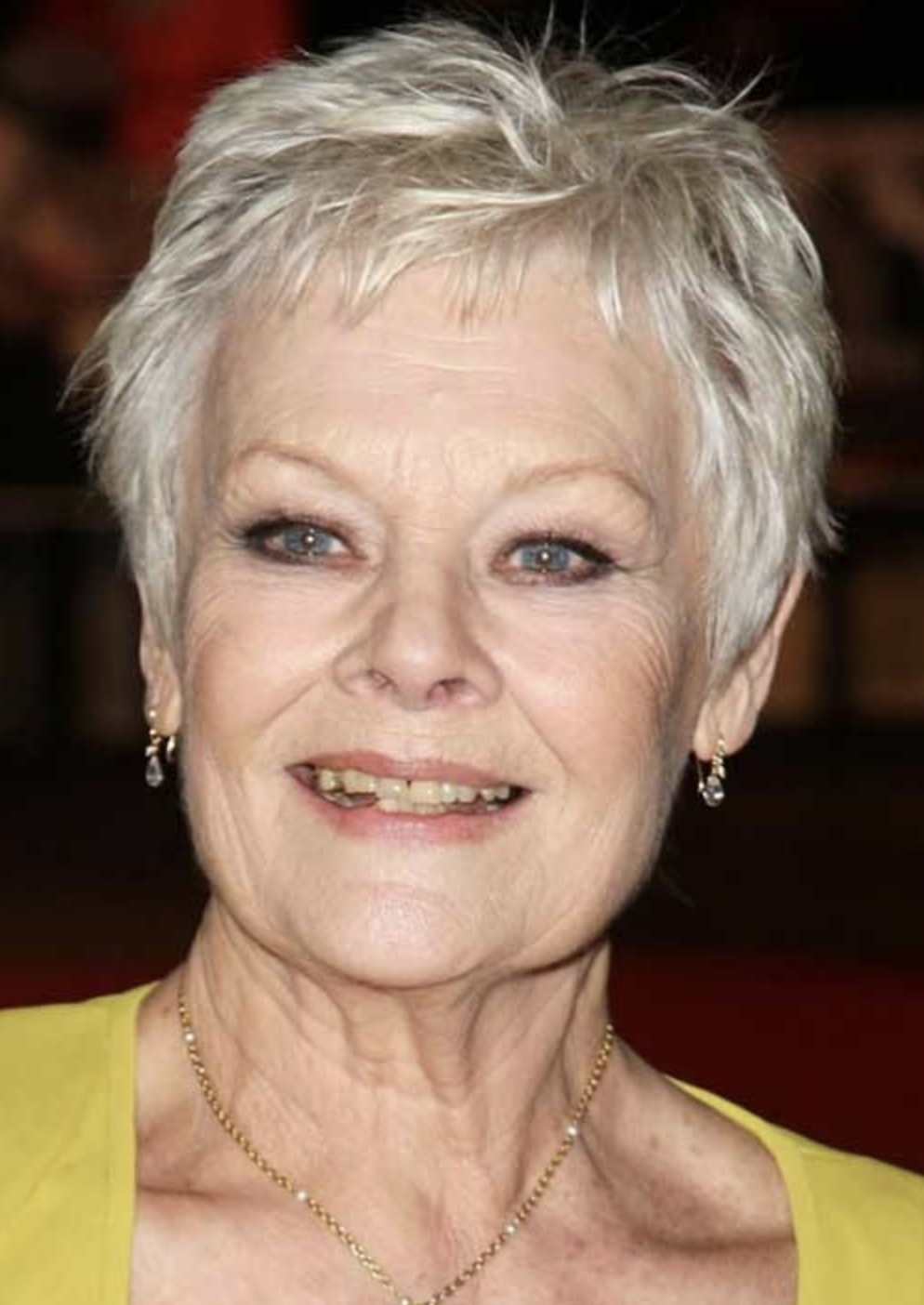
Shoulder-grazing cuts incorporating graduated sections of varying lengths create versatile looks. These styles typically fall between the chin and collarbone, offering a balance between shorter, manageable lengths and the styling versatility of longer hair. Imagine a bob haircut with subtle layering to add volume and movement, or cascading locks softly framing the facethese exemplify the essence of this adaptable style.
Such hairstyles offer numerous advantages. They are often easier to maintain than significantly longer hair, requiring less styling time and product. Layering adds dimension and texture, creating a visually appealing silhouette that can complement various face shapes and hair textures. Furthermore, these styles have transcended fleeting trends, proving their enduring appeal throughout decades of evolving fashion. The adaptable nature allows for effortless transitions between professional settings and casual outings.
This article will delve deeper into the specifics of achieving and maintaining these looks, exploring suitable hair types, diverse styling options, and recommended product choices. It will also provide guidance on selecting the perfect layered cut to flatter individual facial features and personal styles.
1. Face Shape Suitability
Harmonizing hairstyle with face shape is paramount for a flattering and balanced appearance. Medium-length layered cuts offer adaptable solutions for various face shapes, enhancing features and softening angles. Understanding these relationships empowers informed decisions regarding layering techniques and overall style.
-
Oval Faces
Oval faces are considered the most versatile, accommodating a wide range of styles. Medium-length layered cuts further enhance this versatility, allowing for experimentation with various layering patterns, from subtle face-framing pieces to more dramatic, textured layers. This face shape can carry off most styles successfully.
-
Round Faces
Layered cuts create the illusion of length and definition for round faces. Long, sweeping layers that fall below the chin help elongate the face and minimize roundness. Avoiding short, choppy layers around the cheeks prevents added width. Strategically placed layers can sculpt the face and create a more angular appearance.
-
Square Faces
Softening the angles of a square face is key. Medium-length layers, especially those concentrated around the jawline, help to round out the sharper edges. Soft, textured layers and waves further enhance this effect, creating a more harmonious balance. Avoiding blunt, straight-across cuts is crucial for a more flattering look.
-
Heart-Shaped Faces
Balancing a wider forehead with a narrower chin is the primary consideration. Layers that add volume around the chin and jawline help create a sense of fullness and balance the proportions. Shoulder-length cuts with layers starting below the cheekbones work well to achieve this effect.
By considering face shape and tailoring layering accordingly, individuals can optimize the aesthetic impact of medium-length layered hairstyles. These styles offer a versatile canvas for personalized expression while ensuring a harmonious balance of features.
2. Hair Texture Considerations
Hair texture significantly influences the outcome and manageability of medium-length layered hairstyles. Understanding the interplay between texture and layering allows for informed style choices, maximizing the potential of the cut while minimizing styling challenges. This involves analyzing factors like thickness, coarseness, and curl pattern to determine the most suitable layering techniques and overall style.
-
Fine Hair
Fine hair benefits from strategically placed layers that create an illusion of volume and fullness. Shorter layers, often incorporated around the crown, can add lift and body. However, excessive layering can diminish density, so a balanced approach is essential. Texturizing techniques can enhance movement and prevent the style from appearing flat.
-
Thick Hair
Thick hair can appear bulky without proper layering. Long, graduated layers help remove weight and create a more manageable shape. Layering also enhances movement and prevents the style from feeling heavy. Texturizing techniques, such as thinning shears, can further refine the shape and prevent excessive volume.
-
Curly Hair
Layering curly hair requires careful consideration of curl pattern and desired volume. Layers can help define curls and prevent a triangular shape. Diffused drying techniques enhance natural curl formation. Product choices, such as curl creams or mousses, play a vital role in managing and defining curls.
-
Straight Hair
Straight hair showcases layering with precision. Layers can add movement and prevent the style from appearing flat. Subtle layering can create soft movement, while more pronounced layers add texture and dimension. Styling techniques, such as using a round brush during blow-drying, can enhance volume and create a polished finish.
By carefully considering hair texture, individuals can select a medium-length layered style that complements their natural characteristics. This approach ensures a harmonious balance between style and manageability, maximizing the overall aesthetic impact while minimizing styling efforts.
3. Layering Techniques
Layering techniques are fundamental to achieving the desired shape, volume, and movement in medium-length hairstyles. These techniques manipulate hair lengths to create texture, dimension, and a customized silhouette. Understanding the nuances of various layering techniques empowers informed collaboration with stylists, ensuring the final result aligns with individual preferences and hair characteristics.
-
Point Cutting
Point cutting involves snipping the ends of the hair at an angle, creating a textured, feathered edge. This technique softens the ends, adds movement, and removes bulk. It’s often used to create subtle layers around the face or to add texture throughout the overall style. Point cutting is particularly effective for blending layers seamlessly and creating a soft, diffused look.
-
Slide Cutting
Slide cutting utilizes open shears gliding along the hair shaft, removing weight and creating soft, graduated layers. This technique adds movement and texture without creating blunt lines. It’s often used to create long, flowing layers or to blend shorter layers into longer ones. Slide cutting is particularly effective for achieving a natural, effortless look.
-
Razor Cutting
Razor cutting employs a straight razor to create wispy, textured ends. This technique produces a more diffused, piece-y look compared to shears. It adds texture and removes bulk, particularly effective for creating edgy, textured styles. However, razor cutting may not be suitable for all hair types, particularly fine or damaged hair.
-
Graduation
Graduation refers to a layering technique where hair progressively increases in length from the interior to the exterior. This creates stacked layers, adding volume and fullness, particularly at the crown. Graduation can be combined with other layering techniques to create customized shapes and volumes. It’s frequently used in bob and lob hairstyles to create a rounded silhouette.
The interplay of these layering techniques allows stylists to sculpt medium-length hairstyles with precision, customizing the shape, volume, and movement to complement individual features and hair textures. Selecting appropriate techniques is essential for achieving the desired aesthetic and ensuring the final result reflects both personal style and optimal hair health.
4. Styling Options
Styling options for medium-length layered hair are diverse, offering opportunities to create a variety of looks ranging from sleek and polished to tousled and textured. The adaptability of these hairstyles allows for personalized expression, catering to diverse preferences and occasions. Understanding the interplay between layering and styling techniques is crucial for maximizing the potential of the cut and achieving desired results.
-
Straight and Sleek
A sleek, straightened style showcases the precision of the layered cut, emphasizing the lines and angles created by the layering. This look is achieved using a flat iron and smoothing products, creating a polished, sophisticated appearance suitable for professional settings or formal events. The layered structure prevents the straight style from appearing flat, adding subtle movement and dimension.
-
Wavy and Tousled
Soft waves or tousled textures add volume and movement to layered hair, creating a relaxed, effortless vibe. This style can be achieved using curling irons, texturizing sprays, or by braiding damp hair overnight. The layers enhance the wave pattern and prevent the style from appearing overly structured. This versatile look transitions seamlessly from casual daytime outings to evening events.
-
Updos and Half-Updos
Medium-length layered hair offers sufficient length for various updo and half-updo styles. Layers add texture and visual interest to these styles, preventing them from looking too severe. Loose braids, messy buns, or half-up styles with cascading tendrils showcase the versatility of the cut while offering practical solutions for managing hair.
-
Voluminous Blowouts
A voluminous blowout maximizes the potential of layers, creating a full, bouncy style. Achieved using a round brush and volumizing products during blow-drying, this technique lifts the hair at the roots and creates fullness throughout the lengths. The layers contribute to the overall shape and movement, preventing the style from appearing overly rounded or heavy.
The versatility of medium-length layered hairstyles extends beyond these examples, offering a canvas for creative exploration. Experimenting with different styling tools, products, and techniques allows for personalized expression and adaptation to various occasions and personal preferences. Understanding the impact of layering on styling outcomes empowers informed choices and ensures a consistently flattering and stylish result.
5. Maintenance Requirements
Maintaining the shape and vitality of medium-length layered hairstyles requires consistent effort. The layered structure, while offering versatility and movement, necessitates regular trims to prevent split ends and maintain the intended shape. Neglecting trims can lead to uneven layers, diminishing the overall aesthetic and making styling more challenging. For instance, allowing layers around the face to grow excessively long can obscure facial features and create an unkempt appearance. The frequency of trims depends on individual hair growth rates and styling preferences, but generally, a trim every 6-8 weeks is recommended to preserve the integrity of the layered cut.
Product selection also plays a crucial role in maintaining these hairstyles. Choosing products tailored to individual hair textures and styling goals is essential. For example, fine hair may benefit from volumizing mousses and lightweight sprays to enhance body and lift, while thicker hair may require smoothing creams or serums to manage volume and frizz. Additionally, heat protectant sprays are crucial when using styling tools like flat irons or curling irons to minimize heat damage and maintain hair health. Appropriate product application techniques further optimize results. Applying volumizing products near the roots maximizes lift, while distributing smoothing products evenly through the lengths minimizes frizz and enhances shine.
In summary, consistent trimming and appropriate product usage are integral components of maintaining medium-length layered hairstyles. Regular trims preserve the shape and prevent split ends, while carefully chosen products enhance manageability and optimize styling outcomes. Understanding these maintenance requirements ensures the long-term health and aesthetic appeal of the layered cut, allowing individuals to enjoy the versatility and style benefits these hairstyles offer.
Conclusion
This exploration of medium-length layered hairstyles has highlighted the versatility and adaptability of these cuts. From face shape considerations and hair texture analysis to layering techniques and styling options, the nuances of achieving and maintaining these looks have been examined. The importance of regular trims and appropriate product usage for preserving shape and hair health has also been underscored. Ultimately, achieving a successful medium-length layered hairstyle relies on a confluence of factors, including careful consideration of individual characteristics, informed collaboration with stylists, and consistent maintenance practices.
The enduring appeal of medium-length layered hairstyles lies in their ability to balance style and manageability. These cuts offer a canvas for personalized expression, adaptable to diverse preferences and occasions. As styling trends evolve, the foundational principles discussed here remain relevant, empowering informed decisions and ensuring consistently flattering results. By understanding the interplay between cut, texture, and styling techniques, individuals can harness the transformative potential of medium-length layered hairstyles to achieve a look that reflects both personal style and optimal hair health.