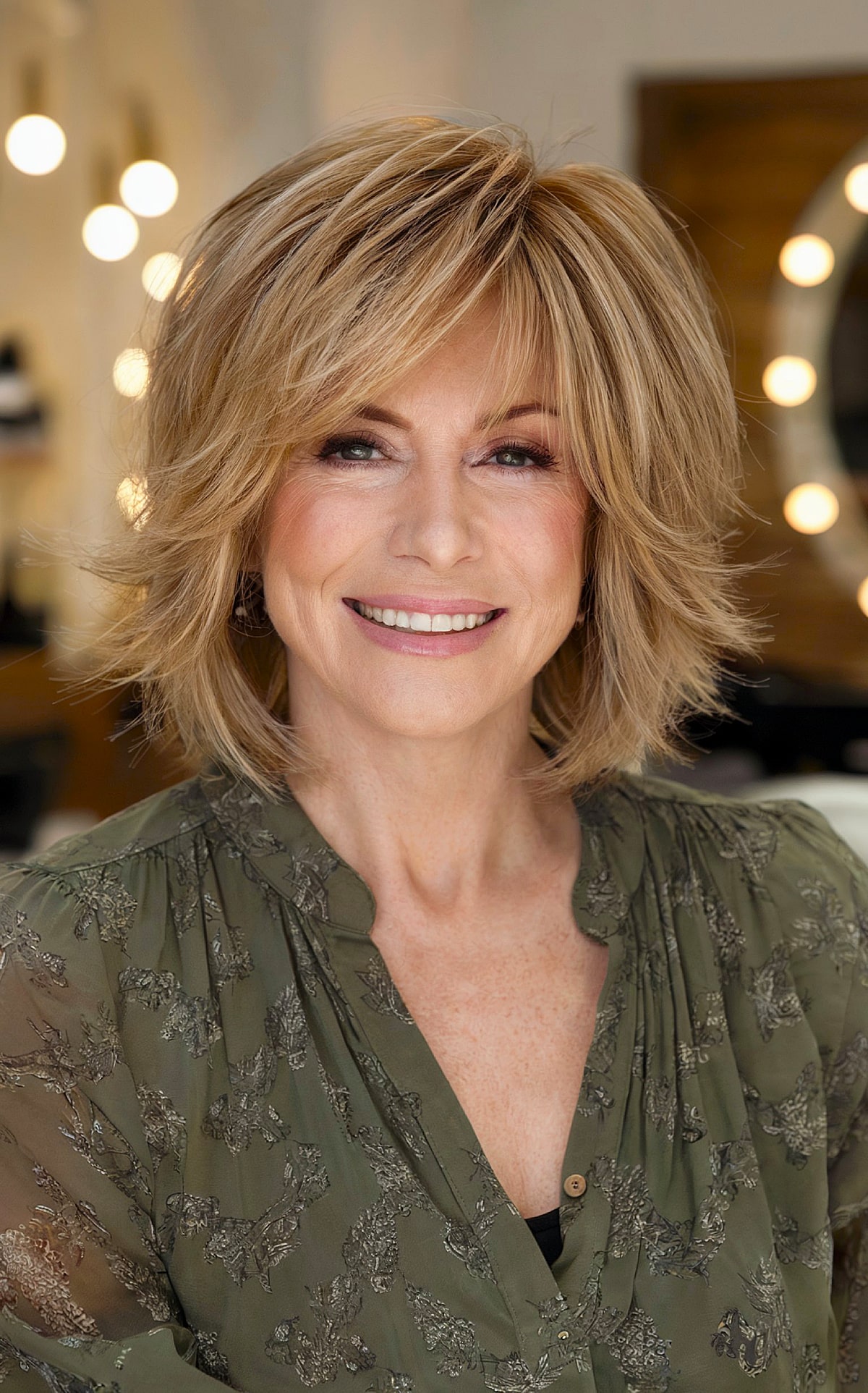
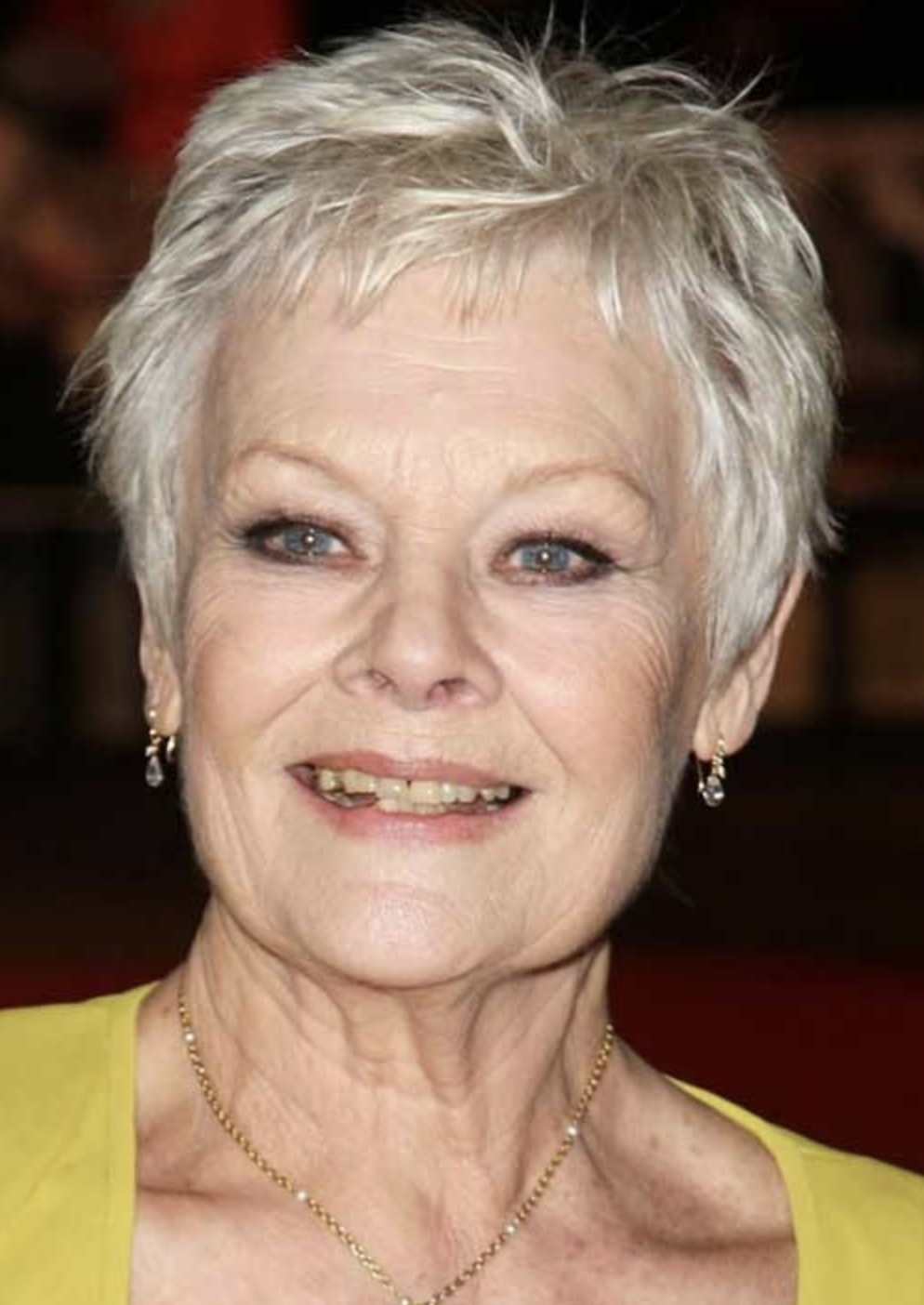
This style involves shorter strands around the face gradually lengthening towards the back. Imagine a cascade effect, with the shortest layers framing the face and adding volume at the crown. This technique can be adapted to various lengths and textures, from a short pixie cut to long, flowing locks.
A face-framing cut offers numerous advantages. It can create the illusion of fuller hair, add movement and dimension, and soften facial features. This styling approach has evolved over time, adapting to contemporary trends while retaining its core principles of enhancing facial features and creating a dynamic, personalized look. It’s a versatile choice suitable for a wide range of face shapes and hair types.
Further exploration of this technique will encompass suitable hair types and face shapes, styling options, maintenance tips, and advice for communicating effectively with a stylist to achieve desired results.
1. Face Framing
Face framing is a central element of layered hairstyles, particularly those focusing on the front sections. It involves strategically cutting layers to complement and enhance facial features, creating a harmonious balance between hair and face shape.
-
Shape Enhancement
Different face shapes benefit from specific layering techniques. Round faces, for example, can appear more elongated with layers that create vertical lines. Conversely, square faces can be softened with layers that round off the edges. The precise placement and length of these layers are key to achieving the desired effect.
-
Feature Highlighting
Face-framing layers can draw attention to specific features. Shorter layers around the cheekbones can accentuate them, while layers that fall around the jawline can soften or define it. This technique allows for personalized styling that complements individual features.
-
Movement and Softness
Layering around the face introduces movement and softness to the overall hairstyle. The varying lengths create texture and dimension, preventing the hair from appearing flat or heavy. This is particularly beneficial for those with thicker hair, as it can add lightness and flow.
-
Styling Versatility
Face-framing layers offer versatility in styling. They can be styled inwards to create a more polished look, outwards for a more voluminous and textured appearance, or even tucked behind the ears for a simple yet elegant style. The adaptability of these layers makes them a popular choice for those seeking low-maintenance yet stylish options.
The strategic implementation of face-framing layers significantly contributes to the overall impact of a layered hairstyle. By considering face shape, desired features to highlight, and preferred styling options, individuals can achieve a tailored look that enhances their natural beauty and personal style.
2. Volume Enhancement
Volume enhancement is a key benefit and often a primary motivation for choosing a layered hairstyle, especially when focusing on the front. Layered cuts create the illusion of fullness and lift, which can be particularly advantageous for individuals with fine or thin hair.
-
Layering Techniques
Specific layering techniques contribute significantly to volume creation. Graduated layers, where the hair progressively gets longer from the crown to the ends, create a stacked effect that naturally boosts volume. Shorter layers at the crown, strategically placed to lift and separate the hair, further enhance this effect. The angle and precision of the cut are critical for achieving the desired volume and avoiding unwanted bulk.
-
Texturizing
Texturizing techniques, such as point cutting or razor cutting, can further amplify volume by removing weight and creating space between strands. This allows the hair to lift more easily and maintain its shape. Texturizing can also enhance the movement and flow of the layered cut, contributing to a more dynamic and voluminous appearance.
-
Styling Products and Techniques
Styling products and techniques play a crucial role in maximizing volume. Volumizing mousses, sprays, and powders applied to the roots can provide lift and hold. Blow-drying techniques, such as lifting the hair at the roots with a round brush, further enhance volume and create a polished finish. Backcombing or teasing specific sections can also add targeted volume, although it should be done sparingly to avoid damage.
-
Hair Type Considerations
The effectiveness of volume enhancement through layering also depends on hair type. Fine hair generally benefits from shorter layers and more texturizing to create lift without weighing the hair down. Thicker hair may require more strategic layering and less texturizing to avoid excessive volume. Understanding the nuances of different hair types ensures the layering technique complements the natural characteristics of the hair.
The interplay of these elements contributes to the overall effectiveness of volume enhancement in layered hairstyles. By carefully considering layering techniques, texturizing methods, appropriate styling products, and individual hair characteristics, significant volume and lift can be achieved, creating a fuller and more dynamic appearance.
3. Movement and Texture
Movement and texture are integral components of hairstyles featuring layers at the front. These elements contribute significantly to the overall aesthetic and dynamism of the cut, allowing for personalized styling and enhancing the visual interest of the hair.
-
Layering Techniques and Their Impact
Different layering techniques create varying degrees of movement and texture. Shorter, choppy layers create a more textured and piecey effect, while longer, blended layers offer a softer, more flowing movement. The angle and precision of the cut influence how the hair falls and interacts with light, creating dimension and depth.
-
Hair Type Considerations
Natural hair texture plays a significant role in how layering affects movement. Fine hair typically benefits from layers that add texture and prevent the hair from appearing flat. Thick hair, on the other hand, can be layered to remove weight and enhance natural movement. Understanding the interplay between layering and hair type is essential for achieving the desired outcome.
-
Styling Products and Techniques for Enhancement
Styling products, such as texturizing sprays, mousses, and waxes, can further enhance movement and texture. These products can define individual layers, create separation, and add hold for a more sculpted look. Styling techniques, such as scrunching, twisting, or using a diffuser, can also amplify the texture and movement created by layering.
-
The Role of Face-Framing Layers
Layers around the face significantly contribute to both movement and texture. They frame the face while adding softness and dimension. The interplay between these shorter layers and the longer layers at the back creates a dynamic and visually appealing contrast, enhancing the overall movement and texture of the hairstyle.
The strategic combination of layering techniques, consideration of hair type, and appropriate styling choices allows for a wide range of movement and texture possibilities. These elements work together to create a personalized and dynamic hairstyle that complements individual features and styling preferences, with layered front sections playing a key role in framing the face and adding visual interest.
Hair Layered at the Front
This exploration has delved into the nuances of hair layered at the front, examining its core components: face-framing, volume enhancement, and the interplay of movement and texture. Each element contributes significantly to the versatility and adaptability of this style, offering a range of possibilities for various hair types and face shapes. The strategic implementation of layering techniques, combined with appropriate styling products and methods, empowers individuals to achieve personalized looks that enhance their natural features and reflect individual style preferences.
Ultimately, the enduring appeal of this technique lies in its ability to transform and elevate one’s appearance. Careful consideration of these discussed elements ensures a successful and satisfying outcome, empowering individuals to embrace a style that exudes confidence and complements their unique beauty. Further research into specific styling techniques and consultations with experienced stylists can provide additional insights and facilitate the realization of desired results.