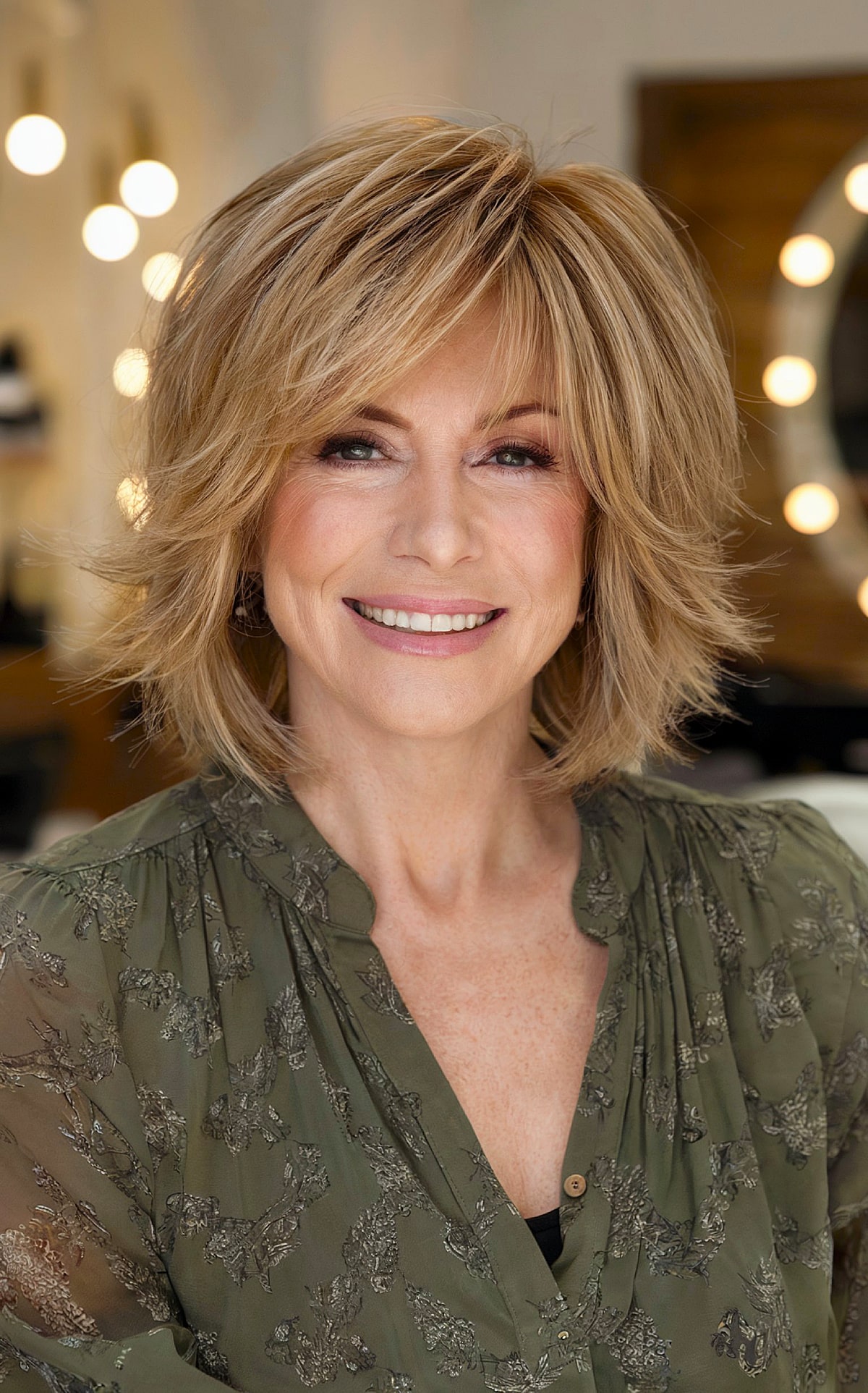
This style involves cutting the hair to a length that grazes or just passes the shoulders, incorporating varying lengths throughout the cut to create texture, movement, and volume. Imagine a cascade of hair where individual sections are subtly shorter than those beneath, resulting in a dynamic, dimensional look. This technique can be adapted to suit various hair types and face shapes.
Layered cuts at this length offer versatility and manageability. They can add fullness to fine hair, reduce weight and bulk in thicker hair, and frame the face in a flattering manner. Historically, layered hairstyles have evolved from simpler, blunt cuts, reflecting a growing desire for personalized and expressive looks that complement individual features and lifestyles. The adaptability of this style contributes to its enduring popularity.
The following sections will delve deeper into the nuances of this versatile hairstyle, exploring suitable face shapes, styling techniques, and maintenance tips.
1. Face Shape Suitability
A key advantage of shoulder-length layered hairstyles lies in their adaptability to various face shapes. Careful consideration of face shape ensures the cut enhances, rather than detracts from, one’s features. Round faces benefit from layers that create vertical lines, elongating the face and minimizing roundness. Long, face-framing layers can achieve this effect. Square faces can be softened with layers that round the edges, while layers concentrated around the cheekbones can add dimension and detract from a strong jawline. Heart-shaped faces often suit layers that add fullness around the chin, balancing a wider forehead. For oval faces, the balanced proportions allow for greater flexibility, with layering primarily used to add texture and volume.
A skilled stylist analyzes facial features to determine optimal layering patterns. For example, someone with a prominent forehead might benefit from a layered fringe or side-swept bangs, while someone with a narrow chin might opt for layers that create fullness at the bottom. The placement and length of layers contribute significantly to the overall balance and harmony of the hairstyle. Understanding the relationship between layering and face shape empowers individuals to choose cuts that highlight their best features.
Precise layering techniques are crucial for achieving the desired effect. Improper layering can exacerbate imbalances or create unwanted volume in certain areas. Careful consultation with a stylist, coupled with an understanding of one’s face shape, allows for a collaborative approach to achieving a flattering and personalized shoulder-length layered hairstyle. This understanding is fundamental to maximizing the style’s potential and achieving a truly harmonious look.
2. Hair Type Considerations
Hair type significantly influences the outcome of shoulder-length layered hairstyles. Texture, density, and natural curl pattern are crucial factors determining how layers fall and behave. Fine hair benefits from layers that create an illusion of fullness and volume. Shorter layers, strategically placed throughout the cut, can lift the hair and prevent it from appearing flat. However, excessive layering can thin out fine hair further, so a balanced approach is essential. Conversely, thick hair can become heavy and unmanageable without layers to reduce bulk and weight. Long, blended layers can create movement and prevent the hair from appearing overly dense. Curly hair presents unique considerations. Layers can enhance natural curl definition and prevent a triangular or bulky shape. However, the layering technique must complement the curl pattern, ensuring the curls fall naturally and maintain their shape. Dry, damaged hair requires special attention as layering can exacerbate existing issues. Regular deep conditioning treatments and protective styling techniques are crucial for maintaining healthy, layered hair.
Practical examples illustrate the impact of hair type on layered styles. Individuals with fine, straight hair might opt for shorter layers throughout the crown to create lift and volume, while those with thick, wavy hair might choose longer, textured layers to reduce weight and enhance natural wave patterns. Someone with tightly curled hair might benefit from layers that create shape and definition without disrupting the curl’s integrity. Understanding the interplay between hair type and layering allows for informed decisions that result in flattering and manageable styles. Consultation with a stylist experienced in working with diverse hair types ensures the layering technique aligns with individual hair characteristics and desired outcomes.
Considering hair type before opting for a layered style is paramount for achieving a successful and satisfying result. Careful assessment of texture, density, and curl pattern, combined with professional guidance, allows individuals to select layering techniques that complement their hair’s unique characteristics. This understanding contributes to a harmonious balance between desired style and natural hair properties, minimizing potential challenges and maximizing the style’s potential. Ultimately, recognizing the importance of hair type ensures a customized approach to layering that enhances natural beauty and promotes healthy hair.
3. Styling Versatility
A significant advantage of shoulder-length layered hair lies in its styling versatility. The interplay of varying lengths allows for a wide array of looks, ranging from sleek and polished to tousled and textured. This adaptability makes the style suitable for various occasions, from everyday wear to formal events. Layering creates natural movement and volume, providing a foundation for diverse styling techniques. Straightening showcases the precision of the cut, highlighting the layered structure and creating a sleek, sophisticated appearance. Conversely, curling or waving layered hair amplifies volume and texture, resulting in a more dynamic and romantic look. The layers respond well to heat styling, holding curls or waves effectively while maintaining a natural flow. Updos, half-up styles, and braids are also readily achievable with this length, offering further styling options.
Consider, for example, the classic blowout. Layered hair responds beautifully to this technique, resulting in voluminous, bouncy curls that showcase the layers’ dynamic movement. Alternatively, a textured, beachy wave look can be achieved with a texturizing spray and minimal heat styling, capitalizing on the layers’ natural tendency to create movement. For formal occasions, a sleek, low bun or a sophisticated chignon can be crafted, with the layers adding subtle texture and interest to the updo. The adaptability of layered hair extends to various hair accessories, from headbands and clips to barrettes and decorative pins. These accessories can further enhance the chosen style and add a personalized touch.
The versatility inherent in shoulder-length layered hairstyles provides individuals with the freedom to experiment with different looks and adapt their style to suit various occasions and personal preferences. This adaptability contributes significantly to the style’s enduring popularity. Understanding the styling potential of layered hair allows individuals to maximize its versatility and achieve a range of looks with relative ease. From everyday styling to special occasion looks, layered hair provides a foundation for creative expression and personalized style, making it a practical and versatile choice for those seeking a dynamic and adaptable hairstyle.
4. Maintenance and Upkeep
Maintaining the shape and vitality of shoulder-length layered hairstyles requires consistent upkeep. Regular trims are crucial for preventing split ends and maintaining the integrity of the layers. The frequency of trims depends on individual hair growth rates and styling habits, but typically ranges from every 6 to 8 weeks. Neglecting regular trims can lead to uneven layers, a loss of shape, and an overall unkempt appearance. Layered hair, due to its textured nature, can be more prone to tangling and dryness. Therefore, appropriate hair care products, such as detangling sprays and moisturizing conditioners, play a vital role in maintaining healthy, manageable layers.
Consider the impact of layering on hair’s exposure to environmental factors. Layered ends, particularly in shoulder-length cuts, can be more susceptible to damage from sun exposure, wind, and heat styling. Utilizing heat protectant sprays before styling and incorporating deep conditioning treatments into one’s routine helps mitigate these risks. Furthermore, the specific styling techniques employed influence maintenance requirements. Frequent heat styling necessitates more intensive conditioning and protective measures. Conversely, air-drying or embracing natural texture can reduce the need for frequent trims and intensive treatments. Choosing hair products specifically formulated for one’s hair type fine, thick, curly, or straight further optimizes hair health and maintains the layered look’s integrity.
Appropriate maintenance practices are essential for preserving the aesthetic appeal and overall health of shoulder-length layered hair. Regular trims, targeted hair care products, and mindful styling techniques contribute significantly to the longevity of the style and prevent damage. Understanding the specific maintenance needs associated with layered hair empowers individuals to proactively care for their hair, ensuring the style remains vibrant, healthy, and reflective of its intended design. Neglecting these practices can compromise the layered structure, leading to an unkempt appearance and potentially exacerbating existing hair concerns. Consistent upkeep, therefore, is not merely an aesthetic consideration, but a fundamental aspect of maintaining healthy, beautiful hair.
Shoulder Length Hairstyles with Layers
This exploration of shoulder-length hairstyles with layers has highlighted the multifaceted nature of this popular style. Adaptability to diverse face shapes, considerations for varying hair types, styling versatility, and maintenance requirements have been examined. A thorough understanding of these elements empowers informed decisions, ensuring a harmonious balance between desired aesthetic and individual characteristics. Precise layering techniques tailored to face shape and hair type maximize the style’s potential, creating flattering silhouettes and enhancing natural features. The inherent versatility of this length allows for a wide spectrum of styling options, from sleek and polished to textured and voluminous. Consistent upkeep, through regular trims and appropriate hair care practices, preserves the integrity of the layered structure and promotes overall hair health.
Ultimately, the enduring appeal of shoulder-length layered hairstyles stems from a confluence of adaptability, versatility, and manageable upkeep. Careful consideration of individual features and lifestyle preferences, combined with the expertise of a skilled stylist, allows this classic style to be personalized and perpetually reimagined. This nuanced approach ensures a timeless look that transcends fleeting trends and empowers individuals to express their unique style with confidence and grace.