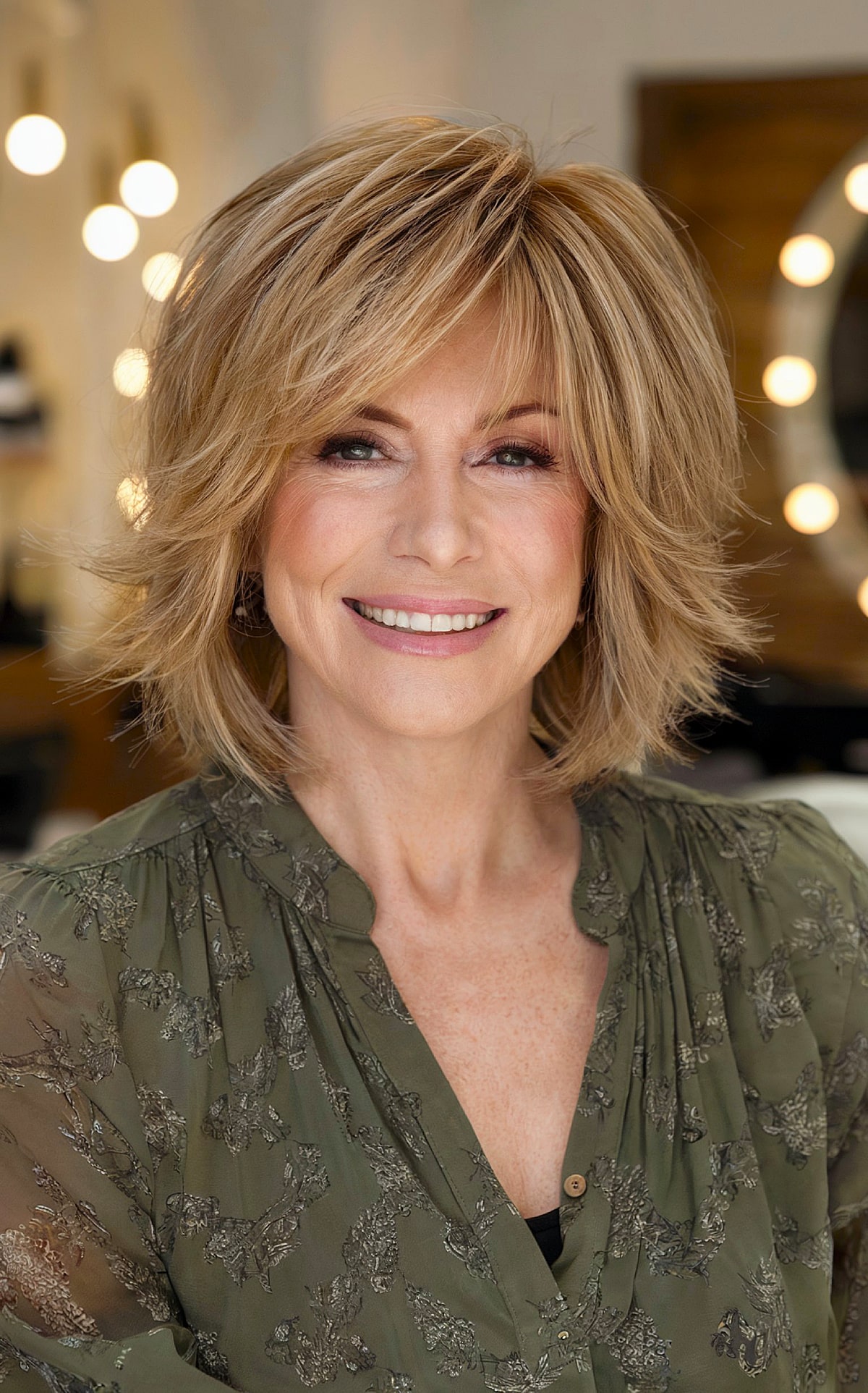
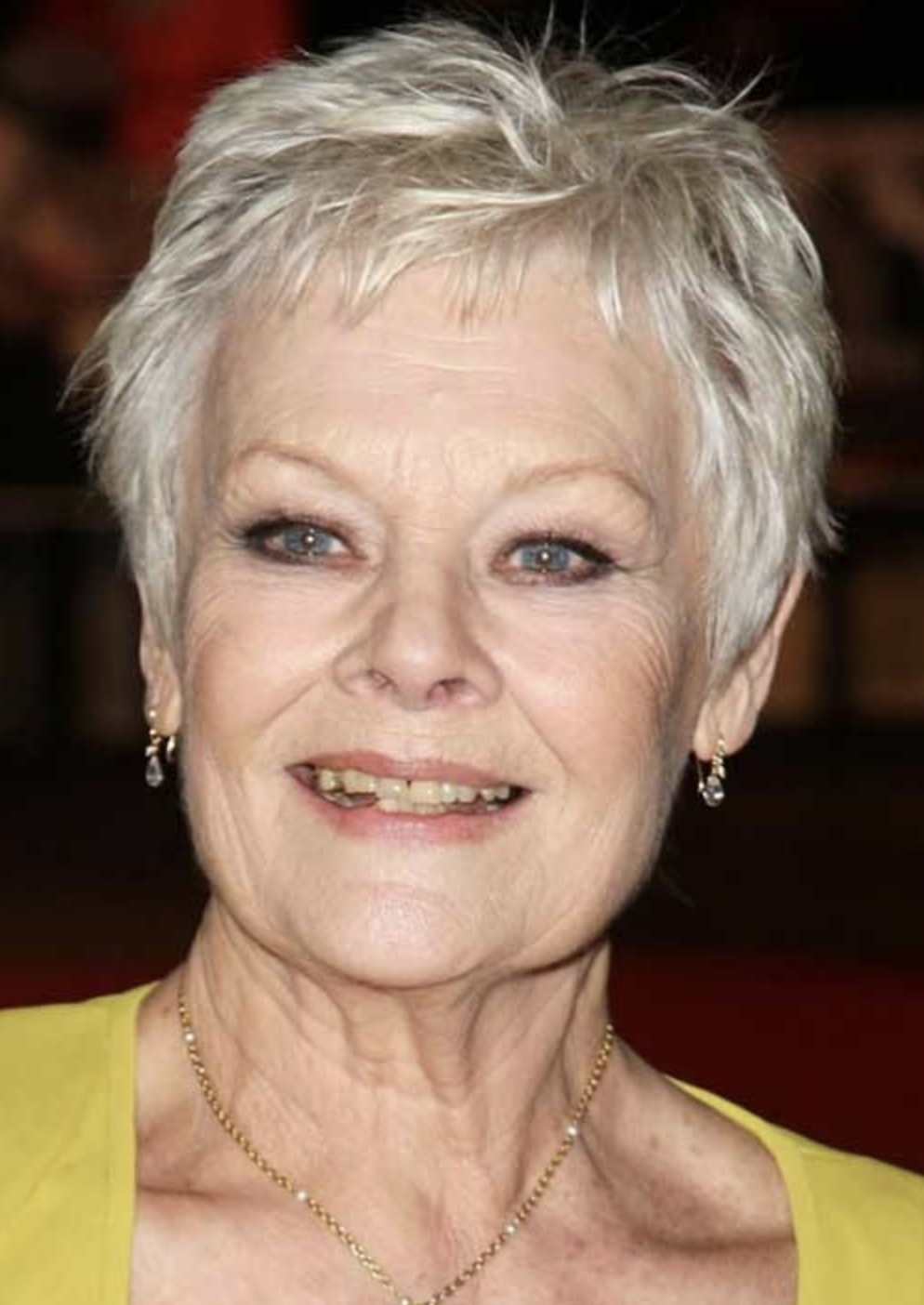
Individuals with full, rounded facial features often seek styles that create a slimming, lengthening effect. Choosing the right coiffure involves careful consideration of shape, volume, and texture to balance proportions and enhance overall appearance. For example, long layers can add definition and draw attention vertically, while short, blunt cuts can accentuate roundness.
A well-chosen style can significantly impact one’s self-confidence and perception. Historically, hairstyles have played a crucial role in expressing identity and conforming to societal beauty standards. Today, the focus has shifted towards personalized aesthetics and finding a look that complements individual features. The right cut can minimize perceived flaws and highlight desirable attributes, leading to a more positive self-image and enhanced social interactions.
The following sections will delve into specific styling recommendations for individuals with rounder faces, exploring various lengths, textures, and techniques to achieve flattering and fashionable looks.
1. Lengthening
Lengthening is a core principle in selecting hairstyles for round faces. The objective is to create a vertical illusion, counteracting the face’s natural width and giving the impression of a slimmer, more oval shape. This involves strategic styling choices that draw the eye downwards, minimizing the appearance of roundness.
-
Height at the Crown
Adding volume at the crown is a key lengthening technique. This can be achieved through various styling methods, including backcombing, layering, or specialized cuts. Elevated hair at the top of the head creates a visual focal point, adding height and dimension, which in turn elongates the face. This technique works particularly well with shorter cuts like pixies and layered bobs.
-
Long Layers
Long, face-framing layers contribute to a lengthening effect. These layers create vertical lines that draw the eye downwards, minimizing the appearance of width across the cheeks. The layers should ideally start below the chin and gradually lengthen towards the ends, adding movement and texture while maintaining a streamlined silhouette. This approach complements both medium and long hairstyles.
-
Asymmetrical Cuts
Asymmetry introduces diagonal lines and angles that disrupt the horizontal balance of a round face. An off-center part or side-swept bangs, for instance, can shift the focal point and create a longer, more angular appearance. This technique works well with various hair lengths, adding a contemporary edge to the style.
-
Avoiding Chin-Length Blunt Cuts
Blunt cuts that end at the chin or jawline tend to accentuate the roundness of the face. These styles create a horizontal line that visually widens the face. Instead, opting for lengths that fall above or below the chin helps create a more streamlined, elongated look.
By understanding these lengthening techniques, individuals with round faces can choose styles that enhance their features and create a more balanced, flattering appearance. The goal is not to drastically alter the face shape, but rather to subtly guide the eye and create an illusion of length and definition. The most effective approach often involves a combination of these techniques tailored to individual hair type and personal preferences.
2. Slimming
Slimming, in the context of hairstyles for round faces, refers to techniques that create the illusion of a narrower, more elongated face shape. These techniques minimize the appearance of width across the cheeks and jawline, contributing to a more balanced and defined overall look. Strategic styling choices can effectively create this slimming effect, enhancing facial features and boosting confidence.
-
Long, Wispy Layers
Long, wispy layers that frame the face can effectively create a slimming effect. These layers break up the roundness of the face and draw the eye downwards, creating a more vertical and elongated appearance. The soft, textured edges of wispy layers prevent the style from looking too heavy or bulky, which can further accentuate roundness. Examples include layered cuts that start below the jawline and gradually taper towards the ends, adding movement and dimension without adding width.
-
Off-Center Parts and Side-Swept Bangs
Off-center parts and side-swept bangs disrupt the symmetry of a round face, creating a slimming diagonal line. These styles shift the visual focus away from the center of the face, minimizing the appearance of width. Side-swept bangs, in particular, can partially obscure one side of the face, creating a more angular and less rounded appearance. Examples include long, sweeping bangs that blend seamlessly into the longer layers, or shorter, textured bangs that add a playful, yet slimming element.
-
Volume at the Crown, Not the Sides
Volume at the crown adds height and lengthens the face, while volume at the sides can exaggerate roundness. Therefore, concentrating volume at the top of the head, while keeping the sides relatively sleek, is crucial for creating a slimming effect. This can be achieved through styling techniques like backcombing or teasing at the crown, or by choosing layered cuts that naturally add volume at the top. Examples include styles with a lifted crown and smooth sides, creating a more balanced and less rounded silhouette.
-
Avoiding Short, Rounded Styles
Short, rounded styles, like chin-length bobs with curled-under ends, tend to emphasize the roundness of the face. These styles create a circular shape that mirrors the face’s natural roundness, further accentuating it. Instead, opting for longer lengths or incorporating asymmetry can help create a more slimming and flattering look. Examples of styles to avoid include tightly curled bobs that end at the chin and blunt cuts without layers that add width to the face.
By understanding these slimming techniques and incorporating them into hairstyle choices, individuals with round faces can achieve a more balanced and harmonious look. These strategies work by creating vertical lines, disrupting symmetry, and strategically placing volume to minimize width and enhance length. The result is a more defined, flattering appearance that complements the natural beauty of a round face shape.
3. Balancing
Balancing, in the context of hairstyles for round faces, involves creating visual harmony and proportion. It’s about choosing a style that complements the face’s natural roundness without exaggerating it. This requires careful consideration of volume, length, and angles to achieve a balanced and aesthetically pleasing look. The goal is to create a style that appears proportionate and enhances overall features, rather than simply minimizing roundness.
-
Visual Weight Distribution
Visual weight distribution refers to how the volume and density of the hair appear across the head. For round faces, the objective is to avoid concentrating weight on the sides, which can further widen the face. Instead, distributing volume more evenly, or concentrating it at the crown, creates a more balanced appearance. A style with heavy, blunt bangs can add weight to the forehead, while long, layered sides can balance this by distributing weight vertically. A pixie cut with a textured crown and tapered sides exemplifies proper weight distribution for a round face.
-
Proportion and Scale
Proportion and scale refer to the size and shape of the hairstyle relative to the face and body. A hairstyle that is too large or too small can appear disproportionate and emphasize the roundness of the face. For example, excessively voluminous curls can overwhelm a smaller round face, while a very short, slicked-back style can make a larger round face appear even wider. A shoulder-length bob with soft waves provides a balanced scale for many round face shapes.
-
Lines and Angles
Lines and angles within the hairstyle can significantly influence the perceived shape of the face. Sharp angles and diagonal lines can create a slimming and lengthening effect, counteracting the roundness. Soft curves and rounded lines, while sometimes appropriate, should be used strategically to avoid exaggerating the face’s roundness. A long bob with angled ends creates a slimming effect, while a layered cut with face-framing pieces softens the overall look without adding excessive roundness.
-
Texture and Movement
Texture and movement play a crucial role in balancing a round face. Straight, sleek hair can sometimes cling to the face and accentuate its roundness. Adding texture through waves, curls, or layers can create volume and movement, disrupting the smooth, round silhouette. However, excessively tight curls can add unwanted volume to the sides, so a balance must be struck. Loose waves or textured layers provide movement and dimension without widening the face.
These facets of balancing work in conjunction to achieve a harmonious and flattering hairstyle for a round face. Understanding how visual weight, proportion, lines, and texture interact allows for informed choices that enhance overall appearance. The aim is to create a style that not only minimizes the perception of roundness but also complements individual features and personal style, resulting in a balanced and confident look. By addressing these elements, individuals can select styles that flatter their unique features and create a look that is both stylish and proportionate.
Conclusion
Styling choices significantly impact the perceived shape and proportions of a round face. Lengthening techniques, such as height at the crown and long layers, create vertical illusions. Slimming strategies, including off-center parts and wispy layers, minimize width. Balancing involves harmonizing elements like visual weight, proportion, lines, and texture for an overall flattering effect. Careful consideration of these factors ensures a style that complements, rather than exaggerates, round facial features.
Ultimately, the most suitable style depends on individual preferences and hair characteristics. Exploration and consultation with experienced stylists are crucial for achieving a personalized and flattering result. Continuous evolution in hairdressing trends offers ongoing opportunities for individuals to discover and refine styles that best enhance their unique features and boost confidence.