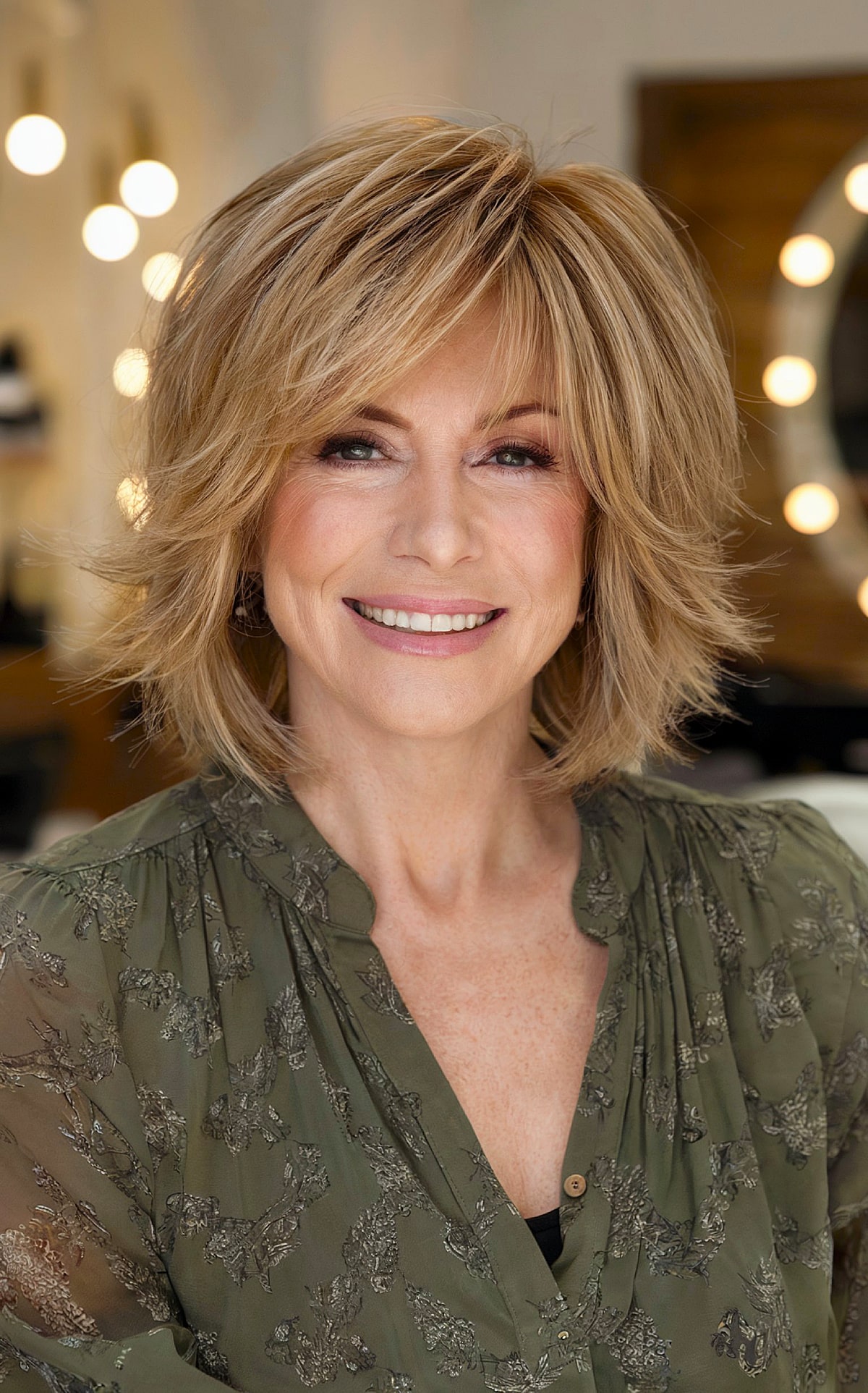
Shoulder-length hair incorporating graduated sections creates shape, movement, and texture. This technique allows for versatility in styling, accommodating various hair types and face shapes. Think of hairstyles ranging from a textured shag to a sleek, layered lob.
This approach offers numerous advantages. It can add volume to fine hair, control thickness in coarser hair, and frame the face in a flattering manner. Historically, layered cuts have evolved from simpler techniques to the sophisticated, personalized styles seen today, reflecting changing fashion trends and advancements in hairdressing techniques. Layering allows for customization based on individual needs and preferences, making it a consistently popular choice.
The following sections will delve deeper into specific aspects of achieving and maintaining this versatile look, exploring topics such as suitable face shapes, styling techniques, and product recommendations.
1. Face Shape Suitability
Harmonizing a medium-length layered haircut with an individual’s face shape is crucial for a flattering outcome. Careful consideration of facial contours ensures the layers enhance, rather than detract from, natural features. The objective is to create balance and proportion. For instance, long layers can visually lengthen a round face, while shorter, choppy layers can add angles to a square face. Ignoring face shape can result in a style that appears unbalanced or accentuates less desirable features.
Specific layering techniques can address various face shape concerns. Individuals with heart-shaped faces often benefit from layers that add fullness around the chin area, softening the pointed chin. Oval faces, considered the most versatile, generally suit a wide range of layered styles. However, even with an oval face, the specific layering pattern can be adjusted to highlight cheekbones or minimize a high forehead. Skilled stylists analyze facial proportions and recommend layer placement to achieve the most complementary look.
Understanding the relationship between face shape and layered haircuts empowers individuals to make informed decisions regarding their desired style. This knowledge allows for clearer communication with stylists, leading to more satisfying results. While trends may influence stylistic choices, a well-executed layered haircut considers the individual’s unique features, resulting in a personalized and harmonious appearance.
2. Hair Texture Considerations
Hair texture significantly influences the outcome of medium-style layered haircuts. Texture encompasses thickness, density, and natural wave or curl pattern. Each characteristic interacts with layering techniques, affecting how the hair falls, moves, and responds to styling. Understanding these interactions is crucial for achieving the desired look and ensuring the style complements individual hair characteristics.
Fine hair, for example, can appear limp and lifeless without layering. Strategically placed layers create an illusion of volume and fullness. However, excessive layering can thin out the ends, exacerbating the issue. Conversely, thick hair benefits from layers that remove bulk and add movement. Without layers, thick hair can appear heavy and unmanageable. The specific layering technique must be tailored to the density and thickness to avoid creating unwanted volume or a triangular shape. Curly hair presents another set of considerations. Layering curly hair enhances its natural bounce and shape, but improper layering can result in frizz or an uneven curl pattern. The stylist must consider the curl type and adjust the layering technique accordingly.
Successful execution of medium-style layered haircuts relies on a comprehensive understanding of hair texture. This knowledge enables stylists to tailor layering techniques to individual hair characteristics, optimizing the final result. Effective communication between the stylist and client regarding hair texture ensures realistic expectations and contributes to achieving a personalized and flattering style. Recognizing the impact of texture allows for informed decisions regarding layering techniques and styling approaches.
3. Layering Techniques
Layering techniques form the foundation of medium-style layered haircuts, dictating the final shape, volume, and movement. The method employed significantly influences how the hair falls and interacts with the individual’s face shape and hair texture. Understanding various layering techniques provides insights into achieving desired outcomes and facilitates informed discussions with stylists.
-
Internal Layering
Internal layering removes weight from the interior sections of the hair, creating texture and encouraging movement without affecting the overall length. This technique is particularly effective for thick hair, preventing it from appearing heavy or bulky. It also contributes to enhanced volume in fine hair by reducing weight and allowing the hair to lift more easily. Internal layering can be subtle or pronounced, depending on the desired effect.
-
External Layering
External layering focuses on the outer sections of the hair, creating graduated lengths that frame the face and add dimension. This technique is often used to create feathered or textured ends. External layering can be adapted to suit various face shapes, with longer external layers often used to elongate round faces and shorter, choppier layers adding angles to square faces. The degree of layering determines the overall effect, ranging from subtle texturizing to a more pronounced layered look.
-
Razor Layering
Utilizing a razor creates textured, wispy ends, adding a softer, more diffused appearance. This technique is often employed to create a piecey, tousled look. Razor layering is particularly effective for finer hair, creating texture without sacrificing density. However, it requires a skilled stylist to ensure a balanced and controlled outcome, as razor layering can thin out the hair if not executed properly.
-
Combination Layering
Combining various layering techniques allows for highly customized results. A skilled stylist can blend internal and external layering, incorporating razor techniques as needed, to achieve a precise shape and texture. This approach allows for the creation of bespoke styles tailored to individual needs, addressing specific concerns related to hair type, face shape, and desired volume.
Ultimately, the chosen layering technique significantly influences the final appearance of medium-style layered haircuts. A thorough understanding of these techniques enables informed decision-making and collaboration with stylists, ensuring the chosen method complements individual hair characteristics and achieves desired aesthetic goals. The interplay of these techniques allows for a wide range of styles, from classic and sleek to modern and textured, demonstrating the versatility and enduring popularity of layered haircuts.
4. Styling Options
Styling options significantly impact the versatility and overall aesthetic of medium-style layered haircuts. The layering creates a foundation for diverse styling possibilities, ranging from sleek and polished to tousled and textured. Understanding the interplay between the haircut and styling techniques allows individuals to maximize the potential of layered hair and adapt the look to various occasions and personal preferences. The layered structure provides the framework for manipulating volume, texture, and movement, offering a wider array of styling choices compared to a blunt, unlayered cut.
For instance, a layered haircut can be styled straight to showcase the precision of the cut and create a sleek, sophisticated silhouette. Alternatively, incorporating waves or curls adds volume and texture, enhancing the dynamism of the layers. The use of styling products further expands the possibilities. Texturizing sprays enhance separation and definition, while volumizing mousses amplify body and fullness. Heat styling tools, such as curling irons and straighteners, offer further control over shape and texture. A layered cut responds well to these tools, allowing for the creation of various looks from loose waves to defined curls or a sleek, straight finish. Consider how a layered bob can be styled with a deep side part for a dramatic evening look, or tousled with texturizing spray for a casual daytime style.
Ultimately, recognizing the breadth of styling options associated with medium-style layered haircuts allows individuals to fully utilize the versatility of this cut. Effective styling techniques complement the layered structure, transforming the hair into a canvas for self-expression. Adaptability through styling enhances the longevity and appeal of layered haircuts, making them a consistently popular choice. Successful styling relies on an understanding of hair texture, layering technique, and the desired outcome, enabling individuals to achieve looks ranging from effortless chic to polished sophistication.
5. Maintenance and Care
Maintaining the shape, texture, and overall health of medium-style layered haircuts requires consistent care. Neglecting proper maintenance can lead to a loss of definition, split ends, and an unkempt appearance. Understanding the specific needs of layered hair ensures the style remains vibrant and flattering.
-
Regular Trims
Regular trims are crucial for preventing split ends and maintaining the integrity of the layers. The frequency of trims depends on individual hair growth rates and styling habits, but generally, a trim every 6-8 weeks is recommended. Consistent trimming prevents split ends from traveling up the hair shaft, preserving the overall health and appearance of the hair. Without regular trims, the layered structure can become less defined, and the ends may appear frayed or uneven.
-
Hydration and Conditioning
Hydration is essential for all hair types, but layered hair, particularly if chemically treated or heat-styled, can be prone to dryness. Regular deep conditioning treatments replenish moisture, preventing breakage and promoting shine. Hydrated hair maintains its elasticity and resilience, allowing the layers to move and fall naturally. Dry, brittle hair can lead to frizz and difficulty in styling, diminishing the intended effect of the layered cut.
-
Product Selection
Choosing the right products plays a vital role in maintaining the health and style of layered hair. Lightweight products, such as leave-in conditioners and serums, can enhance shine and manageability without weighing down the layers. Volumizing products can be used to amplify body and lift at the roots, while texturizing sprays enhance definition and separation. The specific product choices depend on individual hair texture and styling goals. Using heavy products on fine, layered hair can result in a flat, greasy appearance, negating the benefits of layering.
-
Heat Styling Management
Heat styling tools, while useful for creating various looks, can damage the hair if used excessively or improperly. Applying a heat protectant spray before using hot tools minimizes damage and preserves the hair’s integrity. Excessive heat can lead to dryness, breakage, and split ends, compromising the layered structure and overall health of the hair. Moderation and proper heat protection are crucial for maintaining the long-term health and appearance of layered hair.
Through consistent attention to these maintenance and care practices, individuals can preserve the intended aesthetic of their medium-style layered haircuts. Proper care ensures the layers remain defined, vibrant, and healthy, maximizing the longevity and versatility of the style. By incorporating these practices into a regular routine, individuals can enjoy the full benefits of a well-maintained layered haircut, showcasing its dynamic texture and flattering shape.
Conclusion
Medium-style layered haircuts offer a versatile and adaptable approach to hair styling. Achieving a successful outcome relies on a confluence of factors, including careful consideration of face shape, hair texture, and layering techniques. Styling options further enhance the versatility of layered hair, allowing for personalized expression and adaptation to various occasions. Consistent maintenance, including regular trims, hydration, appropriate product use, and mindful heat styling, preserves the integrity and aesthetic of the layered cut.
Ultimately, the enduring popularity of medium-style layered haircuts stems from their adaptability and ability to complement a wide range of individual characteristics. The layered approach empowers individuals to embrace personalized styles while maintaining a manageable and flattering look. Continued exploration of layering techniques and styling innovations will further enhance the potential of this timeless and adaptable haircutting approach.