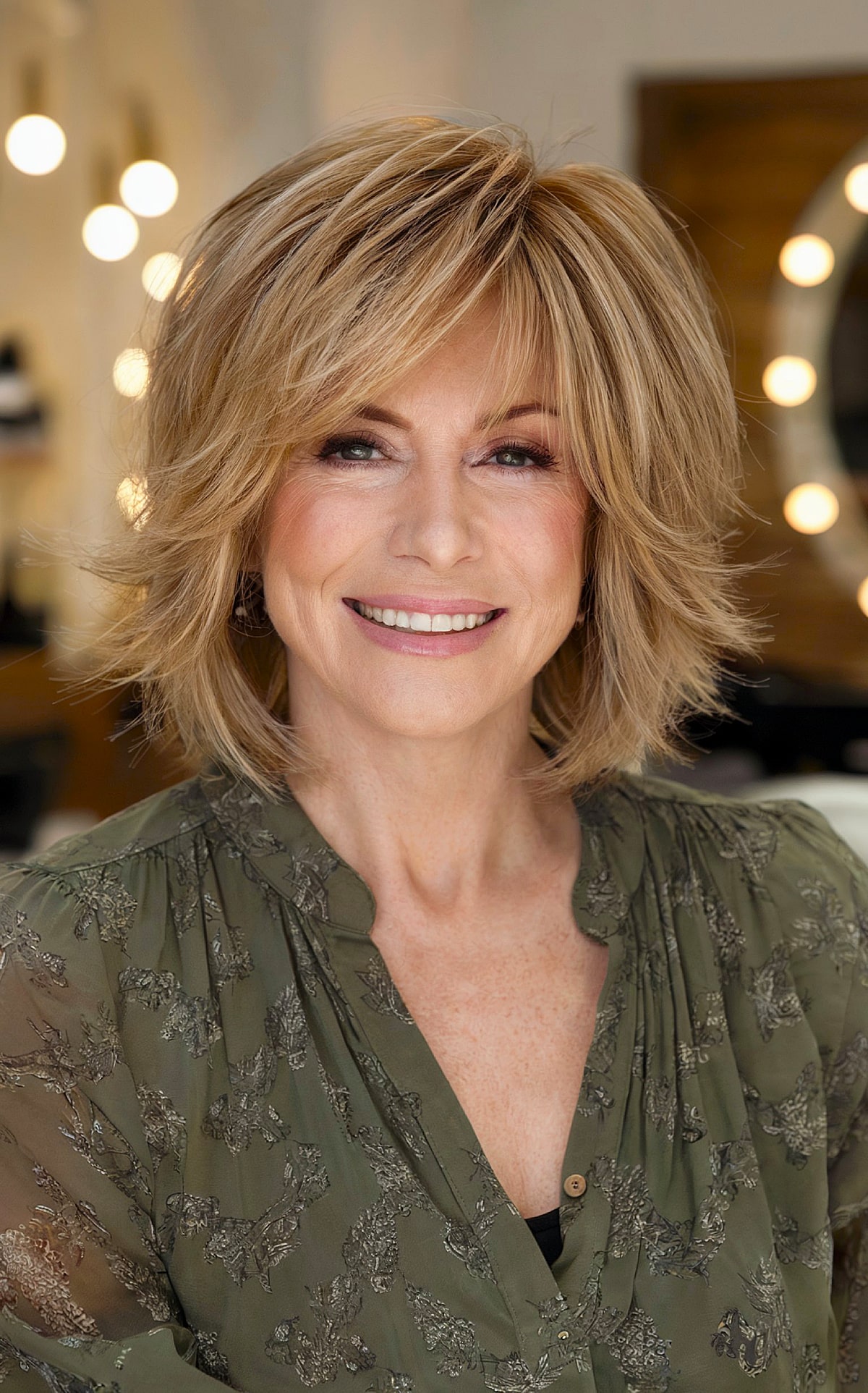
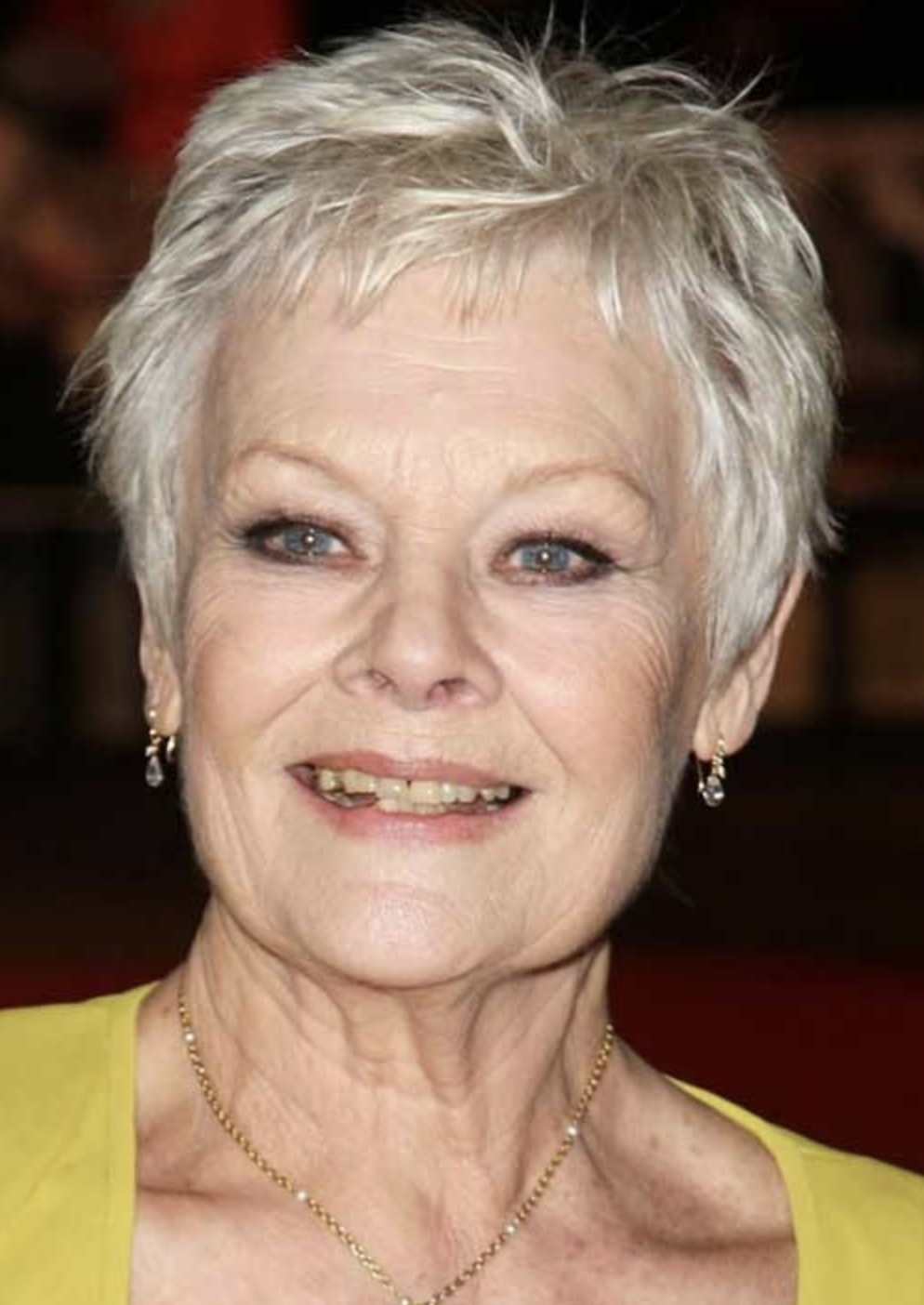
Medium-length hairstyles, ending around the shoulders, offer a versatile and flattering option for those with fine hair. These cuts can create the illusion of fullness and body, transforming hair that might otherwise appear limp or lifeless. Visual examples include layered lobs, textured bobs, and blunt cuts with subtle shaping.
This hair length offers manageability and styling versatility without compromising on aesthetic appeal. It allows for various styling techniques, from effortless air-drying to elaborate updos, contributing to its enduring popularity. Historically, trends in this length have reflected broader fashion movements, demonstrating adaptability and enduring relevance.
Further exploration will cover suitable styles, ideal face shapes, styling techniques, and maintenance advice for achieving optimal results with this hair length.
1. Layered cuts
Layered cuts offer a strategic approach to enhancing volume and movement in shoulder-length hair, particularly for finer textures. The technique involves cutting hair at different lengths, creating varying dimensions that prevent the hair from appearing flat or limp. This graduation in length allows individual strands to lift and separate, contributing to an overall impression of fullness. For example, incorporating shorter layers around the crown can add lift at the roots, while longer layers through the lengths and ends create movement and swing. The strategic placement of layers can also help balance facial features, softening angles or adding width where desired.
The effectiveness of layered cuts for thin, shoulder-length hair lies in their ability to manipulate the hair’s weight distribution. By reducing weight in specific areas, layers encourage natural lift and body. This can be particularly beneficial for individuals with fine hair that tends to lie flat against the scalp. Layering also facilitates styling versatility, allowing for a range of looks from tousled and textured to sleek and polished. A long, layered bob, for instance, can be styled with a texturizing spray for a casual, beachy look, or smoothed out with a round brush for a more refined appearance.
Achieving optimal results with layered cuts requires careful consideration of hair type, texture, and face shape. Consultation with a skilled stylist is crucial for determining the most flattering layering pattern and ensuring a balanced, harmonious outcome. While layered cuts offer substantial benefits for thin hair, over-layering can sometimes have the opposite effect, leading to thinning at the ends and compromising overall fullness. Therefore, a precise and tailored approach to layering is essential for maximizing volume and achieving the desired aesthetic.
2. Textured styles
Textured styles play a crucial role in maximizing volume and creating visual interest in shoulder-length haircuts for thin hair. Introducing texture disrupts the hair’s natural tendency to lie flat, resulting in a more dynamic and voluminous appearance. This can be achieved through various cutting and styling techniques, offering a range of options tailored to individual preferences and hair characteristics.
-
Choppy Layers
Choppy layers involve cutting the hair at varying lengths with a more distinct separation between layers, creating a deliberately uneven and textured effect. This technique adds significant movement and dimension, preventing the hair from looking flat or one-dimensional. Short, choppy layers around the crown can create lift and volume at the roots, while longer, textured layers throughout the lengths add movement and swing. This style works particularly well for those seeking a modern, edgy look.
-
Waves and Curls
Incorporating waves or curls into shoulder-length thin hair adds substantial volume and texture. This can be achieved through various methods, including heat styling tools like curling irons or wands, or by using no-heat methods such as braids or rollers. The curves and bends introduced by waves and curls disrupt the uniformity of straight hair, creating the illusion of greater fullness and body. Loose, beachy waves offer a relaxed and effortless look, while tighter curls create a more glamorous and defined style.
-
Texturizing Products
Texturizing products, such as mousses, sprays, and powders, play a vital role in enhancing and maintaining texture in shoulder-length hairstyles for thin hair. These products work by adding grip and separation to individual strands, preventing the hair from clinging together and appearing flat. Volumizing mousses applied to damp hair before styling create lift at the roots, while texturizing sprays applied to dry hair enhance definition and create a piecey, separated look. Dry texture sprays can also absorb excess oil, helping to maintain volume and prevent the hair from becoming weighed down.
-
Balayage and Highlights
Strategic hair coloring techniques, such as balayage and highlights, can further enhance texture and dimension in shoulder-length thin hair. These techniques involve lightening sections of the hair to create contrast and depth, mimicking the natural variations found in thicker hair. Balayage creates a soft, blended transition between colors, while highlights offer more defined streaks of light. These color variations create visual texture and movement, making the hair appear fuller and more dynamic.
By strategically combining these texturizing elements, individuals with thin hair can achieve voluminous and stylish shoulder-length looks. The interplay of layers, waves, texturizing products, and color creates a harmonious and flattering effect, transforming fine hair into a canvas for versatile and expressive styles.
3. Blunt Cuts
Blunt cuts, characterized by a single, clean edge where all the hair ends at the same length, offer a unique approach to shoulder-length hairstyles for thin hair. While layering removes weight to create volume, a blunt cut retains weight at the ends, creating a thicker, fuller appearance. This technique can be particularly effective for those with fine hair, as it maximizes the density at the perimeter, giving the illusion of more substantial volume. For instance, a blunt lob (long bob) can make fine hair appear denser and healthier by avoiding the wispy ends often associated with layered cuts on thin hair. The sharp, defined line of a blunt cut also adds a modern and sophisticated aesthetic.
However, the success of a blunt cut on thin, shoulder-length hair relies heavily on precise execution and careful consideration of face shape and hair texture. Overly blunt cuts can sometimes emphasize thinness if the hair is extremely fine or sparse. In such cases, subtle texturizing techniques, such as point cutting or internal layering, can be incorporated to soften the line and add movement without compromising the overall blunt effect. For example, a stylist might incorporate slight texturizing at the ends to prevent a blunt bob from appearing too heavy or severe on a client with very fine hair. This customization allows for a tailored approach, balancing the desire for fullness with the need for movement and dimension.
Blunt cuts, when executed correctly and tailored to individual hair characteristics, can be a powerful tool for creating the illusion of thicker, fuller hair at shoulder length. Achieving this requires a skilled stylist who can assess the hair’s density and texture and adjust the bluntness accordingly. While not universally suitable for all hair types, the blunt cut provides a valuable option for those seeking a sleek, modern style that maximizes the appearance of volume in fine hair. Pairing a blunt cut with volumizing products and styling techniques can further enhance its thickening effect, creating a polished and sophisticated look.
4. Face Shape
Face shape plays a critical role in determining the most flattering shoulder-length haircut for thin hair. A well-chosen cut can accentuate positive features, soften angles, and create the illusion of fullness and balance. Understanding the interplay between face shape and hairstyle is essential for achieving a harmonious and aesthetically pleasing result.
-
Oval Faces
Oval faces are considered the most versatile, generally suiting a wide range of shoulder-length haircuts. The balanced proportions of an oval face allow for experimentation with various styles, from layered cuts to blunt bobs. However, maintaining some volume around the crown is typically recommended to prevent the hair from appearing too flat or close to the head, which can elongate the face further. A textured lob with subtle waves, for instance, adds volume and frames the face beautifully.
-
Round Faces
Shoulder-length haircuts for round faces often aim to create the illusion of length and definition. Styles that add volume at the crown and have a slimming effect around the cheeks are generally preferred. Long layers framing the face, a deep side part, or an off-center parting can help create vertical lines and elongate the face. A shoulder-length cut with longer layers in the front and shorter layers in the back can add height and dimension while minimizing roundness.
-
Square Faces
Softening the angles of a square face is a key consideration when choosing a shoulder-length haircut. Styles with soft waves, rounded layers, or textured ends can help create a more gentle, flowing appearance. Avoiding overly blunt cuts or sharp angles is generally recommended, as these can accentuate the jawline. A shoulder-length shag with wispy layers and a textured fringe can effectively soften the jawline and create a more balanced look.
-
Heart-Shaped Faces
Shoulder-length haircuts for heart-shaped faces often focus on balancing the wider forehead with the narrower chin. Styles that add fullness around the chin and jawline can create a more harmonious appearance. A layered lob with textured waves or curls towards the ends can add volume and width to the lower part of the face, balancing the proportions. A side-swept fringe can also help soften the forehead and create a more balanced look.
Selecting a shoulder-length haircut based on face shape ensures a flattering and harmonious result. While these guidelines offer a starting point, individual hair texture, density, and personal preferences should also be considered. Consulting with a skilled stylist is crucial for determining the most suitable cut and styling techniques to achieve a personalized and aesthetically pleasing outcome.
5. Styling Techniques
Styling techniques are crucial for maximizing the potential of shoulder-length haircuts for thin hair. Proper styling can create volume, texture, and movement, transforming fine hair into a versatile and stylish look. Strategic product use and styling methods can significantly impact the overall appearance, enhancing fullness and addressing the specific needs of thin hair.
-
Volumizing Products
Volumizing products, such as mousses, sprays, and root-lifting products, form the foundation for achieving voluminous shoulder-length styles. These products work by adding lift at the roots and thickening individual strands, creating overall fullness. Applying a volumizing mousse to damp hair before blow-drying, for instance, creates a base for lasting volume and lift. Lightweight formulas are crucial for thin hair, preventing the hair from becoming weighed down or appearing greasy.
-
Blow-Drying Techniques
Proper blow-drying techniques are essential for enhancing volume and shape in shoulder-length thin hair. Using a round brush to lift the hair at the roots while directing airflow upwards creates volume and movement. Concentrating heat at the crown during drying creates lift and fullness, while directing the airflow downwards along the hair shaft smooths the cuticle and enhances shine. The combination of heat and airflow manipulation creates a foundation for various styles, from sleek and straight to voluminous and bouncy.
-
Heat Styling Tools
Heat styling tools, such as curling irons, wands, and flat irons, offer versatile options for adding texture and movement to shoulder-length thin hair. Curling irons and wands can create waves or curls, adding volume and disrupting the flatness often associated with thin hair. Flat irons, while primarily used for straightening, can also be used to create subtle bends and waves at the ends, adding a touch of movement and preventing the hair from appearing too straight and lifeless. However, excessive heat styling can damage fine hair, so heat protectant sprays are crucial.
-
No-Heat Styling Methods
No-heat styling methods provide alternative ways to achieve texture and volume without the potential damage associated with heat styling. Braiding damp hair overnight and unraveling it in the morning creates soft, natural-looking waves. Using Velcro rollers on dry hair adds volume and lift, particularly at the crown. These methods offer gentle and effective ways to enhance texture and create various styles while minimizing heat exposure, preserving the health and integrity of fine hair.
Mastering these styling techniques allows individuals with thin hair to maximize the versatility and style potential of shoulder-length haircuts. By strategically combining volumizing products, blow-drying techniques, and heat or no-heat styling methods, those with fine hair can achieve a range of looks, from sleek and polished to textured and voluminous. Understanding the specific needs of thin hair and adapting styling accordingly empowers individuals to achieve flattering and stylish results, boosting confidence and enhancing overall appearance.
Shoulder Length Haircuts for Thin Hair
Strategic styling and cut selection are essential for maximizing the potential of shoulder-length hair, particularly for those with finer textures. Layered cuts, textured styles, and even blunt cuts, when tailored appropriately, can create the illusion of fullness and body. Careful consideration of face shape ensures a harmonious balance, while styling techniques, from product application to blow-drying methods, contribute significantly to the final result. Optimizing these elements addresses the specific needs of thin hair, transforming potential challenges into opportunities for versatile and stylish self-expression.
Ultimately, achieving a flattering and voluminous shoulder-length look with thin hair requires a holistic approach. Understanding the interplay between cut, texture, face shape, and styling empowers individuals to make informed decisions, leading to a personalized style that enhances both appearance and confidence. This knowledge allows individuals to move beyond perceived limitations and embrace the versatility and potential of shoulder-length haircuts, transforming fine hair into a canvas for diverse and expressive styling possibilities.