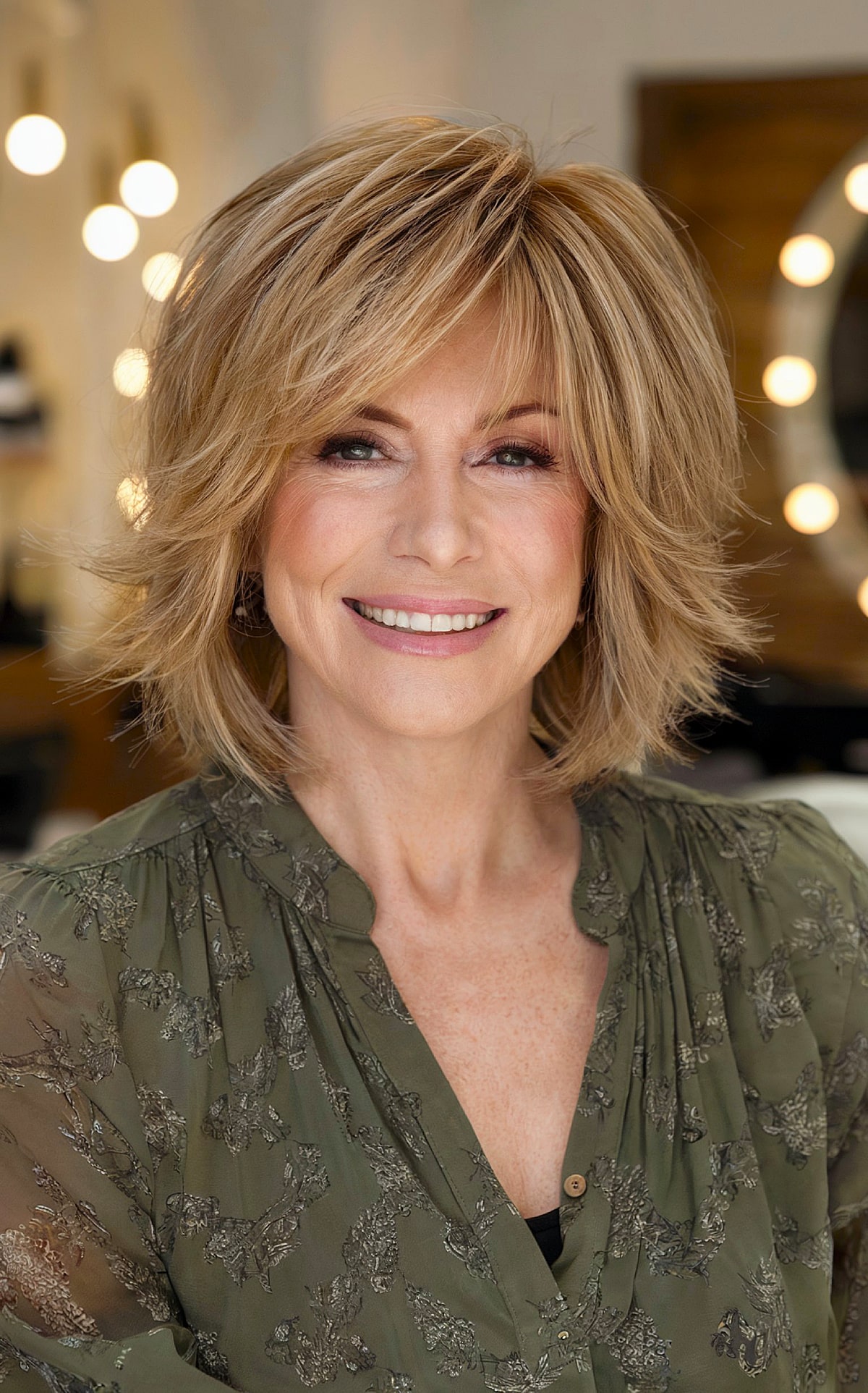
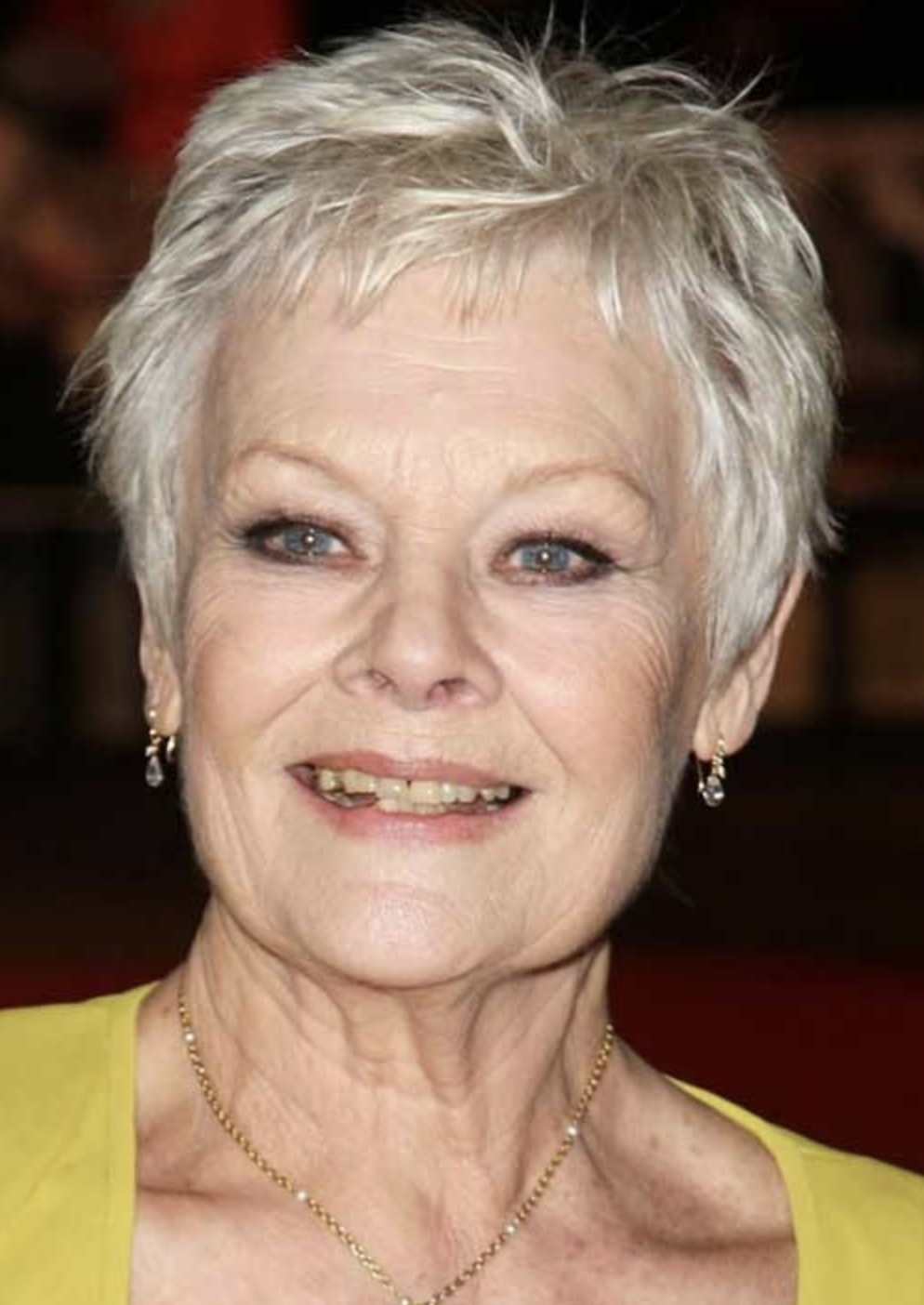
Cropped cuts paired with extended bangs offer a versatile and stylish look. This combination involves significantly shorter lengths at the back and sides of the head, contrasted by a longer front section of hair, often styled to sweep across the forehead or frame the face. Think of a pixie cut with long, side-swept bangs, or a bob that maintains length solely in the front.
The juxtaposition of short and long creates visual interest and offers numerous styling opportunities. This style can soften facial features, add an element of mystery, or create a bold, fashion-forward statement. Its adaptability makes it suitable for various hair textures and face shapes. Historically, similar styles have cycled in and out of fashion, demonstrating enduring appeal while being reinterpreted for contemporary trends.
This exploration will delve into specific examples of these blended cuts, considering face shape suitability, styling techniques, and maintenance requirements for achieving and preserving the look.
1. Face-framing effect
The strategic placement of longer strands in short hairstyles plays a crucial role in sculpting facial features, creating a bespoke frame that enhances and balances proportions. This “face-framing effect” is central to the appeal of short hairstyles with long fringes, offering adaptable solutions for various face shapes and desired aesthetic outcomes.
-
Contouring and Highlighting
The fringe, whether blunt, side-swept, or textured, acts as a contour, adding depth and shadow to specific areas. It can highlight cheekbones, minimize a wider forehead, or draw attention to the eyes. A long, sweeping fringe, for instance, can create the illusion of higher cheekbones by strategically shadowing the area beneath.
-
Softening Harsh Angles
Individuals with strong jawlines or prominent foreheads can benefit from the softening effect of a long fringe. The gentle curve of the hair softens angular features, creating a more harmonious and balanced appearance. A textured fringe, broken up into pieces, can further diffuse harsh lines.
-
Balancing Proportions
Different fringe styles can address specific facial proportions. A longer, asymmetrical fringe can balance a longer face, while a shorter, wispy fringe can complement a smaller, more delicate face. The fringe length and style, coupled with the short hair at the back and sides, work in tandem to create an overall balanced look.
-
Creating Visual Interest
Beyond its functional benefits, the fringe introduces an element of visual interest. It draws the eye towards the face, adding movement and texture. The interplay between the shorter hair and the longer fringe creates a dynamic frame that enhances the overall hairstyle and prevents it from appearing flat or one-dimensional.
Ultimately, the face-framing effect achieved through a long fringe contributes significantly to the versatility and enduring popularity of short hairstyles. Its adaptability allows for personalized adjustments to flatter individual features and achieve diverse stylistic goals, from subtle enhancements to bold statements.
2. Texture and Movement
Texture and movement are integral to the success of short hairstyles with long fringes. These elements contribute significantly to the overall aesthetic, influencing how the style interacts with light, frames the face, and projects a sense of dynamism. The interplay between short lengths and longer fringes offers a canvas for exploring diverse textures and creating movement that complements individual features and styling preferences.
The desired texturewhether piecey, choppy, wispy, or bluntis achieved through cutting techniques like layering, point-cutting, and razor cutting. Layering, in particular, builds volume and creates separation, allowing for more movement within the fringe and the shorter sections. For instance, a heavily layered pixie cut with a long, side-swept fringe can create a textured, tousled look, while a blunt bob with a straight fringe offers a sleek, polished finish. Product application further enhances texture. Texturizing sprays, mousses, and waxes can create definition, enhance movement, and provide hold without weighing the hair down. The choice of product depends on the desired effect and hair type; finer hair benefits from lighter products, while thicker hair may require stronger hold.
Movement within the fringe is crucial for preventing a static or heavy appearance. This dynamism is achieved through the interplay of length, layering, and styling techniques. A long fringe can be styled to sweep across the forehead, creating a soft, flowing movement, or it can be parted in the middle or to the side, creating a more structured frame. Curling or waving the fringe adds volume and bounce, while straightening creates a sleek, modern look. Understanding the relationship between texture and movement is crucial for achieving a balanced and flattering style. A well-executed short hairstyle with a long fringe leverages these elements to create a look that is both visually appealing and adaptable to individual preferences and hair characteristics.
3. Styling Versatility
A significant advantage of short hairstyles with long fringes lies in their remarkable styling versatility. This adaptability allows individuals to effortlessly transition between various looks, from casual to formal, and to experiment with different textures and silhouettes. The interplay between the shorter back and sides and the longer fringe provides a foundation for diverse styling options, empowering self-expression and catering to a wide range of aesthetic preferences.
-
Adaptability to Occasion
The same short haircut with a long fringe can be styled differently to suit various occasions. For everyday wear, a tousled, textured fringe creates a relaxed and effortless vibe. For a more formal event, the fringe can be straightened and swept to the side for a sleek, polished appearance. This adaptability eliminates the need for multiple haircuts to suit different situations.
-
Texture Manipulation
The longer length of the fringe allows for experimentation with different textures. It can be straightened for a sleek, modern look, curled for a softer, more romantic feel, or textured with products for a piecey, edgy finish. This versatility empowers individuals to adapt their style to their mood or outfit.
-
Accessorizing Potential
Long fringes provide opportunities for incorporating hair accessories. Headbands, clips, and barrettes can be used to add visual interest, secure the fringe away from the face, or create different looks. This allows for further personalization and experimentation with style.
-
Effortless Transformations
The contrast between the short back and sides and the longer fringe creates a dynamic canvas for transformations. Simply changing the parting of the fringe, adding volume at the roots, or tucking it behind the ears can dramatically alter the overall appearance. This effortless versatility makes these hairstyles practical and convenient for daily wear.
The styling versatility inherent in short hairstyles with long fringes contributes significantly to their enduring popularity. This adaptability empowers individuals to express their unique style, adapt to different occasions, and effortlessly refresh their look without requiring drastic changes. The interplay of length, texture, and styling options provides a framework for continuous experimentation and personalized expression.
4. Maintenance Requirements
Maintaining the distinct silhouette and style of short hairstyles with long fringes requires a specific regimen. While these styles offer versatility and visual appeal, consistent upkeep is essential to preserve their shape and prevent the look from becoming unkempt or overgrown. Understanding these maintenance requirements is crucial for individuals considering this style.
-
Regular Trims
Frequent trims are paramount for maintaining the desired length and shape, particularly for the fringe. As the fringe grows, it can obscure vision and detract from the overall style. Regular trims, typically every 4-6 weeks, prevent overgrowth and maintain the carefully crafted balance between the short back and sides and the longer front section. This regularity ensures the style remains sharp and intentional.
-
Targeted Shampooing and Conditioning
Shorter hairstyles, especially those with textured or layered fringes, can become oily more quickly. Targeted shampooing focuses on cleansing the scalp and roots, while minimizing product buildup on the lengths and ends. Lightweight conditioners prevent weighing down the hair, preserving volume and movement. Specific product choices cater to individual hair types and styling needs.
-
Styling Product Application
Styling products play a vital role in achieving and maintaining the desired texture and shape. Mousses, texturizing sprays, waxes, and serums can enhance volume, create definition, and provide hold without compromising movement. Proper application techniques, such as distributing product evenly through damp hair before styling, ensure a natural and lasting finish.
-
Heat Styling Management
While heat styling tools can enhance the look, excessive heat can damage hair, especially shorter strands prone to dryness. Utilizing heat protectant sprays before blow-drying, straightening, or curling minimizes damage. Furthermore, adjusting heat settings to lower temperatures and limiting styling frequency helps maintain hair health and prevent breakage.
These maintenance requirements, while demanding a commitment to regular upkeep, are essential for preserving the distinctive appeal of short hairstyles with long fringes. Adhering to this regimen ensures the style continues to flatter facial features, project a polished image, and offer the desired versatility and visual impact. Neglecting these aspects can lead to an unkempt appearance, diminishing the intended effect of this stylish cut.
Short Hairstyles Long Fringe
Short hairstyles incorporating long fringes offer a compelling blend of aesthetic versatility and individualized styling. This exploration has highlighted the interplay between contrasting lengths, the significance of texture and movement, and the transformative power of face-framing effects. From softening angular features to adding depth and dimension, the strategic placement of a longer fringe within a shorter cut provides adaptable solutions for diverse face shapes and desired stylistic outcomes. Furthermore, the adaptability of these styles extends to various occasions and styling preferences, allowing for effortless transitions between casual and formal looks through texture manipulation and accessorizing.
Ultimately, the enduring appeal of short hairstyles with long fringes stems from their ability to empower personal expression. While maintenance requirements necessitate a commitment to regular upkeep, the rewards lie in a dynamic and ever-evolving look. The continued exploration of these styles promises further innovation and personalized interpretations, cementing their position as a staple in contemporary hairdressing.