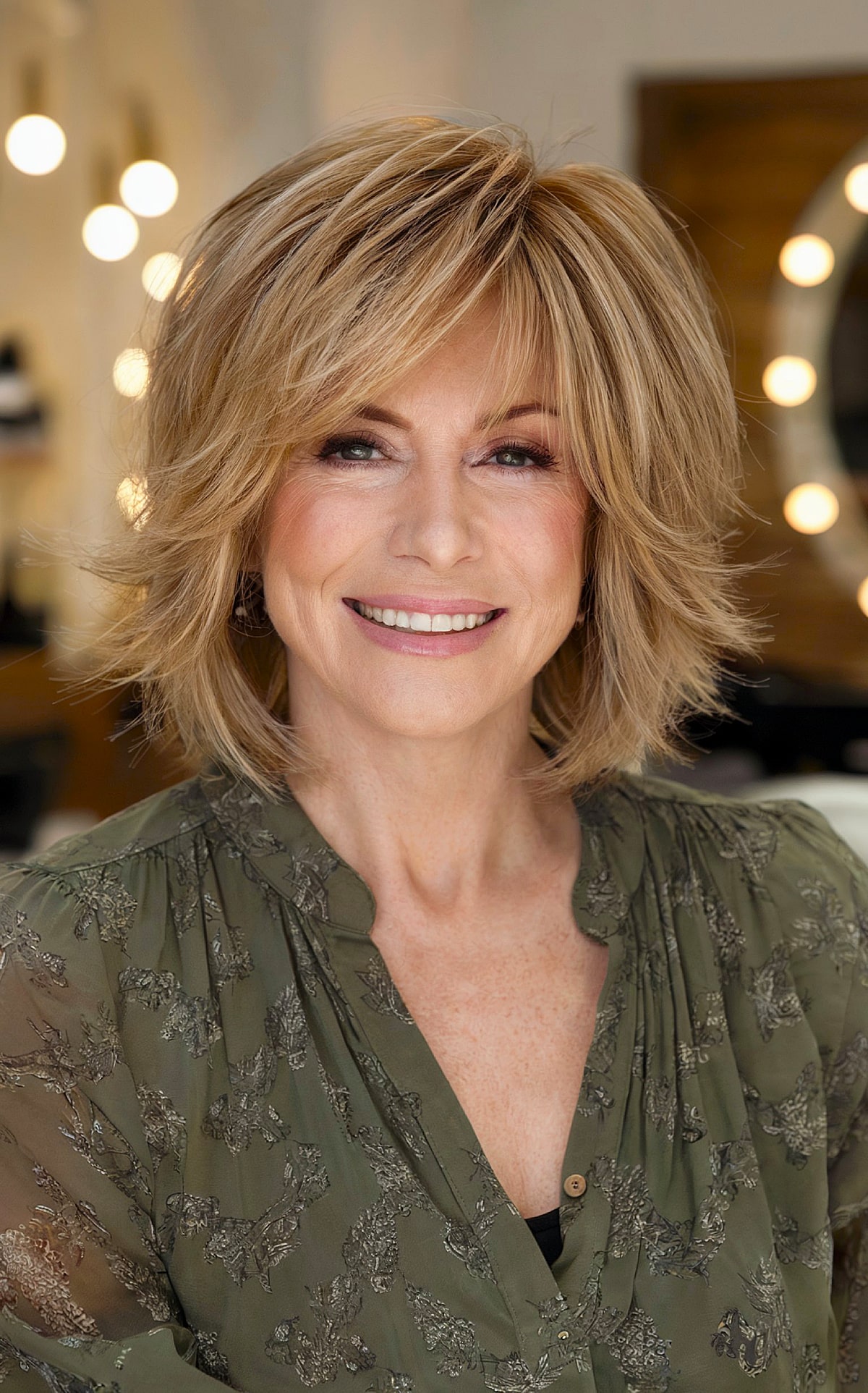
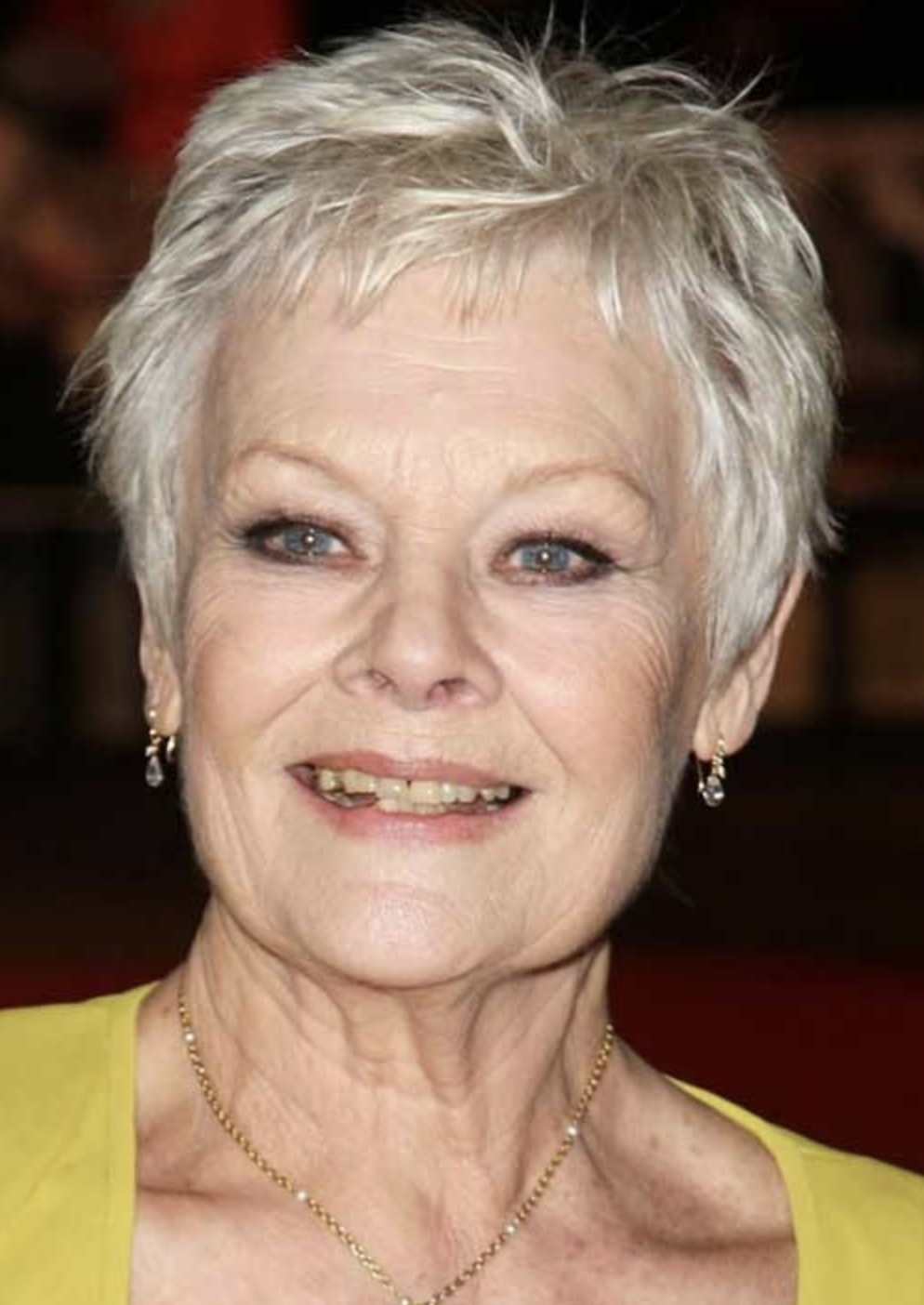
This hairstyle features a foundational length that falls between the chin and shoulders, complemented by strategically placed, subtly graduated sections of hair to create volume and movement. The incorporation of fringe adds framing around the face. This style can be adapted to suit a variety of hair textures and face shapes, offering versatility in styling options.
The adaptability of this cut contributes to its enduring popularity. It offers a balance between manageable length and the styling potential of longer hair. The layered structure adds body and texture, which can be particularly beneficial for fine hair, while the bangs offer the opportunity to soften facial features or highlight specific aspects. This approach to layering emerged alongside a growing preference for more natural, textured hairstyles, moving away from rigidly styled cuts.
This foundation provides a platform for exploring specific styling techniques, face shape considerations, and hair care regimens appropriate for maintaining this layered look. Further discussion will delve into the nuances of adapting this style to individual needs and preferences.
1. Face Shape
Face shape plays a pivotal role in determining whether a medium-length layered cut with bangs harmonizes with an individual’s features. Careful consideration of face shape ensures the cut complements rather than detracts from overall appearance. Analyzing facial contours guides decisions regarding layering and bang style.
-
Oval Faces
Oval faces are generally well-suited to a wide range of styles. The balanced proportions allow for experimentation with various bang lengths and layer placements. Soft, blended layers and brow-skimming bangs can enhance natural symmetry. This face shape offers flexibility, allowing for adaptations of the cut to suit personal preferences.
-
Round Faces
Round faces benefit from layers that create vertical lines and angles, elongating the face. Long, layered bangs or side-swept fringes can contribute to this effect. Avoiding short, blunt bangs and overly rounded layers is crucial. The goal is to add definition and structure.
-
Square Faces
Softening the angles of a square face is key. Layered bangs and feathered layers around the jawline can achieve this. Textured layers and choppy bangs can add a sense of movement and detract from sharp angles. Avoiding blunt, straight-across bangs is recommended.
-
Heart-Shaped Faces
Heart-shaped faces often feature a wider forehead and a narrower chin. Balancing these proportions is achieved through layers that add fullness around the chin area. Side-swept bangs or curtain bangs can minimize forehead width while accentuating cheekbones. Layering should focus on balancing the upper and lower portions of the face.
By understanding the interplay between face shape and this layered cut, individuals can achieve a look that complements their features and enhances their overall appearance. Skilled stylists can tailor the cut to create a personalized look based on these principles. Properly executed layering and bang choice create a harmonious balance, accentuating natural beauty.
2. Hair Texture
Hair texture significantly influences the outcome and maintenance of a medium-length layered cut with bangs. Understanding the interplay between texture and cut is crucial for achieving desired results and managing styling expectations. Texture dictates layering techniques, product choices, and overall suitability of the style.
-
Fine Hair
Fine hair benefits from layers that create the illusion of volume and fullness. However, excessive layering can result in thinning at the ends, compromising the overall shape. Texturizing techniques, such as point cutting, can add dimension without sacrificing density. Styling products that add volume and grip are often beneficial.
-
Thick Hair
Thick hair often requires more substantial layering to remove bulk and create movement. Layers help prevent the style from appearing overly heavy or triangular. Texturizing and thinning shears can be employed to reduce weight and enhance manageability. Smoothing products can help control frizz and enhance shine.
-
Curly Hair
Curly hair presents unique considerations. Layering should be approached with caution to avoid excessive volume or an uneven shape. Layers should work with the natural curl pattern, enhancing definition and reducing bulk where necessary. Diffusing and curl-enhancing products are typically employed for styling. Bangs may require specific cutting and styling techniques to blend seamlessly with the overall curl pattern.
-
Straight Hair
Straight hair showcases layering with precision. The clean lines of the cut are readily apparent, emphasizing the graduated lengths. Layers can add movement and prevent the style from appearing flat or lifeless. Texturizing techniques can add subtle dimension and separation. Styling products can be used to add volume, texture, or sleekness depending on the desired effect.
Appropriate layering techniques, tailored to individual hair texture, are essential for achieving a successful medium-length layered cut with bangs. This consideration ensures the cut complements natural texture, enhancing manageability and optimizing the final result. Careful assessment of texture guides styling choices and product selection, ultimately contributing to a harmonious and flattering look.
3. Layering Techniques
Layering techniques are fundamental to achieving the nuanced look of a medium-length, layered haircut with bangs. The strategic removal of weight and the creation of graduated lengths contribute to the overall shape, movement, and texture of the style. Understanding these techniques provides insight into how stylists tailor the cut to individual hair characteristics and desired outcomes.
-
Point Cutting
Point cutting involves snipping into the ends of the hair at an angle, creating a textured, feathered effect. This technique softens the ends of the layers, preventing blunt lines and promoting blending. In medium-length layered cuts, point cutting adds separation and movement, particularly beneficial for thicker hair or creating wispy bangs.
-
Slide Cutting
Slide cutting involves sliding the open shears along the hair shaft, removing weight and creating subtle layering. This technique creates seamless transitions between lengths, promoting a soft, blended look. It is often used to create face-framing layers and blend bangs seamlessly into the rest of the haircut.
-
Razor Cutting
Razor cutting utilizes a straight-edged razor to create textured, wispy ends. This technique produces a more diffused, feathered effect compared to shears, adding a sense of movement and lightness. It is particularly effective for creating textured layers in thicker hair and crafting piece-y bangs, but requires careful application to avoid thinning fine hair excessively.
-
Internal Layering
Internal layering focuses on removing weight from the interior sections of the hair, creating volume and lift without affecting the overall length. This technique is crucial for creating shape and movement in medium-length layered cuts, particularly for fine or limp hair. It allows the surface layers to lie smoothly while creating underlying support and structure.
The interplay of these layering techniques allows stylists to sculpt the hair, creating a bespoke look that complements individual features and hair textures. A skillful stylist employs a combination of techniques to achieve the desired shape, volume, and movement characteristic of successful medium-length layered cuts with bangs. The precision and artistry involved in layering directly impact the overall aesthetic and manageability of the style.
4. Bangs Style
Bangs style significantly influences the overall aesthetic of a medium-length layered haircut. The fringe frames the face, impacting the balance and perception of facial features. Careful consideration of bang style in conjunction with layering ensures a harmonious and flattering result. The choice of bangs contributes to the versatility of this haircut, allowing for personalized adaptations.
Several bang styles complement medium-length layered hair. Blunt, straight-across bangs create a strong, modern look, suitable for those with oval or elongated faces. Wispy, textured bangs offer a softer, more romantic feel, particularly flattering for round or square faces. Side-swept bangs, seamlessly blending into the layered sides, create a dynamic, asymmetric style suitable for most face shapes. Curtain bangs, parted in the middle and framing the face, evoke a 70s-inspired aesthetic and complement various hair textures. Choosing a bang style depends on face shape, hair texture, and desired overall effect. For example, wispy bangs can soften strong jawlines, while blunt bangs can accentuate cheekbones. The interplay between bangs and layers contributes to the overall balance and harmony of the hairstyle.
Understanding the relationship between bang style and the overall layered cut is essential for achieving desired results. Bangs contribute significantly to the versatility and adaptability of medium-length layered hair. Successful integration of bangs complements face shape and hair texture, creating a cohesive and flattering look. Consultations with experienced stylists can provide personalized guidance on selecting a bang style that harmonizes with individual features and desired aesthetic goals. This informed approach ensures a tailored result, optimizing the impact of both the layering and the fringe.
5. Styling Options
Styling options contribute significantly to the versatility of medium-length long layers with bangs. This cut offers a foundation for a range of looks, from sleek and polished to tousled and textured. Adaptability allows individuals to customize the style to suit various occasions and personal preferences. Understanding the breadth of styling possibilities underscores the enduring appeal of this haircut.
-
Straight and Sleek
Achieved using a flat iron, this styling option emphasizes the precision of the cut and the layered structure. Straightening enhances shine and creates a polished, sophisticated appearance suitable for professional settings or formal events. Products like smoothing serums and shine sprays enhance the sleek finish and control frizz.
-
Wavy and Textured
This styling option adds volume and movement, creating a relaxed, casual aesthetic. Waves can be created using curling irons, wands, or texturizing sprays. This style suits social gatherings or everyday wear, offering a balance between effortless and chic. Sea salt sprays and texturizing mousses enhance natural waves and create a tousled effect.
-
Updos and Half-Updos
The layered structure lends itself well to various updo styles. Half-updos, braids, and messy buns are easily achievable, offering options for both casual and formal occasions. These styles showcase the layering while adding an element of sophistication or playfulness depending on the chosen updo. Styling products like hairspray and bobby pins provide hold and control.
-
Blowout Styles
A professional blowout can enhance volume, smoothness, and shape. This styling option utilizes a round brush and hairdryer to create polished, voluminous looks, suitable for special events or achieving a polished everyday style. Volumizing mousses and heat protectants optimize the results and safeguard hair health during the styling process.
The diverse styling options associated with medium-length long layers with bangs underscore its adaptability and enduring popularity. From polished and professional to casual and textured, the styling potential caters to a wide range of personal preferences and occasions. Mastering a few key styling techniques allows individuals to maximize the versatility of this haircut, creating a signature look tailored to their individual style and needs. This adaptability ensures the cut remains relevant and allows for ongoing stylistic evolution.
Conclusion
This exploration of medium length long layers with bangs has highlighted the multifaceted nature of this enduringly popular hairstyle. From the interplay between face shape and layering to the impact of hair texture on styling choices, achieving a successful outcome relies on a nuanced understanding of these core elements. The versatility offered through various layering techniques, bang styles, and styling options underscores the adaptability of this cut, allowing for personalized interpretations tailored to individual preferences and needs.
Ultimately, the enduring appeal of this hairstyle lies in its ability to balance classic structure with contemporary adaptability. Careful consideration of individual features and stylistic preferences, combined with the expertise of a skilled stylist, empowers individuals to harness the transformative potential of medium length long layers with bangs. This approach ensures a harmonious and flattering result, allowing individuals to express personal style with confidence and sophistication.