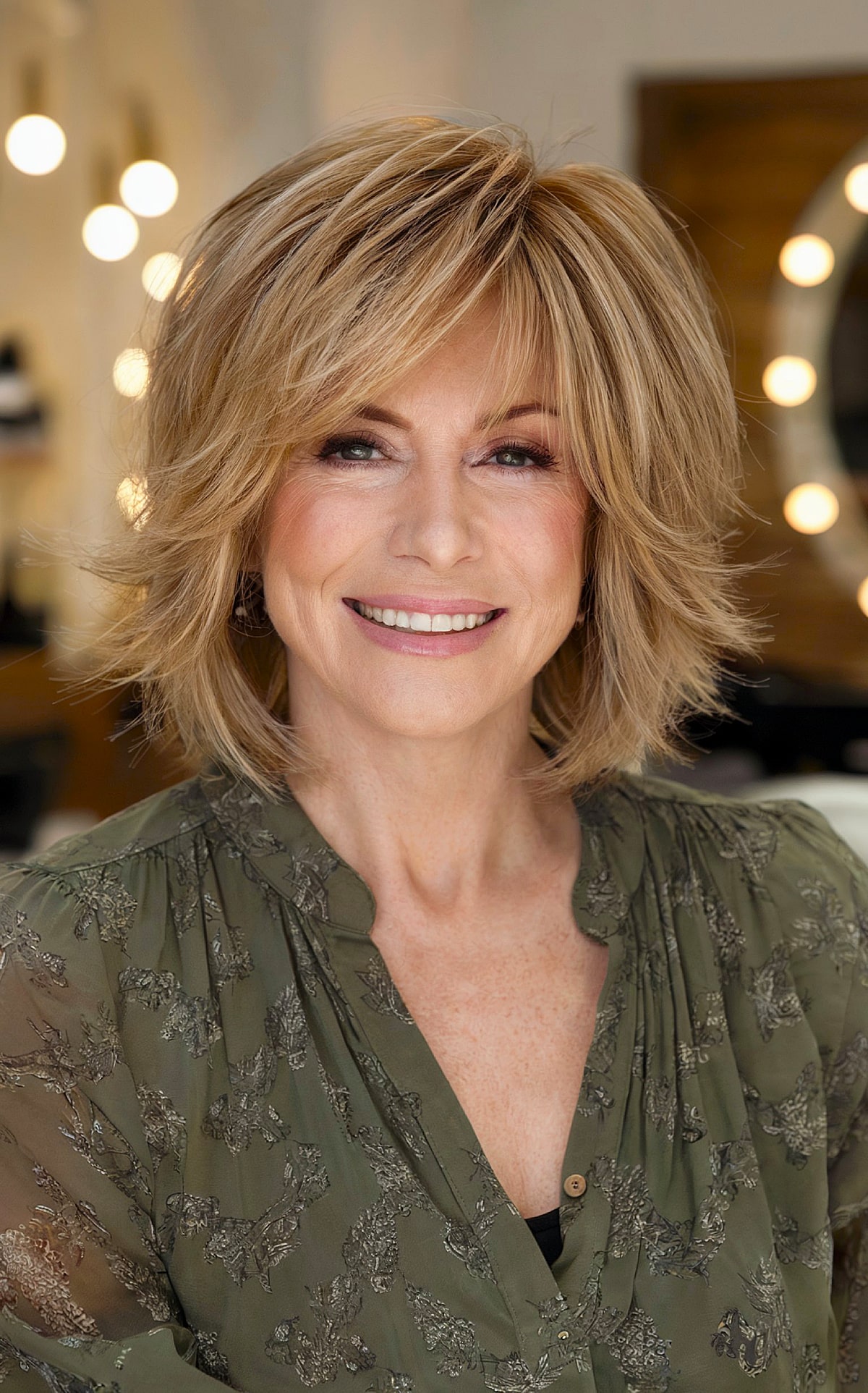
This style involves creating varying lengths of hair strands to add dimension, texture, and movement to a hairstyle that falls between chin and shoulder length. Imagine a cascade of slightly overlapping lengths, creating a dynamic and often voluminous look. This technique can be adapted to suit different hair types and face shapes, offering versatility in styling.
Adding graduated lengths offers numerous advantages. It can create an illusion of fullness for finer hair or remove weight and bulk from thicker hair. This approach allows for personalized shaping, framing the face and accentuating desired features. Historically, layering has evolved from simpler methods to the sophisticated techniques available today, reflecting changing fashion trends and advancements in hairdressing tools and practices.
Further exploration will cover specific types suitable for varying hair textures and face shapes, as well as maintenance and styling tips. Different layering techniques, such as face-framing layers or internal layers, will also be discussed.
1. Face Shape
Harmonizing face shape and hairstyle is crucial for a flattering look. Strategic layering within medium-length hair can soften angular features, add fullness to narrow faces, or create balance for specific face shapes. Understanding these relationships empowers informed decisions regarding cut and style.
-
Round Faces
Round faces benefit from layers that create vertical lines and angles, adding definition and minimizing roundness. Long, sweeping layers that fall below the chin or layers that add volume at the crown can elongate the face. Avoid short, blunt layers, which can accentuate roundness.
-
Oval Faces
Considered the most versatile shape, oval faces generally suit most layered styles. Experimentation with various lengths and layering techniques allows for personalized expression. From textured layers that frame the face to choppy layers that add movement, the options are numerous.
-
Square Faces
Softening the angles of a square face often involves layers that frame the jawline and forehead. Soft, wispy layers around the face create a more rounded appearance. Avoiding blunt, heavy layers near the jaw is key to achieving a harmonious balance.
-
Heart-Shaped Faces
Balancing a wider forehead with a narrower chin can be achieved through layers that add fullness around the chin and jawline. Shoulder-length layers that create volume at the bottom help balance the proportions. Layers that add width near the cheekbones can also enhance this effect.
By considering face shape as a foundational element, individuals can select layered haircuts that enhance their features and create a balanced, stylish aesthetic. Consulting with a stylist can provide personalized recommendations based on individual facial features and hair characteristics, ensuring a tailored and flattering outcome.
2. Hair Texture
Hair texture significantly influences the outcome and suitability of layered haircuts for medium hair. Understanding the interplay between texture and layering techniques is essential for achieving desired results and ensuring manageable, flattering styles. Various textures respond differently to layering, impacting volume, movement, and overall appearance.
-
Fine Hair
Layering can add much-needed volume and movement to fine hair. Strategic layering techniques, such as shorter layers throughout the crown, create lift and fullness. However, excessive layering can thin out the ends, so a balanced approach is crucial. Texturizing techniques can further enhance volume and create a more dynamic look.
-
Thick Hair
Thick hair often benefits from layering to remove bulk and weight, making it more manageable and preventing a heavy, dense appearance. Long layers can create shape and movement without sacrificing fullness. Internal layering, where inner sections are subtly shortened, can reduce weight without compromising the overall density of the hair.
-
Curly Hair
Layering curly hair requires careful consideration to avoid excessive frizz or an overly rounded shape. Layers should be tailored to the curl pattern, working with the natural movement of the hair. Longer layers generally work well, adding shape and definition without disrupting the curl formation. Dry cutting techniques are often preferred to accurately assess the curl pattern and create precise layers.
-
Wavy Hair
Wavy hair can benefit from layers that enhance the natural wave pattern and create a more defined, tousled look. Layers can be placed strategically to encourage wave formation and add volume. Shorter layers around the face can frame features and add texture. The specific layering technique will depend on the tightness and consistency of the waves.
Selecting the right layering technique based on hair texture is paramount for achieving a successful and flattering medium-length haircut. This tailored approach ensures that the layers complement the natural characteristics of the hair, enhancing its beauty and manageability while avoiding undesirable outcomes such as excessive volume, thinning, or an undefined shape. Consultation with a skilled stylist is recommended to determine the optimal layering strategy for individual hair textures and desired styles.
3. Styling Versatility
Styling versatility represents a significant advantage of layered haircuts for medium hair. The interplay of varying lengths allows for a wider range of styling options compared to one-length cuts. This adaptability stems from the ability to manipulate the layers to create different textures, volumes, and silhouettes. For instance, layers can be styled straight for a sleek, polished appearance, curled for added volume and bounce, or texturized for a tousled, effortless look. This inherent flexibility allows individuals to adapt their hairstyle to various occasions and personal preferences.
The graduated structure of layered hair provides the foundation for this versatility. Shorter layers around the crown can be lifted for increased volume, while longer layers can be styled to frame the face or create movement. This dynamic interplay of lengths offers opportunities for customization, enabling individuals to achieve diverse looks ranging from classic to contemporary. The ability to easily transition between different styles contributes significantly to the popularity of layered haircuts. This adaptability is particularly valuable in today’s fast-paced world, where individuals often require hairstyles suitable for both professional and social settings.
In summary, the layered approach to medium-length hair unlocks a spectrum of styling possibilities, empowering individuals with adaptable looks to suit various contexts and personal preferences. This inherent versatility, derived from the interplay of varying hair lengths, contributes significantly to the enduring appeal of layered haircuts. Understanding how to manipulate these layers through different styling techniques allows individuals to maximize the potential of this adaptable cut and achieve a range of looks tailored to their individual needs and aesthetic preferences.
Layered Haircuts for Medium Hair
This exploration has highlighted the multifaceted nature of layered haircuts for medium hair. From the interplay of face shape and hair texture to the diverse styling options available, the adaptability and potential of this haircutting technique have been thoroughly examined. Strategic layering empowers individuals to achieve personalized looks that enhance natural features and cater to individual preferences. The discussion encompassed the importance of considering face shape to create harmonious proportions, the impact of hair texture on layering techniques, and the styling versatility inherent in graduated lengths.
Ultimately, achieving a successful layered haircut relies on a confluence of informed decision-making and skilled execution. Careful consideration of individual characteristics, combined with the expertise of a skilled stylist, allows individuals to harness the full potential of layered haircuts. This approach fosters a personalized and flattering outcome, transforming medium-length hair into a canvas for self-expression and stylistic versatility.