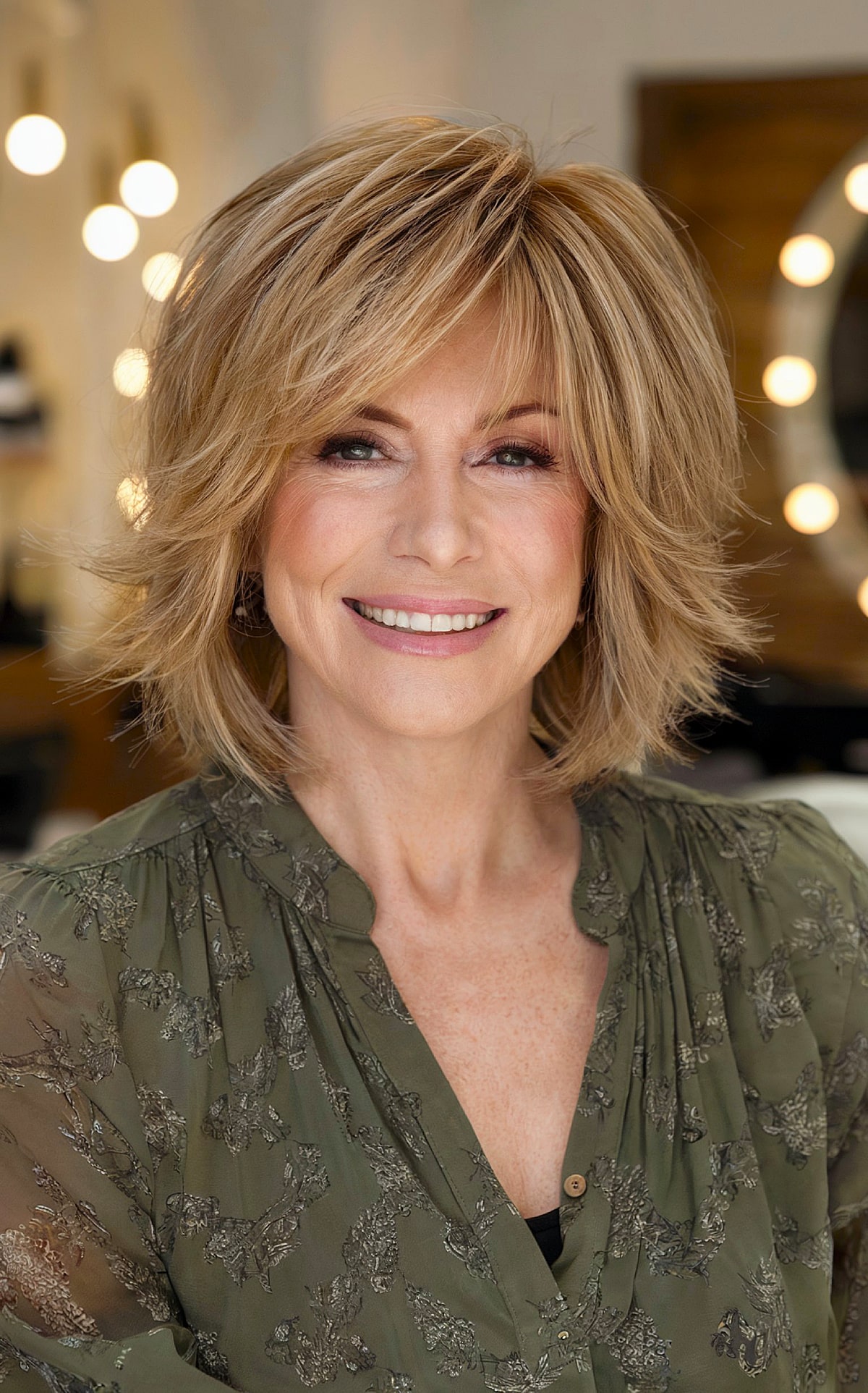
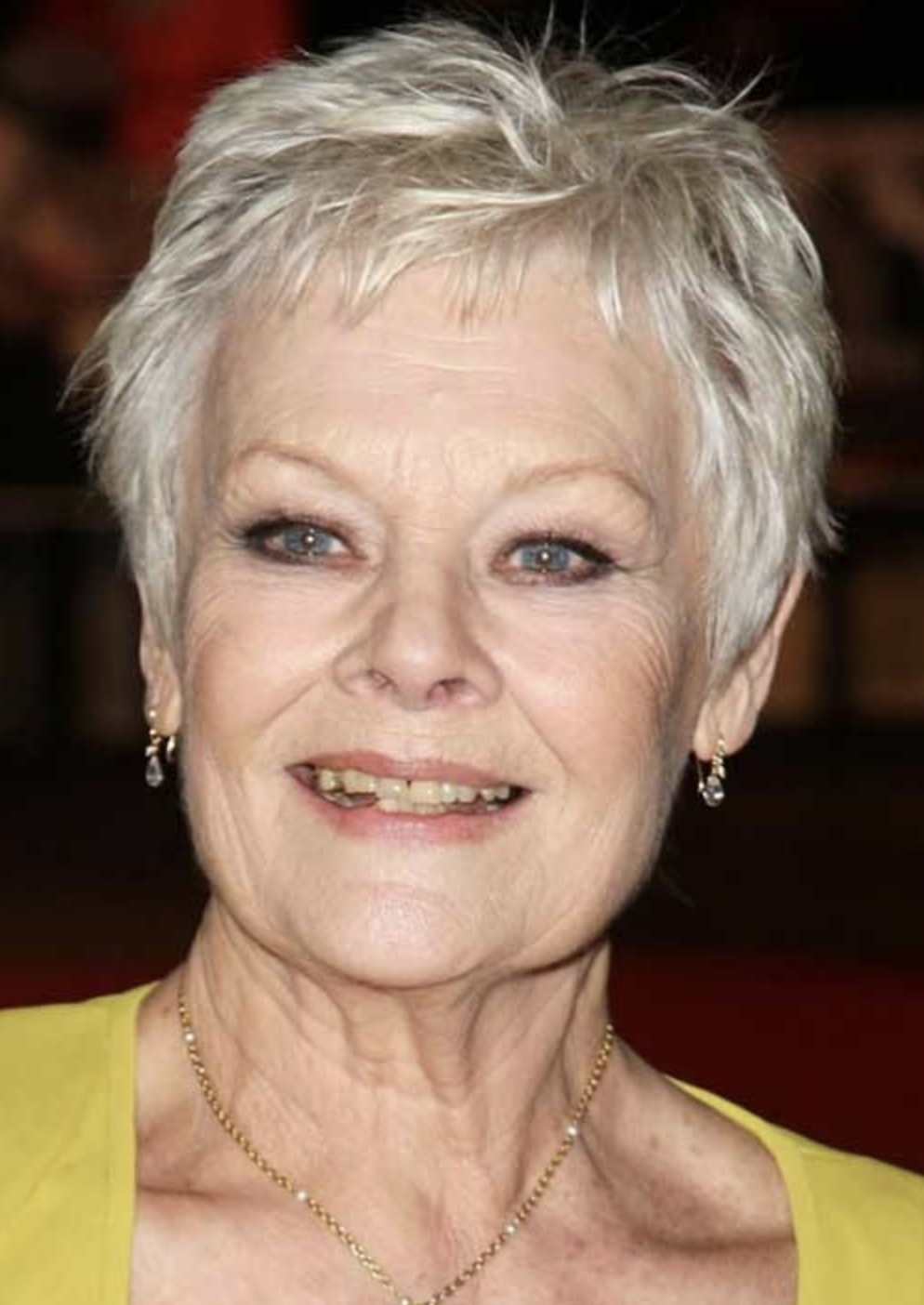
Certain hairstyles can create the illusion of a smaller or more proportionally balanced forehead for those who perceive theirs as large. These styles often involve bangs, layers, or volume at the crown to draw attention away from the forehead and towards other facial features. For instance, a soft, side-swept bang can camouflage a portion of the forehead while adding a touch of elegance. Layered cuts around the face can also soften the appearance and create a more harmonious balance.
Choosing a suitable hairstyle can significantly impact one’s self-confidence and overall appearance. A well-chosen cut can enhance facial features and create a more flattering frame for the face. Historically, hairstyles have played a crucial role in aesthetics and self-expression, and finding a style that complements one’s features remains an essential aspect of personal grooming. A balanced and harmonious look can contribute positively to self-esteem and create a sense of poise.
This article will further explore various hairstyles suitable for individuals seeking to create this balanced look, including specific cut recommendations, styling tips, and advice on consulting with professional stylists to achieve personalized results.
1. Bangs
Bangs play a crucial role in hairstyles designed to balance a larger forehead. They offer a versatile and effective way to create the illusion of a smaller forehead by partially obscuring it. Different bang styles achieve this in diverse ways, offering personalized options for various face shapes and hair textures.
-
Blunt Bangs
A straight, heavy fringe cut across the forehead can dramatically reduce its perceived size. This style works particularly well for individuals with longer faces, as it creates a horizontal line that shortens the face visually. However, blunt bangs require regular trimming to maintain their shape and effectiveness.
-
Side-Swept Bangs
These bangs are angled and swept to one side, creating a softer, more versatile look. They offer a less dramatic approach than blunt bangs, subtly camouflaging a portion of the forehead while adding a touch of elegance and movement. Side-swept bangs are adaptable to various face shapes and hair textures.
-
Wispy Bangs
Thin, textured bangs create a delicate frame around the face without completely covering the forehead. This style softens the hairline and adds a touch of femininity. Wispy bangs can be particularly flattering for individuals with finer hair or those seeking a low-maintenance option.
-
Curtain Bangs
Parted down the middle and framing the face on both sides, curtain bangs create a soft, ’70s-inspired look. They offer a balanced approach, partially obscuring the forehead while also adding volume and movement around the face. This style complements various face shapes and can be adapted to different hair lengths.
The choice of bang style depends on individual preferences, face shape, and hair texture. Consulting with a stylist can help determine the most flattering and manageable option for creating a harmonious balance and minimizing the appearance of a larger forehead. Careful consideration of these factors ensures that the chosen bang style complements other facial features and contributes to a cohesive overall appearance.
2. Face-Framing Layers
Face-framing layers play a significant role in balancing facial proportions, particularly for individuals seeking to minimize the appearance of a larger forehead. Strategically placed layers draw attention away from the forehead and towards other features, creating a more harmonious overall look. The length, texture, and placement of these layers contribute significantly to the final effect.
-
Length and Placement of Layers
Shorter layers around the cheekbones and jawline add volume and definition, drawing the eye downwards. Longer layers can create a softer, more elongated look. The starting point and gradation of these layers are crucial for achieving the desired effect. For instance, layers beginning at chin level can soften a strong jawline, while layers starting higher up can add fullness around the cheeks.
-
Texture and Movement
The texture of the layers contributes to the overall flow and movement of the hairstyle. Choppy layers create a more textured and dynamic look, while softer, blended layers provide a smoother, more polished appearance. Texturizing techniques, such as point cutting or razor cutting, can further enhance the movement and dimension of the layers, contributing to a more visually interesting and balanced style.
-
Adaptability to Hair Types
Face-framing layers can be adapted to suit various hair types and textures. For fine hair, strategically placed layers can create the illusion of volume and fullness. For thicker hair, layers can remove weight and add movement, preventing the hair from appearing too bulky. Understanding the individual’s hair type is crucial for determining the optimal layering technique and achieving the desired outcome.
-
Synergy with Other Styling Elements
Face-framing layers work synergistically with other styling elements, such as bangs and crown volume, to create a cohesive and balanced look. They complement these elements by adding texture, movement, and dimension around the face, further softening the appearance of a larger forehead. The combination of these elements contributes to a more flattering and harmonious overall style.
By carefully considering the length, texture, and placement of face-framing layers, individuals can achieve a hairstyle that complements their features and creates a more balanced and proportional appearance. The strategic use of these layers contributes significantly to the overall effectiveness of hairstyles designed to minimize the prominence of a larger forehead.
3. Volume at the Crown
Volume at the crown plays a crucial role in balancing facial proportions and is a key element in hairstyles designed to complement a larger forehead. By adding height and lift at the top of the head, it creates the illusion of a more oval face shape, minimizing the perceived prominence of the forehead. This technique shifts the focal point upwards, drawing attention away from the forehead and creating a more harmonious overall appearance.
-
Creating Height and Lift
Various techniques can achieve volume at the crown, including backcombing, volumizing products, and specific haircutting techniques. Backcombing, also known as teasing, involves gently combing sections of hair towards the scalp to create lift and fullness. Volumizing mousses, sprays, and powders add texture and body to the hair, enhancing its ability to hold volume. Layered haircuts, particularly those with shorter layers at the crown, naturally create lift and movement.
-
Balancing Facial Proportions
Adding volume at the crown helps balance the proportions of the face by creating a more symmetrical appearance. For individuals with larger foreheads, this added height visually shortens the face, making it appear more oval and balanced. This balancing effect contributes significantly to the overall harmony of the hairstyle and facial features.
-
Styling Techniques for Different Hair Types
Different hair types require specific styling techniques to achieve optimal volume at the crown. Fine hair may benefit from lightweight volumizing products and gentle backcombing to avoid breakage. Thicker hair may require stronger hold products and more aggressive teasing to create the desired lift. Understanding individual hair characteristics is essential for choosing the right products and techniques.
-
Complementing Other Styling Elements
Volume at the crown works in conjunction with other styling elements, such as bangs and face-framing layers, to create a cohesive and flattering look. The combination of these elements contributes to a more balanced and harmonious appearance, effectively minimizing the perceived size of the forehead while enhancing other facial features. This synergy is crucial for achieving a stylish and well-proportioned overall style.
The strategic use of volume at the crown is an essential component in creating hairstyles that flatter individuals with larger foreheads. By adding height and lift, it balances facial proportions and draws attention upwards, minimizing the prominence of the forehead and contributing to a more harmonious and aesthetically pleasing overall look. This technique, combined with other styling elements, empowers individuals to embrace and enhance their unique features.
Styling Solutions for Larger Foreheads
Various hairstyle elements can effectively create a balanced and harmonious look for individuals with larger foreheads. Bangs, face-framing layers, and volume at the crown each contribute uniquely to minimizing forehead prominence. Careful consideration of bang styles, layer placement and texture, and volume-enhancing techniques allows for personalized solutions tailored to individual preferences and hair characteristics. The strategic combination of these elements yields the most flattering and balanced results.
Ultimately, achieving a flattering hairstyle involves understanding facial proportions and selecting complementary elements. Professional consultation with a stylist can provide personalized guidance, ensuring a style that enhances confidence and complements individual features. This empowers individuals to embrace and celebrate their unique attributes through informed stylistic choices.