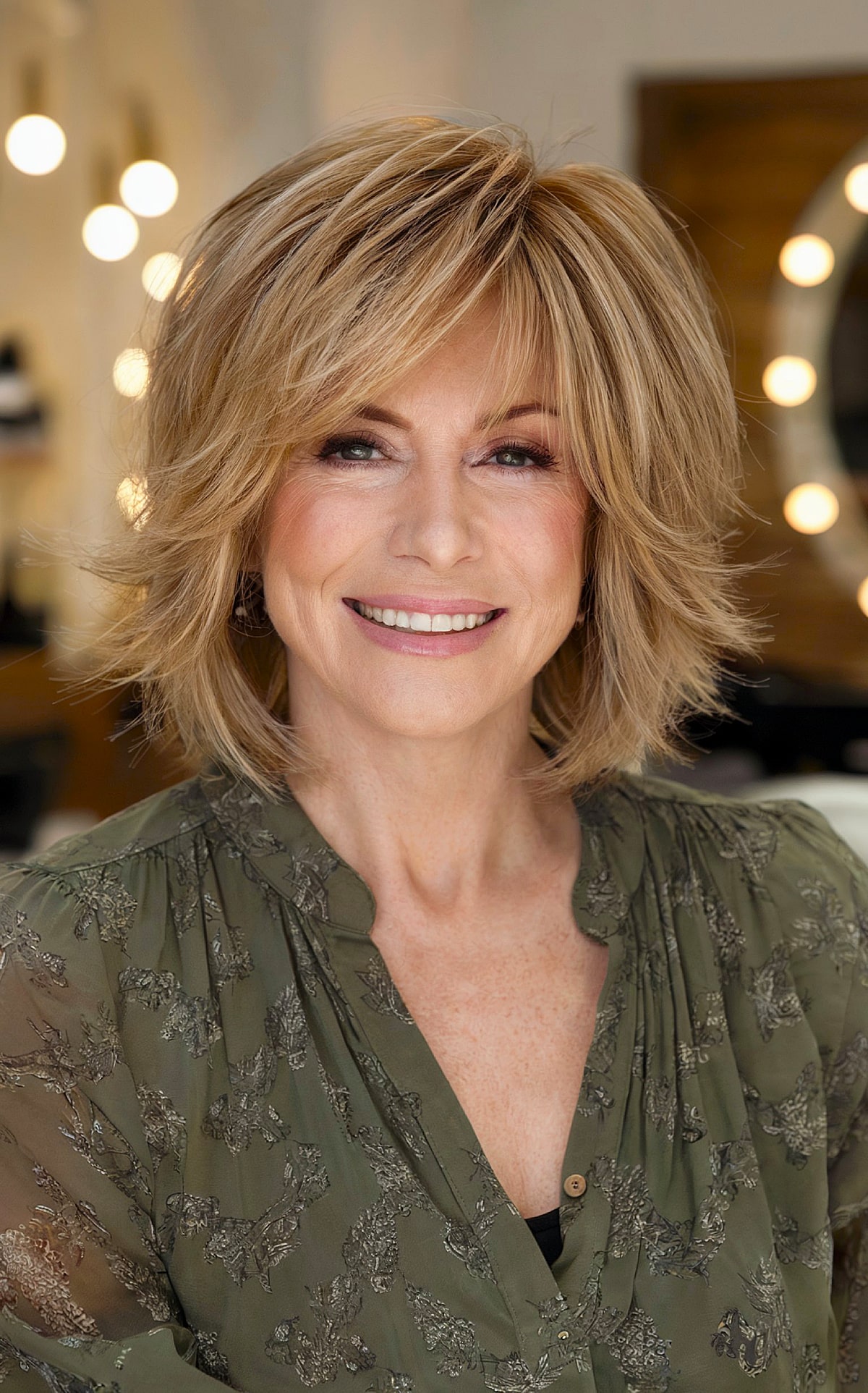
Shoulder-grazing cuts in shades of blonde encompass a versatile range of styles. From layered shags and textured bobs to sleek, one-length lobs and tousled waves, these looks offer adaptability for various hair textures and face shapes. Imagine, for instance, sun-kissed beach waves falling just below the collarbone, or a smooth, angled bob framing the face with icy platinum highlights.
This hair length offers a balance between short and long styles, providing manageability and styling ease while retaining enough length for updos and braids. Historically, mid-length hair has cycled in and out of fashion, often reflecting societal shifts and evolving beauty standards. Currently, its popularity stems from its practicality and the wide array of styling options available, appealing to individuals seeking a contemporary, low-maintenance yet chic appearance.
The following sections will delve into specific styling techniques, product recommendations, and maintenance tips for achieving and preserving these coveted looks. Further exploration will also address considerations for different face shapes, hair types, and skin tones to personalize this adaptable style.
1. Face Shape
Face shape plays a crucial role in determining the most flattering medium-length blonde hairstyle. A well-chosen cut can accentuate desirable features and soften or balance others. Understanding the interplay between face shape and hairstyle allows for a harmonious and aesthetically pleasing result. For instance, a long, layered cut can create the illusion of length for round faces, while a blunt bob can add structure to a heart-shaped face. A skilled stylist considers face shape as a foundational element in crafting a personalized look.
Several common face shapes benefit from specific medium-length blonde styles. Oval faces offer versatility, suiting most cuts and styles. Round faces benefit from styles that add height and length, such as layered cuts or those with off-center parts. Square faces can be softened with wavy or textured styles that frame the jawline. Heart-shaped faces often suit styles with fullness at the bottom, balancing the wider forehead. Oblong faces can appear shorter with brow-skimming bangs and added volume at the sides.
Considering face shape when choosing a medium-length blonde hairstyle ensures a flattering and balanced outcome. This understanding empowers individuals to select styles that enhance their natural features and achieve a cohesive overall look. While personal preference remains paramount, acknowledging the impact of face shape contributes significantly to a successful and satisfying hairstyle choice. Careful consideration of these principles ensures a style that enhances rather than detracts from one’s appearance.
2. Hair Texture
Hair texture significantly influences the suitability and outcome of medium-length blonde hairstyles. Understanding the interplay between texture and cut is crucial for achieving the desired look and ensuring manageability. Fine, medium, and thick hair textures each present unique opportunities and challenges when styled into shoulder-grazing blonde looks. For example, fine hair might appear limp and lifeless with a blunt, one-length cut, while a layered or textured style can create the illusion of volume and movement. Conversely, thick hair might appear overly voluminous with excessive layering, benefiting instead from a blunter cut to control weight and shape. The inherent qualities of the hair fiber directly impact how the style holds, its overall shape, and the styling techniques required to achieve and maintain the desired appearance.
Specific styling approaches cater to different hair textures within this length range. Fine hair often benefits from volumizing products and techniques that create lift at the roots, such as backcombing or using hot rollers. Texturizing sprays and dry shampoos can also add volume and grip, enhancing the appearance of fullness. Medium-textured hair offers more versatility, adapting well to both layered and blunt cuts. This texture typically holds styles well and responds favorably to various styling tools and products. Thick hair may require thinning shears to remove bulk and prevent the style from appearing too heavy or wide. Smoothing serums and creams can help manage frizz and enhance shine. The choice of styling products and techniques should align with the specific texture to achieve the desired result.
Careful consideration of hair texture is essential for achieving a successful and satisfying medium-length blonde hairstyle. This understanding allows for realistic expectations regarding how the style will hold, the level of maintenance required, and the most effective styling techniques. Addressing texture-specific needs ensures a flattering and manageable look that complements natural hair characteristics. Ultimately, recognizing the impact of hair texture contributes to a harmonious balance between the desired aesthetic and the realities of individual hair properties.
3. Skin Tone
Skin tone plays a vital role in determining the most flattering shade of blonde for medium-length hairstyles. Harmonizing hair color with complexion creates a cohesive and balanced look, enhancing natural features and avoiding a washed-out or jarring appearance. Careful consideration of undertonesthe subtle hues beneath the surface of the skinguides the selection process and ensures a complementary pairing between skin tone and hair color.
-
Warm Undertones
Individuals with warm undertonestypically exhibiting golden, peachy, or yellow hues in their skinoften look best with golden, honey, or caramel blonde shades. These warmer blonde tones complement the skin’s natural warmth, creating a harmonious and radiant effect. Examples include celebrities with warm complexions choosing buttery blonde hues to enhance their features.
-
Cool Undertones
Cool undertonescharacterized by pink, red, or blue huesgenerally harmonize well with ashy, platinum, or icy blonde shades. These cooler blonde tones complement the skin’s natural coolness, preventing a clash between warm and cool colors. Celebrities with cool complexions often opt for icy platinum or beige blonde shades to enhance their porcelain skin.
-
Neutral Undertones
Neutral undertones, a blend of warm and cool hues, offer greater flexibility in blonde shade selection. Individuals with neutral undertones can often wear both warm and cool blonde tones successfully. This versatility allows for experimentation and personalized choices based on individual preferences. Examples include individuals with neutral undertones exploring a wide spectrum of blonde shades, from strawberry blonde to sandy beige.
-
Depth of Skin Tone
Beyond undertones, the depth of skin tone also influences the choice of blonde shade. Lighter skin tones often pair well with lighter blonde shades, while deeper skin tones can carry richer, darker blonde hues. This consideration ensures a balanced contrast between hair and skin, preventing the hair color from overwhelming or washing out the complexion. Examples include individuals with deep skin tones opting for honey blonde or caramel highlights to complement their rich complexion, while those with lighter skin tones might choose baby blonde or platinum hues.
By carefully considering skin tone and its underlying undertones, individuals can select a medium-length blonde hairstyle that enhances their natural beauty and creates a harmonious overall appearance. Understanding this interplay allows for a more informed and personalized approach to hair color selection, resulting in a flattering and complementary look. This knowledge empowers individuals to confidently choose a shade of blonde that complements their unique complexion and enhances their overall style.
4. Styling Techniques
Styling techniques significantly impact the versatility and aesthetic of medium-length blonde hairstyles. The interplay between cut, color, and styling creates a cohesive look, allowing individuals to personalize their appearance. Various techniques, from classic blowouts and curling iron sets to modern beach waves and textured styles, offer diverse options for shaping and defining these versatile cuts. The choice of technique depends on the desired outcome, hair texture, and face shape, impacting the overall impression and suitability for different occasions. For example, a sleek, straight style achieved through a precise blowout can project a polished, professional image, while tousled waves created with a curling wand offer a more relaxed, bohemian vibe. Understanding the impact of different styling techniques empowers individuals to adapt their look to suit various contexts and express personal style.
Specific styling techniques enhance the inherent qualities of medium-length blonde hair. Blowouts, using a round brush and hairdryer, create volume, smoothness, and shape, providing a foundation for various looks. Curling irons and wands produce defined curls and waves, adding texture and movement. Flat irons straighten hair, achieving a sleek and polished finish. Braiding techniques offer intricate updos and casual everyday styles, capitalizing on the sufficient length for versatile manipulation. The use of styling products, such as mousses, gels, serums, and sprays, further enhances these techniques, providing hold, texture, and shine. Consider, for instance, the impact of a volumizing mousse applied before blow-drying fine hair, creating lift and fullness, or a texturizing spray used to enhance waves and create a beachy effect. These techniques, combined with appropriate products, allow for a wide spectrum of styles, from classic to contemporary, tailored to individual preferences and occasions.
Mastering styling techniques specific to medium-length blonde hair allows individuals to maximize the potential of this versatile length. Understanding the impact of each technique, from the classic blowout to the intricacies of braiding, empowers individuals to achieve diverse looks, adapting their style to suit various contexts and express personal style. Moreover, recognizing the role of styling products in enhancing these techniques allows for greater control and precision in achieving desired results. This knowledge fosters confidence and creativity in managing and styling medium-length blonde hair, ensuring a polished and personalized appearance.
5. Maintenance
Maintaining the vibrancy and health of medium-length blonde hairstyles requires consistent effort and a tailored approach. Blonde hair, particularly when chemically treated, can be prone to dryness, breakage, and color fading. A dedicated maintenance routine preserves the desired shade, shine, and overall health of the hair, ensuring the longevity of the style and minimizing damage.
-
Regular Trims
Regular trims, typically every 6-8 weeks, prevent split ends and breakage, preserving the hair’s overall health and appearance. Split ends, if left unaddressed, can travel up the hair shaft, causing further damage and weakening the hair. Regular trims maintain the shape and integrity of the hairstyle, preventing it from appearing frayed or uneven. This practice is particularly important for layered styles, ensuring the layers remain defined and the overall shape remains balanced. For example, maintaining regular trims helps prevent a layered bob from losing its shape and becoming bottom-heavy due to split ends weighing down the lower layers. Trimming also removes dry, damaged ends, which contributes to maintaining a healthier appearance.
-
Color Upkeep
Maintaining blonde hair color requires regular touch-ups, especially for those with highlights, balayage, or all-over color. Root touch-ups and toning treatments refresh the color, preventing fading and maintaining the desired shade. The frequency of touch-ups depends on the chosen coloring technique and the rate of hair growth. For instance, highlights might require less frequent touch-ups than all-over color. Toning treatments help neutralize unwanted brassy or yellow tones, which can develop over time due to environmental factors, product buildup, or the natural oxidation of the hair color. These treatments restore the desired cool or warm tones, preserving the vibrancy and overall aesthetic of the blonde shade. Using color-safe shampoos and conditioners specifically formulated for blonde hair helps maintain the vibrancy and prevent premature fading.
-
Hydration and Conditioning
Blonde hair, particularly chemically treated blonde hair, often requires extra hydration and conditioning to combat dryness and maintain elasticity. Deep conditioning treatments, hair masks, and leave-in conditioners replenish moisture and strengthen the hair shaft, preventing breakage and promoting shine. Hydrated hair appears healthier, reflects light better, and is less prone to frizz and tangling. The frequency of deep conditioning treatments depends on the individual’s hair needs and the level of dryness or damage. Some individuals might benefit from weekly treatments, while others might find bi-weekly or monthly treatments sufficient. Incorporating hydrating hair oils, such as argan oil or coconut oil, can further enhance moisture retention and improve the overall health and appearance of the hair.
-
Heat Protection
Heat styling tools, while effective for achieving various looks, can damage hair if used excessively or without proper protection. Applying heat protectant sprays or serums before using hot tools, such as hairdryers, curling irons, and flat irons, minimizes heat damage and preserves the integrity of the hair. Heat protectants create a barrier between the hair and the heat, reducing the risk of breakage, dryness, and color fading. Furthermore, using lower heat settings and limiting the frequency of heat styling also contributes to maintaining healthy hair. Embracing air-drying whenever possible allows the hair to recover from heat exposure and retain its natural moisture. These practices are particularly important for maintaining the health and vibrancy of chemically treated blonde hair, which tends to be more susceptible to heat damage.
Consistent adherence to a tailored maintenance routine ensures the long-term health, vibrancy, and beauty of medium-length blonde hairstyles. Addressing the specific needs of blonde hair, from regular trims and color upkeep to hydration and heat protection, preserves the desired look and minimizes damage. By integrating these practices, individuals can enjoy a vibrant and healthy blonde style that remains manageable, shiny, and aesthetically pleasing.
Conclusion
Medium-length blonde hairstyles offer a versatile canvas for personal expression, adaptable to various face shapes, hair textures, and skin tones. Achieving a harmonious and flattering look requires careful consideration of these individual factors, alongside a dedicated maintenance routine. From face-framing layers and textured bobs to sleek lobs and tousled waves, the possibilities within this length range are extensive. Styling techniques further enhance this versatility, allowing for personalized looks ranging from polished and professional to relaxed and bohemian. Maintaining the health and vibrancy of blonde hair necessitates consistent care, including regular trims, color upkeep, hydration, and heat protection. These practices ensure the longevity of the chosen style and minimize potential damage from chemical treatments and heat styling.
Ultimately, the enduring appeal of these hairstyles lies in their adaptability and capacity for personalization. By understanding the interplay between cut, color, styling, and maintenance, individuals can achieve a look that complements their unique features and reflects their personal style. This knowledge empowers informed choices, ensuring a satisfying and sustainable approach to embracing the versatility and aesthetic potential of medium-length blonde hair.