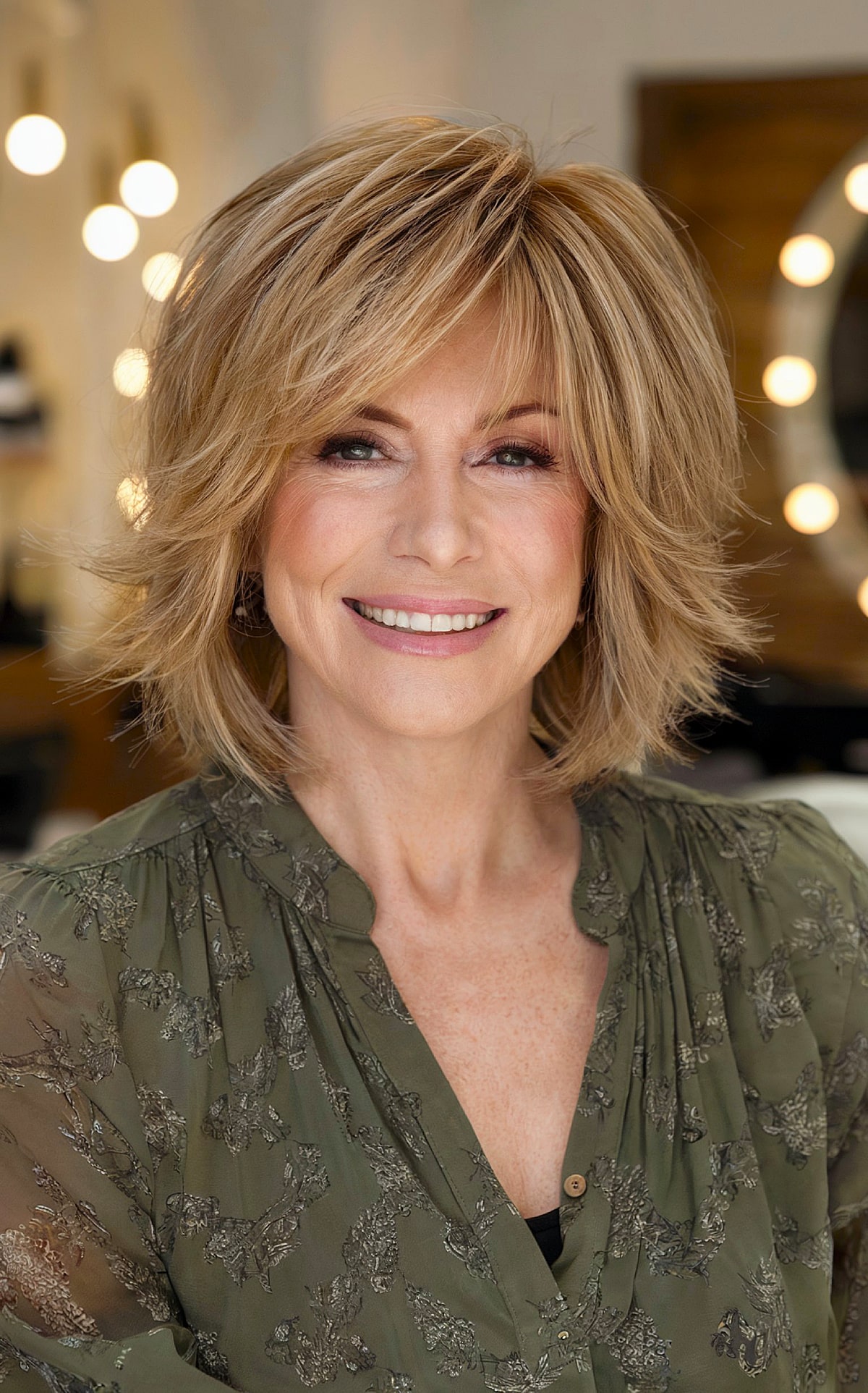
This style involves creating varying lengths of hair, typically longer at the bottom and gradually shorter towards the crown, resulting in a textured, voluminous appearance. Imagine cascading tiers of hair, each slightly shorter than the one below, adding movement and dimension. This technique can be adapted to suit various hair types and face shapes, offering versatility in styling.
The graduated structure of these hairstyles adds body and fullness, which can be particularly flattering for those with fine or thin hair. It also offers styling flexibility, allowing for sleek straight looks, bouncy curls, or effortless waves. Historically, layered haircuts have evolved from simpler, blunt cuts to more intricate and personalized styles, reflecting changing fashion trends and improved cutting techniques. This evolution has made layered hair a timeless choice, adaptable to both classic and contemporary aesthetics.
Further exploration will cover topics such as suitable face shapes and hair textures, different layering techniques, styling tips, and maintenance advice for these versatile haircuts.
1. Face Shape
Face shape plays a crucial role in determining the most flattering long layered haircut. A skilled stylist considers face shape to create layers that enhance features and balance proportions. For instance, long layers framing a round face can create the illusion of length and slim the face. Conversely, adding volume through layers at the crown can balance a heart-shaped face, adding width where it’s needed. Understanding the relationship between face shape and layering allows for a personalized approach, ensuring the haircut complements individual features.
Specific examples illustrate this connection further. Individuals with square faces often benefit from soft, rounded layers to soften angular features. Oval faces, considered the most versatile, can typically accommodate a wide range of layered styles. However, even with an oval face, layering can still enhance features by adding volume or creating movement. The interaction between face shape and layering technique becomes a crucial element in achieving a harmonious and balanced look.
In conclusion, the interplay between face shape and long layered haircuts is a key element of successful hairstyling. Recognizing the impact of layers on different face shapes empowers individuals to make informed decisions and collaborate with stylists to achieve the most flattering and personalized look. This understanding emphasizes the importance of a consultative approach to hairstyling, considering individual features and desired outcomes.
2. Hair Texture
Hair texture significantly influences the outcome of long layered haircuts. Understanding the interplay between texture and layering techniques is essential for achieving the desired look and ensuring styling ease. This exploration delves into the nuances of different hair textures and their impact on layered styles.
-
Fine Hair
Fine hair often benefits from layers that add volume and movement without thinning out the ends excessively. Shorter, blended layers can create the illusion of fullness, while avoiding heavy layering that might result in a stringy appearance. Consider layering techniques that build texture and body, such as point cutting or texturizing shears. This approach allows for a balanced, voluminous look without compromising the overall density.
-
Thick Hair
Thick hair can appear bulky without layers to remove weight and add shape. Long layers can create movement and prevent the hair from looking overly heavy. Techniques like thinning shears or slide cutting can reduce bulk and create a more manageable, flowing style. Layering helps thick hair lie smoothly and prevents it from overwhelming facial features.
-
Straight Hair
Straight hair showcases layers with precision, creating clean lines and defined shapes. Long, subtle layers can add movement and dimension without disrupting the sleekness. Blunt cutting techniques can create a strong, graphic effect, while layered ends add a touch of softness. The versatility of straight hair allows for various layering styles, from subtle to dramatic.
-
Curly and Wavy Hair
Curly and wavy hair presents unique opportunities and challenges with layering. Layers can enhance the natural curl pattern and create a more defined shape, but excessive layering can lead to frizz or uneven curl distribution. Layering techniques specific to curly hair, such as dry cutting or the DevaCut method, focus on shaping the curls while maintaining their integrity. Proper layering enhances the bounce and definition of curls, preventing a triangular or bulky silhouette.
Ultimately, the interaction between hair texture and layering dictates the final look and manageability of long layered haircuts. A skilled stylist considers these factors to create a customized approach, ensuring the layers enhance the natural texture and achieve the desired style. This understanding empowers individuals to collaborate with stylists and make informed decisions regarding layering techniques and styling approaches, resulting in a personalized and flattering haircut.
3. Layering Techniques
Layering techniques form the foundation of successful long layered haircuts. A thorough understanding of these techniques allows stylists to manipulate hair length and create various effects, impacting volume, movement, and overall shape. The following exploration delves into essential layering techniques and their specific application in creating long layered styles.
-
Point Cutting
Point cutting involves snipping the ends of the hair at an angle, creating texture and removing bulk. This technique softens the ends of the layers, preventing blunt lines and promoting a more blended, natural look. Point cutting contributes to movement and allows for seamless transitions between layers, particularly beneficial for creating feathered or textured styles in long hair.
-
Slide Cutting
Slide cutting involves sliding the shears along the length of the hair shaft, removing weight and creating soft, blended layers. This technique produces a seamless transition between lengths, adding movement and reducing bulk without harsh lines. Slide cutting is particularly effective for blending layers in long hair and creating a fluid, natural appearance.
-
Razor Cutting
Razor cutting utilizes a straight-edge razor to create textured, wispy ends. This technique adds a distinct edginess to the layers, creating a more piecey, separated look. Razor cutting is particularly well-suited for creating choppy layers or adding texture to fine hair, though it requires careful consideration based on hair texture to avoid unwanted frizz or damage.
-
Layering with Texturizing Shears
Texturizing shears, also known as thinning shears, remove bulk and create texture without affecting the overall length. These shears feature teeth that remove only a portion of the hair with each cut, resulting in a softer, more diffused effect. Texturizing shears can be used to blend layers, create movement, or remove excess weight in thick hair, adding versatility to layering techniques.
The selection and application of these layering techniques depend on the desired outcome, hair texture, and face shape. A skilled stylist understands the nuances of each technique and applies them strategically to achieve the desired look. Mastering these techniques allows for precision and control in creating long layered haircuts, ensuring a personalized and flattering style.
4. Styling Options
Styling options represent a crucial aspect of long layered haircuts for women, directly influencing the final appearance and versatility of the style. The layered structure provides a foundation for diverse styling possibilities, ranging from sleek and polished to voluminous and textured. Understanding the interplay between layering and styling techniques allows individuals to maximize the potential of their haircut and achieve varied looks.
The length and distribution of layers significantly impact styling outcomes. Long, subtle layers offer a foundation for smooth, flowing styles, easily straightened or curled for a polished finish. More pronounced, shorter layers create texture and volume, lending themselves to tousled, beachy waves or defined curls. The choice of styling tools and products further enhances these effects. For instance, a round brush and volumizing mousse can amplify body and lift at the roots, while a flat iron creates sleek, straight styles. Texturizing sprays and serums enhance definition and separation in layered haircuts, particularly for wavy or curly hair. Examples include using a diffuser to enhance natural curls in layered curly hair or applying a smoothing balm before blow-drying for a sleek, straight look in layered straight hair.
In summary, styling options are integral to the versatility and appeal of long layered haircuts. The interplay between the cut and styling techniques determines the final look, offering a range of possibilities from polished and sophisticated to casual and textured. A thorough understanding of these options empowers individuals to adapt their hairstyle to various occasions and personal preferences, maximizing the potential of their layered haircut. This knowledge translates into practical styling choices, enabling individuals to create diverse looks that complement their individual style and enhance their overall appearance.
Long Layered Haircuts for Women
This exploration has provided a comprehensive overview of long layered haircuts for women, encompassing crucial aspects from face shape and hair texture to layering techniques and styling options. Each element plays a pivotal role in the final outcome, highlighting the importance of a personalized approach. Understanding the interplay between these factors empowers informed decision-making, enabling collaboration between individuals and stylists to achieve desired results. Whether seeking added volume, enhanced texture, or versatile styling possibilities, a thorough understanding of these core principles underpins successful execution and personalized style.
The versatility inherent in long layered haircuts allows for continuous adaptation and evolution within the realm of hairstyling. As trends and techniques progress, the foundational principles discussed remain relevant. By considering individual features and desired aesthetics, long layered haircuts offer a canvas for self-expression and personalized style, ensuring enduring appeal and adaptability across evolving fashion landscapes. Ultimately, informed choices based on these principles pave the way for flattering and personalized hairstyles that enhance individual beauty.