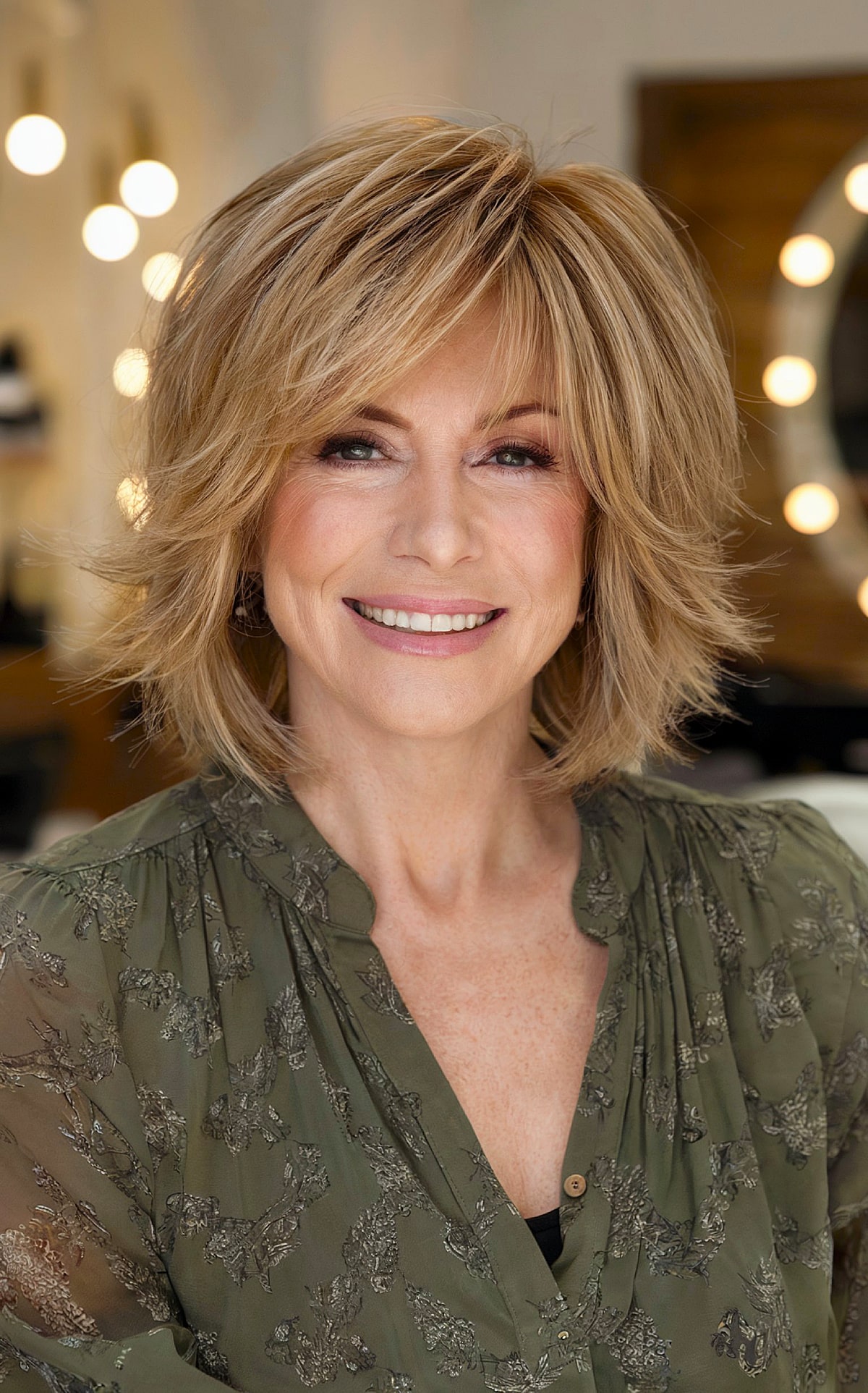
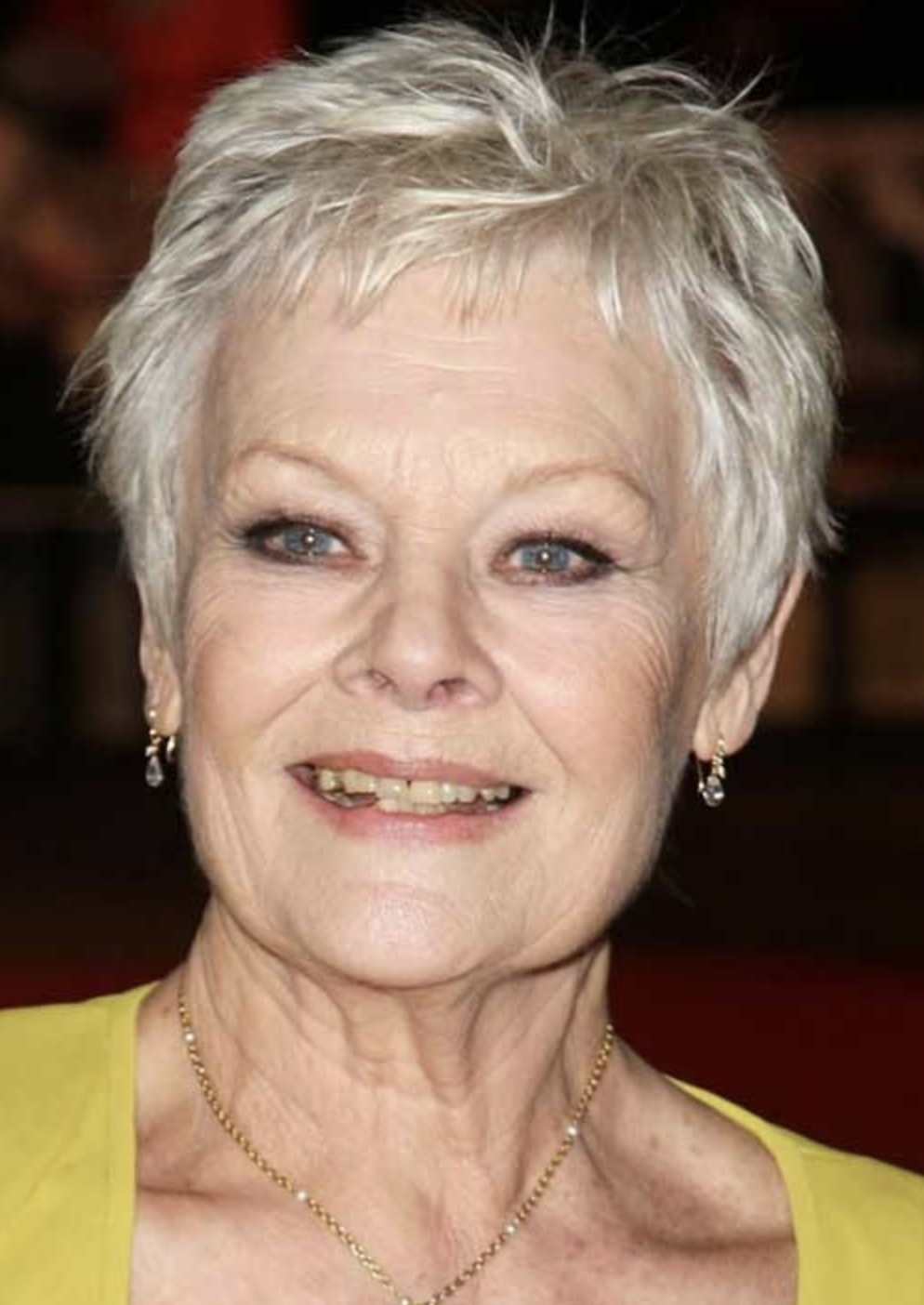
This hairstyle features a cut that falls between the chin and shoulders, incorporating layers to add volume and texture. The addition of bangs, hair cut to fall over the forehead, further frames the face. Variations exist within this style, including the length of the layers, the thickness of the bangs (ranging from wispy to blunt), and the overall shape created, offering diverse looks suitable for various face shapes and hair textures.
A layered cut of this length offers versatility and manageability. The layers provide movement and dimension, making hair appear fuller and more dynamic, while also reducing bulk and weight. Bangs can soften facial features, draw attention to the eyes, or camouflage a high forehead. This style has remained popular across decades, adapting to contemporary trends through subtle shifts in length, layering techniques, and fringe styles. Its enduring appeal stems from its adaptability and ability to flatter a wide range of individuals.
Further exploration of this style can delve into specific variations, face-shape suitability, styling techniques, and maintenance tips. Information regarding product recommendations, professional styling advice, and examples showcasing the diverse possibilities achievable with layered, medium-length hair and bangs will provide readers with comprehensive insights.
1. Face Shape
Face shape plays a crucial role in determining whether a mid-length layered haircut with bangs will be flattering. Careful consideration of facial contours and features allows for a harmonious balance and enhances overall aesthetics. Understanding how different face shapes interact with this particular hairstyle is essential for achieving the desired outcome.
-
Oval Faces
Oval faces are considered the most versatile, generally suiting a wide array of hairstyles. Mid-length layered hair with bangs complements this shape well, as its balanced proportions can accommodate various bang styles and layering techniques. Examples include curtain bangs, side-swept fringes, or even blunt-cut bangs. The adaptability of the oval face shape allows for experimentation within this hairstyle.
-
Round Faces
Round faces benefit from hairstyles that create the illusion of length and definition. Longer layers and bangs that frame the face, such as side-swept or textured bangs, can help elongate the face and soften its roundness. Heavier, blunt-cut bangs should generally be avoided, as they can accentuate the width of the face. The objective is to create a more angular appearance.
-
Square Faces
Square faces often feature a strong jawline and forehead. Layered cuts with soft, textured bangs, like wispy or curtain bangs, help soften these angles and create a more balanced look. Avoid sharp, blunt lines in both the layers and the bangs. The goal is to create a sense of fluidity and diminish the prominence of angular features.
-
Heart-Shaped Faces
Heart-shaped faces are characterized by a wider forehead and a narrower chin. Mid-length layered hair with bangs can balance this shape effectively. Side-swept bangs or curtain bangs that draw attention to the eyes and cheekbones work well. Long layers help to add fullness around the chin area, creating a more harmonious overall appearance.
By analyzing the relationship between face shape and this hairstyle, individuals can make informed decisions about the most suitable variations. A skilled stylist can further personalize the cut and styling to enhance individual features and achieve the most flattering result. Ultimately, the aim is to create a cohesive and balanced look that complements the unique characteristics of each face shape.
2. Hair Texture
Hair texture significantly influences the outcome of a mid-length layered haircut with bangs. Understanding the interplay between texture and cut allows for informed decisions regarding layering techniques, bang styles, and overall suitability. This knowledge ensures a harmonious result that complements natural hair characteristics and minimizes styling challenges.
-
Fine Hair
Fine hair often lacks volume and can appear limp. Layering adds texture and creates movement, giving the illusion of fullness. Choppy layers and textured bangs can further enhance this effect. However, excessive layering can thin out the ends, so a balanced approach is essential. This texture often benefits from styling techniques that boost volume, such as blow-drying with a round brush.
-
Thick Hair
Thick hair can be heavy and difficult to manage. Layering helps remove bulk and creates shape, making it more manageable and less prone to appearing bulky. Longer layers work well with thick hair, preventing it from becoming too poufy. Bangs can be incorporated, but their thickness should be carefully considered to avoid overwhelming the face. Texturizing techniques can further soften the overall look and feel.
-
Curly Hair
Curly hair presents unique considerations. Layering should be approached with caution, as it can result in excessive volume or uneven curl patterns. Longer layers and a focus on shaping the curls are generally preferred. Bangs can be challenging with curly hair, as they require specific styling techniques to blend seamlessly with the rest of the hair. Understanding curl type and working with its natural tendencies is crucial.
-
Wavy Hair
Wavy hair offers a balance between straight and curly textures. Mid-length layered cuts can enhance the natural waves and create a tousled, effortless look. Layering techniques can be tailored to enhance wave definition or create a more relaxed, flowing style. Bangs can complement wavy hair, but careful consideration should be given to their length and texture to ensure they blend seamlessly.
By carefully considering hair texture, individuals can achieve a mid-length layered haircut with bangs that enhances their natural characteristics. This approach ensures a style that is not only visually appealing but also easy to manage and style on a daily basis. Collaboration with a skilled stylist is recommended to determine the most suitable layering techniques and bang style for optimal results.
3. Layer Placement
Layer placement is a critical element in shaping mid-length layered hair with bangs. Strategic placement determines the overall silhouette, volume distribution, and movement within the hairstyle. Understanding the impact of layer placement allows for informed decisions regarding the desired outcome and ensures a tailored result.
-
Crown Layers
Layers placed at the crown add volume and lift at the top of the head. This technique can benefit those with flatter crowns or finer hair textures seeking increased fullness. Crown layers contribute to a balanced overall shape and prevent the style from appearing bottom-heavy. They can also create a more dynamic and less uniform appearance.
-
Face-Framing Layers
Face-framing layers are strategically cut to contour around the face, softening features and adding dimension. These layers can range from subtle, shorter pieces to more pronounced, longer strands. Their purpose is to enhance facial features and create a flattering frame. They can also blend seamlessly with bangs, creating a cohesive and polished look.
-
Internal Layers
Internal layers are cut beneath the surface of the hair, removing weight and adding texture without affecting the overall length. This technique is particularly useful for thick hair, as it reduces bulk and creates movement. Internal layers contribute to a more manageable and less dense feel, while maintaining the desired length and shape.
-
Layered Ends
Layering the ends of the hair creates texture and prevents a blunt, heavy appearance. This technique can be used to create a variety of effects, from subtle movement to a more choppy, piecey look. The degree of layering at the ends influences the overall style and can be adjusted to complement the other layers within the haircut.
The interplay of these layer placement techniques determines the final form and flow of a mid-length layered haircut with bangs. A skilled stylist considers factors like face shape, hair texture, and desired outcome to strategically place layers for optimal results. The ultimate goal is a balanced, flattering style that enhances natural features and achieves the desired aesthetic.
4. Bang Type
Bang type significantly influences the overall aesthetic of mid-length layered hair. The choice of bang style affects face framing, feature emphasis, and the overall balance of the hairstyle. Understanding the relationship between bang type and the layered structure of this cut is crucial for achieving a harmonious and flattering look. Several factors contribute to this relationship, including face shape, hair texture, and desired style. Blunt, heavy bangs create a dramatic, bold statement, particularly effective with straight, thick hair and oval or oblong face shapes. This style, however, can overwhelm round or heart-shaped faces. Softer, wispy bangs offer a more delicate and romantic feel, complementing a variety of face shapes and hair textures, from fine and straight to wavy and textured. This style can soften angular features and create a more ethereal appearance. Side-swept bangs, versatile and adaptable, work well with most face shapes and hair textures. They create asymmetry, drawing attention to the eyes and cheekbones, and offer a more casual, less structured feel than blunt or wispy options. Curtain bangs, a popular contemporary choice, frame the face with a center part, creating a soft, 70s-inspired look. This style pairs well with layered haircuts, adding a touch of retro flair.
The effectiveness of a chosen bang type depends on its integration with the layered structure of the haircut. For instance, heavy bangs paired with heavily layered hair can create an overly textured and choppy look. Conversely, wispy bangs with minimal layering may not provide enough structure or definition. The goal is to achieve a balanced look, where the bangs complement the layers, creating a cohesive and harmonious style. Practical considerations include styling and maintenance. Blunt bangs require regular trimming to maintain their shape and can be prone to separating if hair is naturally oily. Wispy bangs require less frequent trimming but may require styling products to prevent flyaways. Side-swept bangs offer low-maintenance styling and can be easily blended into the rest of the hair. Understanding these practical aspects ensures a chosen bang type aligns with lifestyle and styling preferences.
Bang type selection presents a crucial step in personalizing mid-length layered hair. Careful consideration of face shape, hair texture, and desired aesthetic allows for informed decision-making. Collaboration with a skilled stylist is invaluable for determining the most suitable bang type and ensuring its seamless integration with the layered structure of the haircut. Achieving a balanced and harmonious style that complements individual features and reflects personal style requires a comprehensive understanding of these interconnected elements.
5. Styling Techniques
Styling techniques play a crucial role in maximizing the potential of mid-length layered hair with bangs. The versatility of this haircut allows for a range of styling options, from sleek and polished to tousled and textured. Understanding these techniques empowers individuals to personalize their look and achieve diverse styles suitable for various occasions.
-
Blow-Drying Techniques
Blow-drying offers significant control over volume, shape, and movement. Utilizing a round brush can create volume at the roots and curl the ends inwards or outwards. A paddle brush can achieve a smoother, straighter finish. Directing airflow downwards during blow-drying minimizes frizz and enhances shine. Specific techniques, such as concentrating heat at the roots for lift or using a diffuser attachment for curly or wavy hair, further customize the final result.
-
Heat Styling Tools
Heat styling tools, such as flat irons and curling wands, provide additional styling options. Flat irons can create sleek, straight styles or add subtle bends and waves. Curling wands create defined curls or loose waves, adding texture and volume. Varying barrel sizes allows for different curl sizes and effects. Heat protectant sprays are essential when using these tools to minimize heat damage.
-
Texturizing Products
Texturizing products, including mousses, sprays, and pastes, enhance texture and definition. Mousses applied to damp hair before blow-drying add volume and hold. Texturizing sprays applied to dry hair create a piecey, undone look. Pastes provide a stronger hold and can be used to define individual strands or create a more sculpted style. Product selection depends on desired texture and hair type.
-
Air-Drying Techniques
Air-drying offers a low-maintenance styling option that embraces natural texture. Applying leave-in conditioner or styling cream to damp hair enhances natural wave or curl patterns and minimizes frizz. Techniques such as scrunching or twisting sections of hair can further define texture and create a more polished air-dried look. This method is particularly suitable for wavy or curly hair.
Mastery of these styling techniques allows individuals to adapt their mid-length layered hair with bangs to suit various occasions and personal preferences. From polished and professional to casual and textured, the possibilities are diverse. Understanding the interplay between layering, bang type, and styling technique ensures a cohesive and flattering result. Experimentation and practice are key to discovering the most effective techniques for individual hair characteristics and desired style.
Mid-Length Layered Hair with Bangs
This exploration has delved into the multifaceted nature of mid-length layered hair with bangs, highlighting its adaptability and enduring appeal. From the interplay of face shape and hair texture to the strategic placement of layers and the selection of bang type, each element contributes to the overall aesthetic. Styling techniques further enhance the versatility of this haircut, offering a spectrum of possibilities from sleek and polished to tousled and textured. The analysis underscores the importance of considering individual characteristics and desired outcomes when adopting this style.
Ultimately, the enduring popularity of mid-length layered hair with bangs stems from its capacity for personalization. This adaptability allows individuals to express unique style preferences while maintaining a timeless and flattering look. Continued exploration of individual features, styling techniques, and emerging trends promises further evolution and refinement within this classic hairstyle.