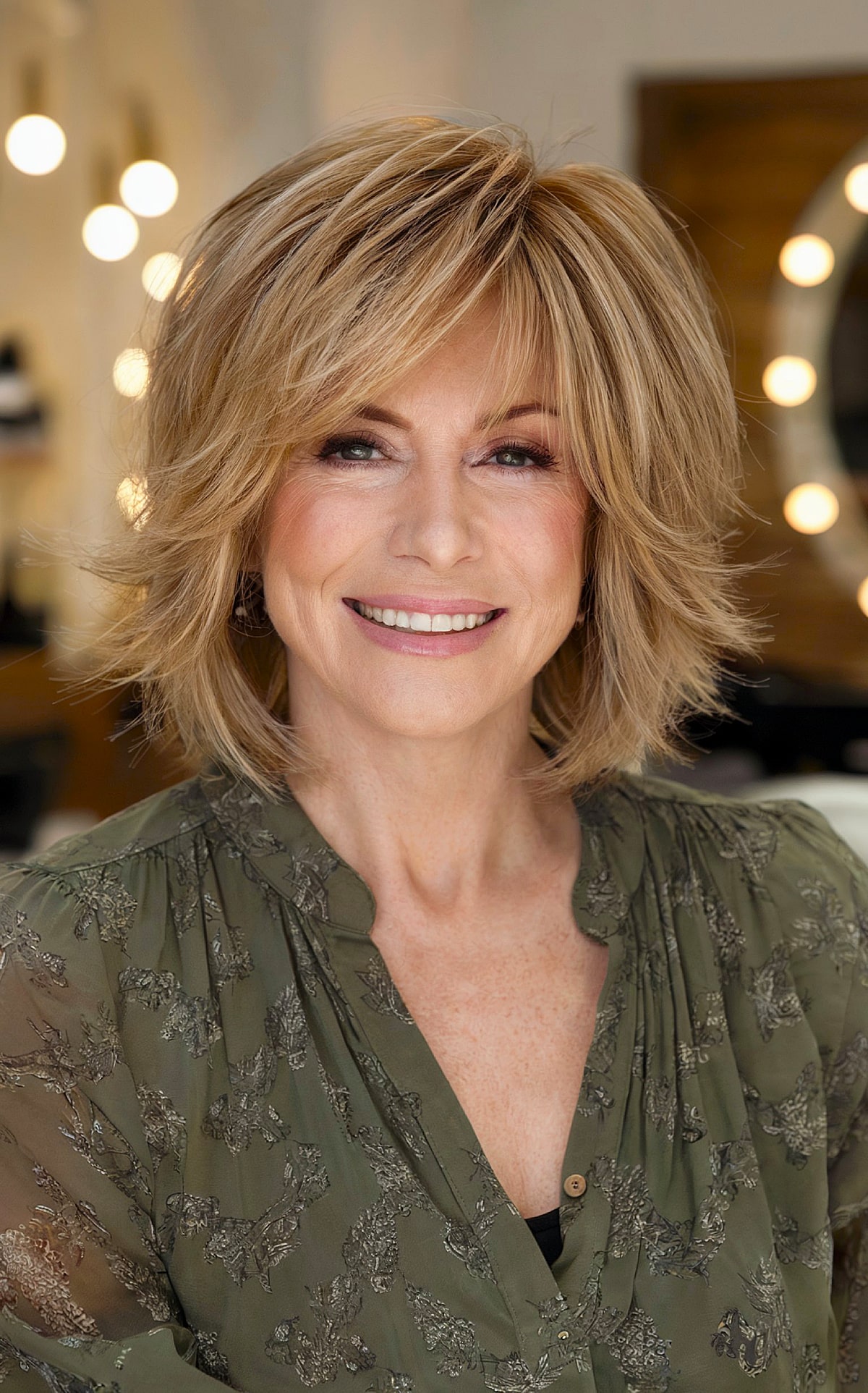
This hairstyle combines a textured, spiraled hair type with a fringe cut across the forehead and graduated sections of varying lengths. This creates volume and movement while framing the face. Imagine a cascade of curls, softened by the fringe and given depth by the layered structure.
A layered and fringed cut can transform dense, coiled tresses into a more manageable and stylish look. Layering removes bulk, preventing a triangular or mushroom-like silhouette. Bangs, carefully chosen to complement the curl pattern and face shape, draw attention to the eyes and add a touch of personality. This styling approach has evolved over time, adapting to fashion trends while remaining a versatile and popular choice for those with textured hair.
The following sections will delve deeper into selecting the right type of bangs for various curl patterns, maintaining layered curly hair, and recommended styling products and techniques.
1. Curl Type
Curl type significantly influences how bangs and layers behave in a textured hairstyle. Tighter curl patterns, such as 3C or 4A, tend to shrink significantly when dry, requiring longer initial bang lengths to avoid an excessively short fringe. Conversely, looser curl types, like 2C or 3A, experience less shrinkage, allowing for more precise bang lengths. Understanding this relationship is crucial for achieving the desired look and avoiding unexpected results. For example, someone with tightly coiled hair aiming for brow-length bangs needs a longer initial cut than someone with wavy hair seeking the same result.
Different curl types also respond differently to layering techniques. Densely packed curls benefit from substantial layering to remove bulk and prevent a pyramid shape. Looser curls, however, may require less layering to maintain volume and avoid a thin or stringy appearance. Layering techniques must be adapted to the specific curl pattern to enhance its natural characteristics. A skilled stylist familiar with textured hair will consider curl type when determining the optimal layering strategy.
Careful consideration of curl type is paramount when creating bangs and layers in textured hair. This factor dictates the initial length, layering technique, and styling approach required to achieve the desired outcome. Ignoring curl type can lead to undesirable results and styling challenges. Accurate curl type assessment empowers both stylist and individual to make informed decisions, resulting in a flattering and manageable hairstyle.
2. Face Shape
Face shape plays a pivotal role in determining which bang style best complements curly hair with layers. A harmonious balance between face shape and fringe creates a flattering frame, accentuating features and softening angles. For instance, round faces benefit from longer, wispy bangs that create vertical lines, visually elongating the face. These bangs should ideally sweep to the sides, avoiding a horizontal emphasis that could widen the face. Conversely, individuals with oval faces possess greater versatility, often suiting various bang styles, from blunt to textured. Blunt bangs can accentuate the symmetry of an oval face, while textured bangs add a soft, romantic touch.
Square faces, characterized by a strong jawline, can be softened with textured, curtain-style bangs that break up the angularity. These bangs should fall softly around the cheekbones, mitigating the sharpness of the jaw. Heart-shaped faces, wider at the forehead and tapering to the chin, can benefit from side-swept bangs that balance the proportions. These angled bangs draw attention away from the wider forehead, creating a more harmonious overall look. Diamond-shaped faces, with prominent cheekbones and a narrower forehead and chin, often suit layered bangs that add volume around the forehead and chin areas, visually balancing the proportions. Avoiding heavy, straight-across bangs is generally recommended for this face shape.
Careful consideration of face shape is crucial for achieving a balanced and flattering hairstyle when incorporating bangs with curly, layered hair. Selecting a bang style that complements the unique contours of the face optimizes the overall look. Consulting with a skilled stylist experienced with textured hair can provide personalized recommendations and ensure a harmonious blend between face shape, curl pattern, and bang style. This individualized approach maximizes the aesthetic potential of curly hair with bangs and layers, resulting in a style that enhances natural features and boosts confidence.
3. Bang style
Bang style significantly impacts the overall aesthetic of curly hair with layers. The interplay between curl pattern and bang shape dictates how the fringe interacts with the layered curls, influencing the final look. Several bang styles harmonize effectively with textured hair, each offering unique benefits and visual effects. Curtain bangs, characterized by a center parting and longer, feathered edges that frame the face, create a soft, romantic look. This style works particularly well with looser curl patterns, blending seamlessly with the cascading layers. For tighter curls, a longer, adapted curtain bang may be necessary to accommodate shrinkage and maintain the desired length.
Blunt bangs, cut straight across the forehead, provide a bold, modern contrast to the texture of curly hair. This style demands precision and careful consideration of curl shrinkage. Regular trims are essential to maintain the desired length and prevent the bangs from becoming too short or uneven. Blunt bangs generally suit oval and heart-shaped faces, adding definition and drawing attention to the eyes. Side-swept bangs, angled to one side of the forehead, offer a versatile and flattering option for various face shapes and curl types. This style softens angular features and adds a touch of asymmetry, creating visual interest. Side-swept bangs can be tailored to complement both loose and tight curls, adapting seamlessly to the natural texture.
Selecting the appropriate bang style for curly, layered hair requires careful consideration of curl pattern, face shape, and desired aesthetic. A harmonious balance between these elements ensures a flattering and well-integrated look. Professional guidance from a stylist experienced with textured hair can provide invaluable insights and ensure a personalized outcome. Understanding the impact of bang style on the overall hairstyle empowers individuals to make informed decisions, maximizing the potential of their curly, layered hair.
4. Layer Placement
Layer placement significantly influences the shape, volume, and manageability of curly hair styled with bangs. Strategic layer placement complements the natural curl pattern, creating a balanced and flattering silhouette. Layering addresses the inherent challenges of styling curly hair, such as excess bulk, uneven weight distribution, and difficulty achieving desired shapes. Consider the impact of layers on tightly coiled hair. Without layers, such hair tends to form a dense, pyramid-like shape. Judiciously placed layers remove weight, allowing the curls to spring upwards and outwards, creating a more rounded and balanced silhouette.
Different layering techniques achieve specific effects. Internal layers, cut beneath the surface of the hair, remove bulk without sacrificing length. This technique benefits those with dense curls seeking to reduce volume and enhance definition. Surface layers, cut on the outer sections of the hair, create movement and texture, ideal for individuals with looser curl patterns seeking a more dynamic shape. The placement of layers interacts directly with the bangs. For instance, long, cascading layers blended with curtain bangs create a soft, romantic look. Shorter, choppy layers combined with blunt bangs produce a more edgy and modern aesthetic. Consider how layer placement addresses the potential for a disconnected look between bangs and the rest of the hairstyle. Skillful layering ensures a smooth transition and cohesive integration between the fringe and the layered curls.
Understanding the impact of layer placement on curly hair with bangs is crucial for achieving desired outcomes. This knowledge empowers informed decisions regarding layering techniques and styling choices. Strategic layer placement transforms challenging, dense curls into a manageable and flattering style. Collaboration with a skilled stylist experienced with curly hair ensures personalized layer placement tailored to individual curl patterns and desired aesthetics. Appropriate layer placement unlocks the full potential of curly hair, creating a harmonious and visually appealing hairstyle that complements the individual’s features.
5. Product Selection
Product selection significantly impacts the manageability, definition, and overall health of curly hair styled with bangs and layers. Choosing products specifically formulated for textured hair addresses the unique needs of this hair type, such as hydration, frizz control, and curl enhancement. Consider the impact of product choice on achieving desired styling results. For example, a lightweight, curl-defining cream applied to damp hair encourages natural curl formation and reduces frizz, while a heavier butter or oil provides intense hydration and controls thicker, coarser curls. The interplay between product and curl type is crucial for achieving optimal results.
Specific product types cater to various styling needs within the context of curly hair with bangs and layers. Leave-in conditioners provide essential moisture and detangling benefits, preparing the hair for styling. Curl creams and gels enhance curl definition and hold, preventing frizz and maintaining the shape of layered curls and bangs. Oils and serums add shine and smooth the hair cuticle, reducing frizz and enhancing the overall appearance. Mousses provide volume and lift, particularly beneficial for finer curls that may require additional body. Consider the function of each product type and how it contributes to the desired aesthetic. For instance, a volumizing mousse applied to the roots before diffusing can lift the hair at the crown, creating a balanced silhouette with layered curls and bangs.
Strategic product selection is essential for maximizing the potential of curly hair with bangs and layers. Understanding the interplay between product properties, curl type, and desired styling outcome empowers informed choices. Appropriate product use enhances manageability, promotes healthy hair, and allows for greater control over styling results. This informed approach elevates the aesthetic and contributes to the long-term health and vitality of textured hair. Experimentation and consultation with experienced stylists specializing in curly hair can further refine product selection and optimize styling techniques. This personalized approach ensures that product choices align perfectly with individual hair characteristics and desired styling goals.
Curly Hair with Bangs and Layers
This exploration has highlighted the multifaceted nature of styling curly hair with bangs and layers. From the initial assessment of curl type and face shape to the strategic placement of layers and selection of appropriate products, each element contributes to the overall success of this hairstyle. The interplay between these factors dictates the final outcome, transforming potentially challenging textured hair into a manageable and visually appealing style. Careful consideration of curl shrinkage, face-framing effects, and product interactions empowers informed decision-making, leading to personalized results that enhance natural features.
Ultimately, achieving a harmonious and flattering look with curly hair, bangs, and layers requires a holistic approach that considers individual hair characteristics and desired aesthetic goals. This understanding empowers individuals to embrace the versatility and beauty of textured hair, fostering confidence and self-expression through personalized styling choices. Continued exploration of techniques and product advancements further expands the possibilities, ensuring that curly hair with bangs and layers remains a dynamic and adaptable style for years to come.