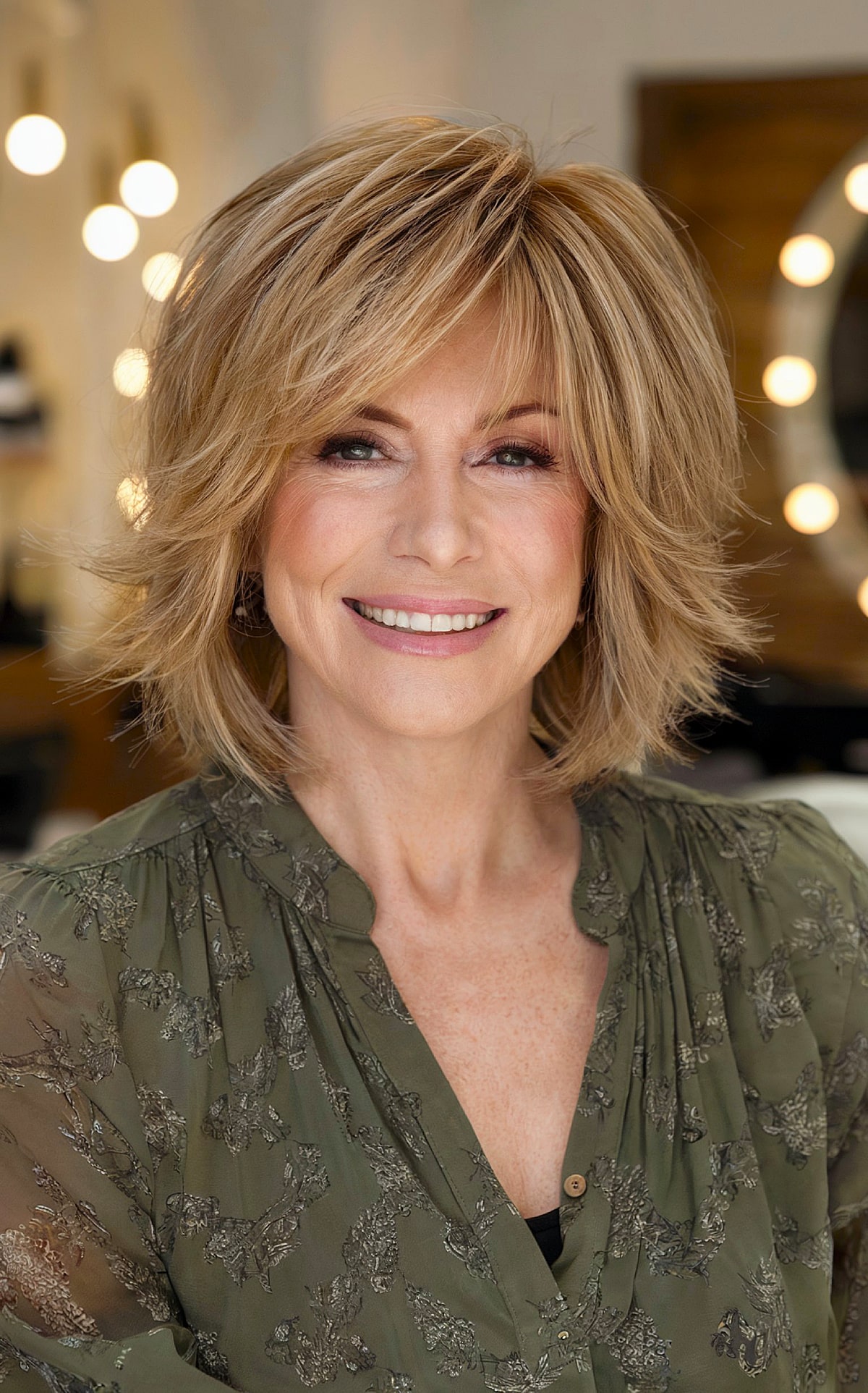
A lob, or long bob, is a haircut that typically falls between the chin and collarbone. This style offers versatility, allowing for various styling options like sleek and straight, wavy, or with added texture. It is particularly well-suited for individuals with finer hair textures, as it can create the illusion of fullness and volume without requiring excessively long lengths that can emphasize thinness.
This adaptable cut offers a balance between short and long hair, providing the ease of shorter styles while retaining enough length for updos or ponytails. The lob’s popularity stems from its ability to flatter various face shapes and hair types. Historically, bobs gained prominence in the early 20th century as a symbol of female empowerment and a move towards more practical hairstyles. The modern lob continues this legacy, representing a chic and manageable style for the contemporary individual. Its suitability for finer hair textures lies in its capacity to create visual density through layering and shaping techniques.
This article will further explore variations of the lob haircut tailored to fine hair, discuss styling tips for achieving maximum volume and body, and offer guidance on selecting the perfect lob variation based on individual face shape and hair characteristics.
1. Length
Length plays a crucial role in the success of a long bob, particularly for fine hair. The proper length contributes significantly to the appearance of volume and fullness. A lob that is too long can weigh fine hair down, making it appear limp and lifeless. Conversely, a lob that is too short may lack the necessary weight to achieve a polished, sophisticated look. The ideal length typically falls between the chin and collarbone, offering a balance between manageability and the illusion of thickness. A longer lob, grazing the collarbone, can create a more elegant and dramatic silhouette, while a shorter lob, closer to the chin, offers a more youthful and dynamic feel. For example, individuals with very fine hair might opt for a lob that sits just below the chin to maximize volume, whereas those with slightly thicker fine hair can successfully carry off a longer length.
The relationship between length and face shape also warrants consideration. A longer lob can elongate a round face, while a shorter lob can soften the angles of a square face. Hair density further influences length choices. Individuals with less dense, fine hair may find shorter lobs more manageable and easier to style with volume, while those with denser fine hair have more flexibility with longer lengths. The key is to select a length that complements both hair texture and face shape to achieve a harmonious and flattering outcome.
Ultimately, determining the ideal length for a long bob on fine hair requires a personalized approach. Consulting with a stylist experienced in working with fine hair textures is essential for achieving optimal results. A skilled stylist can assess individual hair characteristics and face shape to recommend a length that maximizes volume, enhances features, and fulfills stylistic preferences. Careful consideration of length, in conjunction with other elements like layering and styling, is paramount to creating a flattering and successful long bob hairstyle for fine hair.
2. Layers
Layering is a critical component of successful long bob hairstyles for fine hair. It creates texture, movement, and the illusion of volume, addressing the common concerns of limpness or flatness often associated with finer hair textures. Strategic layering removes weight from the underlayers, allowing the top layers to lift and appear fuller. Without layers, a lob on fine hair can appear heavy and one-dimensional, lacking the dynamic movement and body desired. The specific layering technique employed depends on the desired outcome and individual hair characteristics.
For instance, subtle, long layers throughout the length can create gentle movement and fullness without sacrificing length. Alternatively, more pronounced layering around the crown can create significant lift and volume at the roots. Face-framing layers can soften facial features and add further dimension. A skilled stylist tailors the layering approach to complement the individual’s face shape, hair density, and desired style. For example, someone with a round face might benefit from longer, angled layers to create a more elongated silhouette, while someone with an oval face has more flexibility with various layering styles. The placement and length of layers significantly influence the overall appearance and manageability of the lob.
Understanding the impact of layering allows for informed decisions regarding the final look and maintenance of a long bob. Improper layering can result in unwanted volume in certain areas or an overall unbalanced appearance. Careful consideration of layering techniques, combined with appropriate styling methods, ensures a long bob that enhances fine hair’s natural characteristics. Consultation with a stylist experienced in working with fine hair is crucial for determining the most effective layering strategy. This collaborative approach ensures a personalized result that addresses individual needs and achieves the desired aesthetic.
3. Texture
Texture plays a vital role in the overall success of long bob hairstyles for fine hair. It adds dimension, creates visual interest, and can significantly impact the perceived volume and fullness. Manipulating texture can transform a flat, lifeless lob into a dynamic and stylish look. Understanding the various techniques and approaches for enhancing texture allows for informed decisions regarding styling and overall hair management.
-
Natural Texture Enhancement
Working with the existing natural texture can create a low-maintenance yet stylish lob. Air-drying with a texturizing product can enhance natural waves or create a piecey, undone look. This approach minimizes heat styling, promoting hair health while achieving a desirable texture.
-
Heat Styling Techniques
Heat styling tools, such as curling irons, wands, and flat irons, offer versatile options for adding texture. Loose waves, defined curls, or a tousled, textured look can be achieved with these tools. However, regular heat styling requires thermal protectant products to minimize damage to fine hair.
-
Chemical Texturizing
Perms or texturizing treatments offer a more permanent solution for adding texture. These treatments alter the hair’s structure, creating lasting waves or curls. Consulting with a stylist experienced in working with fine hair is crucial for selecting the appropriate treatment and minimizing potential damage.
-
Product Application
Styling products play a significant role in enhancing and maintaining texture. Mousse, texturizing sprays, and dry shampoo can add volume, grip, and definition. The correct product selection depends on the desired texture and hair type. Experimentation is often necessary to determine the most effective products for individual needs.
The interplay between texture and other elements, such as length and layering, contributes significantly to the final appearance of a long bob. A layered lob with added texture through waves or curls creates a dynamic and voluminous style, effectively addressing the common concerns of flatness in fine hair. Careful consideration of texture, alongside other styling choices, ensures a personalized and flattering long bob hairstyle.
4. Styling
Styling is paramount for maximizing the potential of long bob hairstyles, especially for fine hair. Appropriate styling techniques create volume, movement, and texture, addressing the challenges of limpness or flatness often associated with this hair type. The choice of styling methods and products significantly influences the final appearance and longevity of the hairstyle. A well-executed styling regimen can transform a simple cut into a polished and flattering look.
-
Blow-Drying Techniques
Proper blow-drying techniques are fundamental for building volume and shaping a long bob. Utilizing a round brush lifts the hair at the roots, creating the illusion of fullness. Directing airflow upwards and concentrating on the crown area maximizes volume. A concentrator nozzle attachment focuses airflow for precision styling. Employing these techniques creates a foundation for further styling and enhances the overall appearance.
-
Heat Styling Tools
Curling irons, wands, and flat irons offer versatility in styling long bobs. Curling irons create waves or curls, adding texture and movement. Wands produce looser, beachy waves. Flat irons can create sleek, straight styles or add subtle bends at the ends. Heat styling requires thermal protectant products to mitigate potential damage to fine hair. The choice of tool and technique depends on the desired style and hair characteristics.
-
Product Selection
Selecting appropriate styling products is crucial for achieving and maintaining desired results. Volumizing mousses and sprays add lift at the roots. Texturizing sprays create definition and separation. Light-hold hairsprays maintain the style without weighing the hair down. The correct product selection depends on hair type, desired style, and environmental factors like humidity. Overuse of product can weigh fine hair down, counteracting the volumizing efforts.
-
Root Lift Techniques
Specific techniques target root lift, crucial for creating volume and preventing a flat appearance. Backcombing or teasing at the roots adds height and fullness. Volumizing powders or dry shampoos absorb excess oil and create lift. Velcro rollers placed at the roots during blow-drying create volume and shape. These techniques, used strategically, significantly enhance the overall appearance of a long bob on fine hair.
The interplay between these styling elements determines the final outcome. A combination of blow-drying techniques, appropriate product application, and strategic use of heat styling tools creates a polished and voluminous long bob. Adapting these techniques to individual hair characteristics and desired style ensures a flattering and manageable result. Regular trims and consistent hair care practices further contribute to the overall health and appearance of the long bob on fine hair.
5. Face Shape
Face shape plays a pivotal role in determining the most flattering long bob variation for fine hair. Harmonizing the cut with the individual’s face shape ensures a balanced and aesthetically pleasing outcome. Disregarding face shape can result in a style that accentuates undesirable features or creates an unbalanced appearance. Understanding the interplay between face shape and haircut allows for informed decisions and maximizes the potential of the long bob.
Specific face shapes benefit from particular lob variations. Round faces often benefit from longer lobs that create a vertical line, elongating the face. Adding layers that frame the face can further enhance this effect. Square faces, characterized by strong jawlines, are often complemented by softer, textured lobs that mitigate angularity. Heart-shaped faces, with wider foreheads and narrower chins, can be balanced by lobs that add fullness around the chin area. Oval faces, considered the most versatile, generally suit a wide range of lob styles, offering greater flexibility in length and layering. These examples illustrate the importance of considering face shape when selecting a long bob variation.
Achieving a harmonious balance between face shape and hairstyle requires careful consideration of various elements. Length, layering, and styling techniques work in concert to create a flattering look. Consulting with a skilled stylist experienced in analyzing face shapes and recommending appropriate hairstyles is crucial. A professional assessment ensures a personalized approach that addresses individual features and desired outcomes. Ultimately, understanding the relationship between face shape and long bob variations empowers individuals to make informed decisions, resulting in a style that enhances natural features and boosts overall confidence.
Long Bob Hairstyles for Fine Hair
This exploration of long bob hairstyles for fine hair has highlighted the critical factors contributing to a successful and flattering outcome. Length, layering, texture, styling techniques, and face shape considerations are integral to achieving a style that maximizes volume, movement, and overall aesthetic appeal. Strategic layering creates the illusion of fullness, while appropriate styling methods enhance texture and body. Careful consideration of face shape ensures a harmonious balance, resulting in a personalized look that complements individual features. The versatility of the long bob allows for adaptation to various stylistic preferences and hair characteristics, making it a perpetually popular choice.
Ultimately, the long bob’s enduring appeal lies in its adaptability and capacity to address the specific needs of fine hair. By understanding the interplay of these key elements, individuals can achieve a look that not only enhances their appearance but also instills confidence. Continued exploration of styling techniques and product innovations further expands the possibilities of the long bob, ensuring its enduring relevance in the ever-evolving landscape of hairstyling.