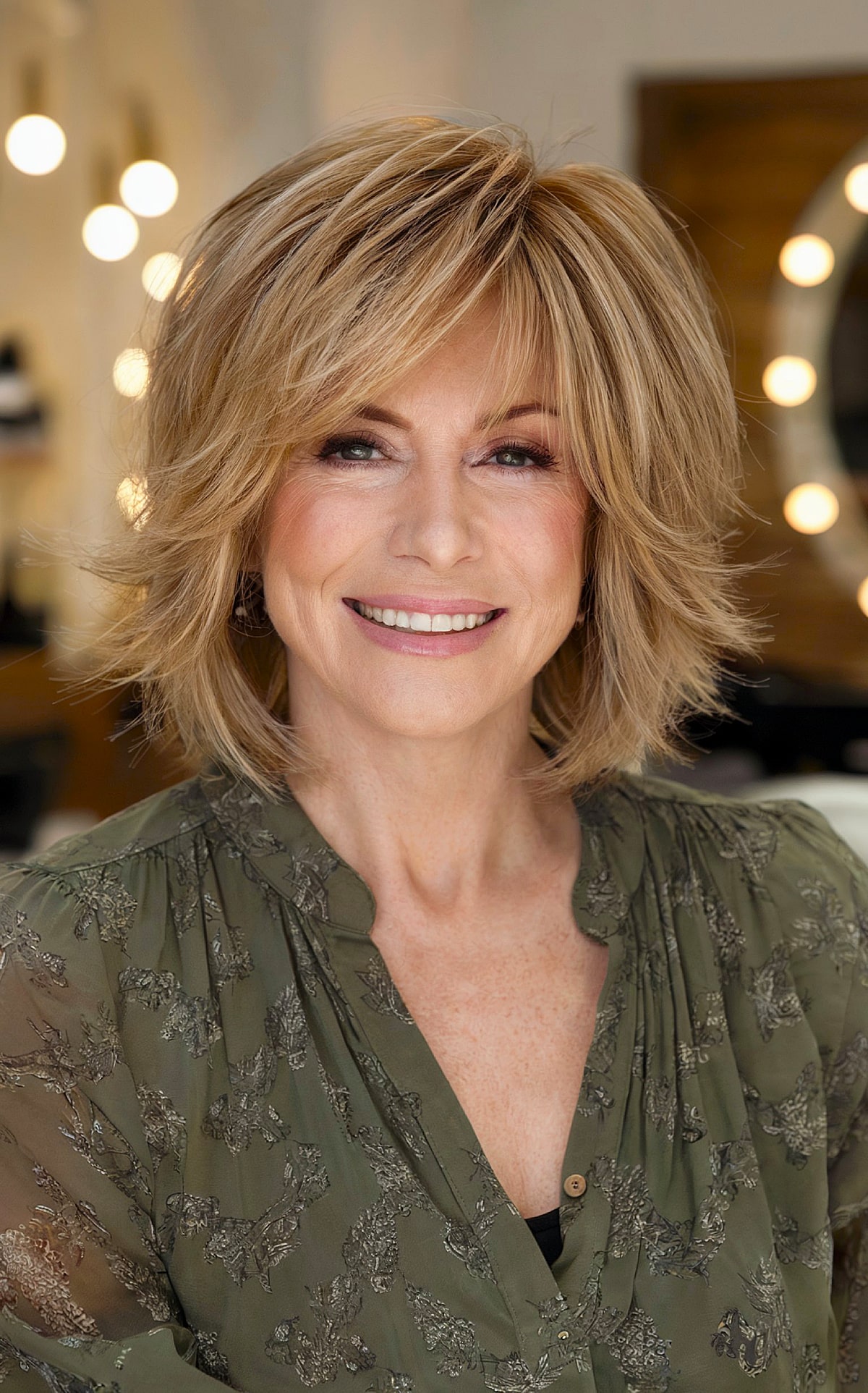
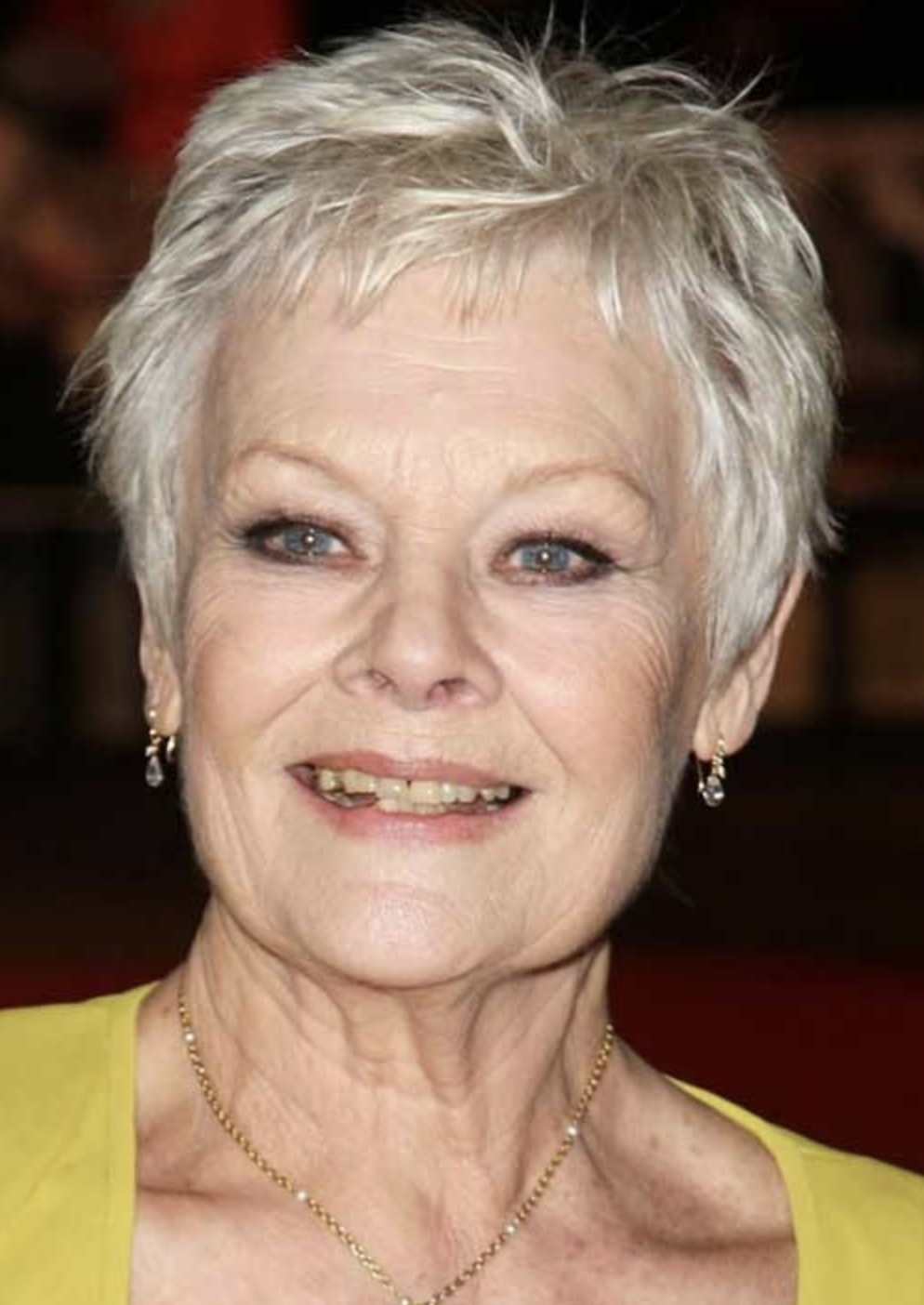
Women over sixty with naturally textured hair often opt for shorter styles that embrace their curls. These styles range from closely cropped cuts to chin-length bobs, emphasizing volume and minimizing styling time while maximizing manageability. Examples include the wash-and-go pixie, the defined curl bob, and the layered curly shag.
Short, curly hairstyles offer numerous advantages for this demographic. They can provide a youthful, vibrant look while addressing the changes in hair texture and density that often occur with age. A well-chosen cut can soften facial features, add height and volume, and simplify daily hair care routines. Historically, shorter, more practical hairstyles gained popularity among older women due to their ease of maintenance. However, contemporary styles celebrate natural texture and individuality, moving away from the more rigid and uniformly styled looks of the past.
This exploration will delve into specific styling techniques, product recommendations, and maintenance tips for short, curly hair on women over sixty. It will also address common concerns, such as dealing with frizz, dryness, and maintaining shape, providing readers with the tools and knowledge to embrace and enhance their natural curls with confidence.
1. Cut
The foundation of successful short, curly hairstyles for women over sixty lies in the cut. A properly executed cut considers curl type, face shape, and desired volume, enhancing natural texture while minimizing styling challenges. This foundational element significantly impacts the overall appearance and manageability of the style.
-
Layered Cuts
Layering removes bulk and creates shape, allowing curls to spring and move freely. This technique prevents a triangular or mushroom-like silhouette, a common concern with curly hair. Layered cuts, customized to individual curl patterns, range from heavily layered for dense curls to lightly layered for looser waves. A layered bob, for example, offers a classic yet modern look, while a layered pixie provides a more edgy and youthful appearance.
-
Face-Framing
Strategic face-framing involves cutting specific sections around the face to complement features. Soft, wispy layers can soften a strong jawline, while longer tendrils can elongate a round face. This personalized approach ensures the cut enhances, rather than detracts from, overall facial aesthetics. Skilled stylists tailor face-framing techniques to individual needs and preferences, achieving balanced and flattering results.
-
Graduated Cuts
Graduated cuts create a stacked effect, building volume at the crown and tapering towards the nape. This technique provides lift and fullness, particularly beneficial for finer hair textures that may thin with age. Graduated cuts work well with various curl patterns, offering a versatile option for achieving a voluminous yet controlled shape. The degree of graduation can be adjusted to create subtly different silhouettes, from a soft, rounded shape to a more angular and dramatic one.
-
Undercuts/Tapering
Incorporating an undercut or tapering the nape can reduce bulk and create a more defined shape. This technique provides a modern and edgy twist to classic curly hairstyles. For women with thicker hair, an undercut can significantly reduce styling time and enhance the overall definition of curls. Tapering, a less dramatic approach, offers similar benefits while maintaining a more traditional silhouette.
Ultimately, the chosen cut dictates the overall look and feel of the hairstyle. A well-executed, personalized cut lays the groundwork for styling success, ensuring manageability, volume, and a flattering silhouette. By considering the nuances of each cutting technique, women over sixty can embrace their natural curls with confidence, achieving a stylish and age-appropriate look that complements their individual features and preferences.
2. Product
Product selection plays a pivotal role in managing and enhancing naturally curly, short hairstyles for women over sixty. The right products address age-related changes in hair texture, such as dryness, thinning, and reduced elasticity, while simultaneously defining and shaping curls without adding weight or stiffness. Understanding the function and application of different product types is crucial for achieving desired results.
Hydration is paramount. Lightweight, moisturizing products combat dryness and frizz, promoting healthy curl formation. Leave-in conditioners, curl creams, and hydrating mousses provide essential moisture without weighing hair down. For example, a curl cream applied to damp hair enhances natural curl definition and provides hold, while a lightweight mousse adds volume and lift at the roots. The quantity of product used is critical; over-application can lead to product buildup and a greasy appearance, while under-application may result in frizz and undefined curls. Experimentation is key to finding the optimal balance for individual hair needs.
Addressing specific styling challenges requires targeted product choices. Serums or oils can tame frizz and add shine, while volumizing sprays or mousses address thinning at the roots. Products with UV protection shield hair from sun damage, preserving color and preventing further dryness. Regular deep conditioning treatments replenish moisture and improve hair elasticity. Selecting products tailored to individual needs and concerns ensures optimal results and long-term hair health. Prioritizing naturally derived ingredients and avoiding harsh chemicals further contributes to maintaining healthy, vibrant curls.
3. Maintenance
Maintaining naturally curly, short hairstyles for women over sixty requires a tailored approach that addresses the specific needs of aging hair. Proper maintenance preserves the shape and vibrancy of the cut, manages texture, and promotes overall hair health. This involves a combination of cleansing, conditioning, styling, and regular trims, all contributing to a polished and age-appropriate look.
-
Cleansing and Conditioning
Cleansing and conditioning form the bedrock of a healthy hair care routine. Sulfate-free shampoos cleanse without stripping natural oils, crucial for maintaining moisture in aging hair. Hydrating conditioners replenish moisture and detangle curls, minimizing breakage. Deep conditioning treatments, applied weekly or bi-weekly, provide intensive hydration and repair, addressing dryness and promoting elasticity. The frequency of washing depends on individual needs and scalp type; over-washing can strip natural oils, while under-washing can lead to product buildup.
-
Drying and Styling
Proper drying and styling techniques enhance natural curl definition and minimize frizz. Air drying or diffusing on a low heat setting preserves curl integrity and minimizes heat damage. Applying styling products, such as curl creams or gels, to damp hair enhances curl formation and provides hold. Avoiding harsh brushing or combing prevents breakage and frizz, promoting healthy curl definition. Protective hairstyles, such as braids or twists, can be worn overnight to maintain style and minimize manipulation.
-
Regular Trims
Regular trims are essential for maintaining the shape and preventing split ends. Trimming every 6-8 weeks removes damaged ends, promoting healthy growth and preventing further breakage. Regular trims also help maintain the desired shape of the cut, preventing it from growing out and becoming unmanageable. Consulting with a stylist experienced in cutting curly hair ensures optimal results.
-
Scalp Care
Healthy hair starts with a healthy scalp. Regular scalp massages stimulate blood flow, promoting hair growth and overall scalp health. Addressing scalp dryness or flakiness with specialized treatments or oils contributes to a healthy environment for hair growth. Using gentle, non-irritating products on the scalp minimizes inflammation and promotes optimal scalp health.
Consistent adherence to a well-rounded maintenance routine ensures the long-term health and vibrancy of naturally curly, short hairstyles for women over sixty. By incorporating these practices, women can embrace their natural texture, minimize age-related hair challenges, and enjoy a stylish, low-maintenance hairstyle that boosts confidence and complements their individual features.
Naturally Curly Short Curly Hairstyles Over 60
This exploration has examined the multifaceted aspects of naturally curly, short hairstyles for women over sixty. From the foundational importance of a well-executed cut, tailored to individual curl patterns and face shapes, to the critical role of product selection and diligent maintenance, each element contributes significantly to achieving a successful and age-appropriate style. Addressing age-related hair changes, such as dryness and thinning, requires a considered approach that prioritizes hydration, gentle handling, and regular trims. Specific cutting techniques, like layering, face-framing, and graduation, offer versatile options for enhancing natural texture and creating flattering silhouettes. Product choices, emphasizing lightweight, moisturizing formulas, play a crucial role in defining curls, managing frizz, and promoting overall hair health.
Ultimately, embracing naturally curly hair after sixty represents an opportunity to celebrate individuality and express personal style. By understanding the interplay of cut, product, and maintenance, women can navigate the unique challenges and opportunities presented by aging hair. This empowers them to cultivate a look that reflects confidence, vitality, and a genuine appreciation for their natural texture. This approach transcends mere aesthetics; it fosters a sense of self-acceptance and empowers women to embrace their natural beauty at every age.