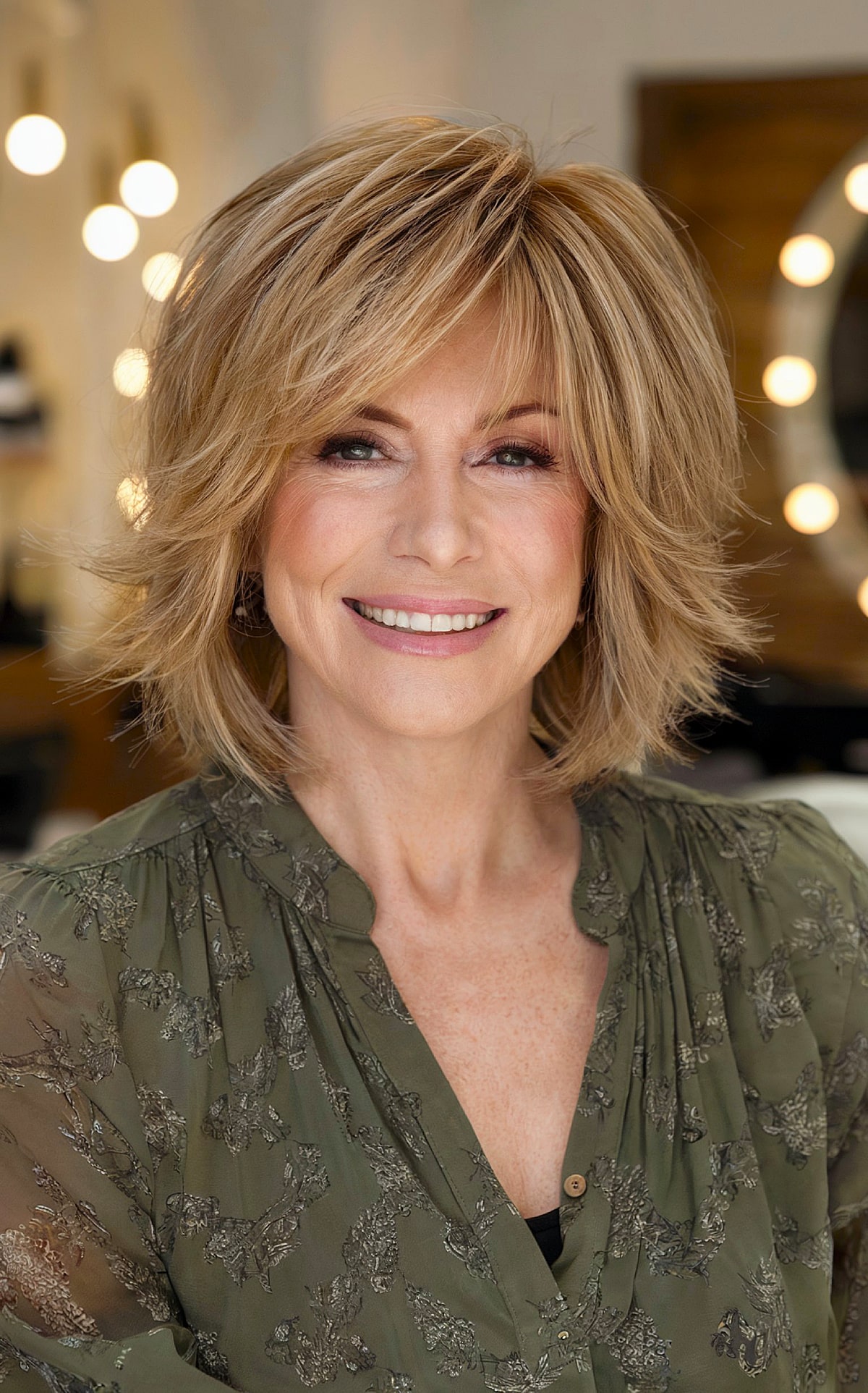
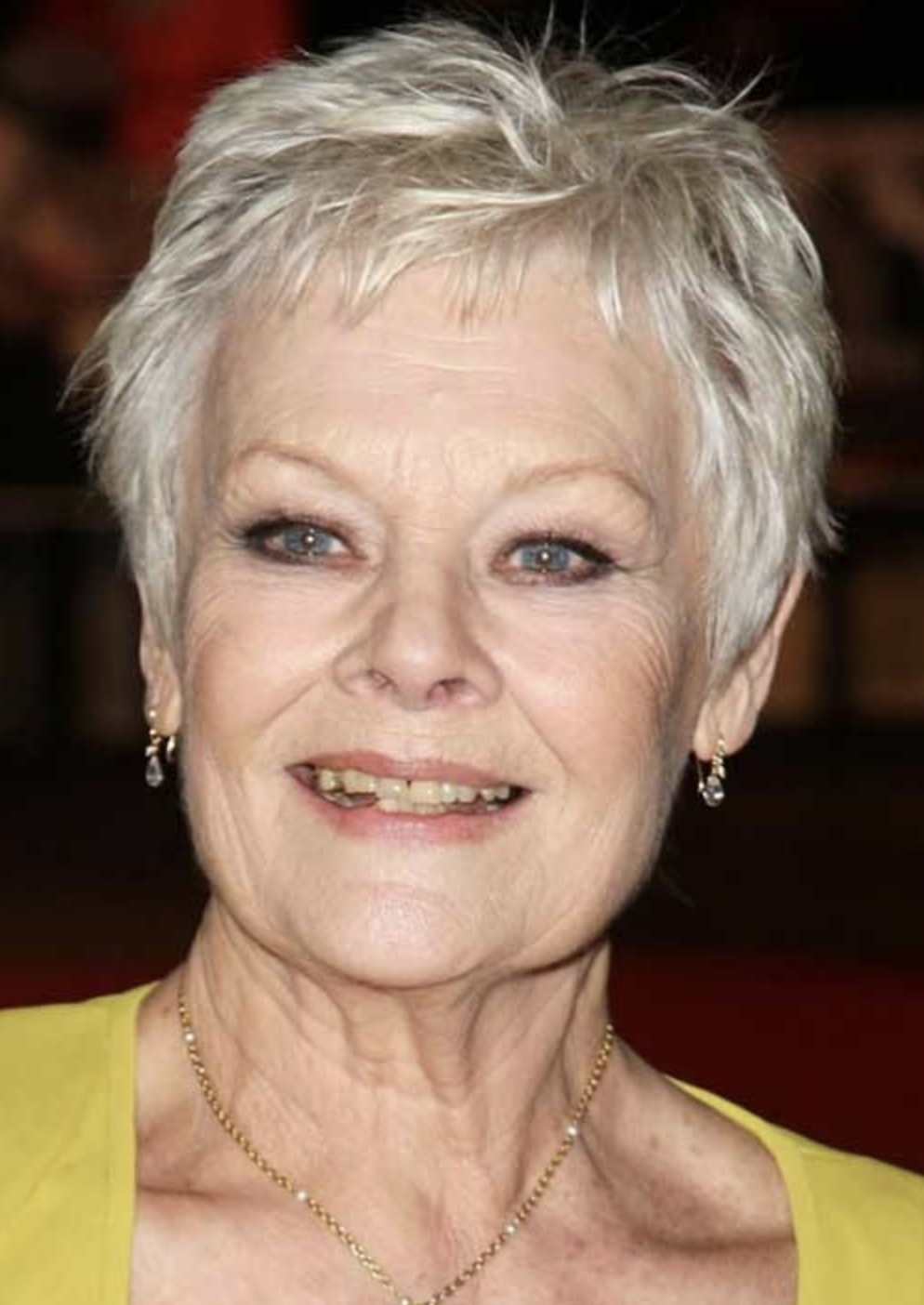
This style involves graduating lengths of hair to create texture and movement, often combined with fringe framing the face. Imagine a cascade of varying hair lengths, shorter at the crown and progressively longer towards the ends, complemented by forehead-covering strands. The overall length typically falls around the shoulders or slightly above or below.
Such a cut offers versatility and can suit various face shapes and hair textures. It can add volume to fine hair, control thickness in coarser hair, and provide a flattering frame for the face. The addition of bangs further enhances the adaptability, offering options from wispy and side-swept to blunt and full. Historically, similar styles have cycled in and out of fashion, demonstrating a classic appeal with contemporary adaptations.
Further exploration will cover specific variations of this cut, suitable face shapes and hair types, styling techniques, and maintenance advice. This information will provide a comprehensive understanding of the multifaceted nature of this popular hairstyle and its enduring appeal.
1. Face Shape Suitability
A key consideration when opting for a layered haircut with bangs and medium length is face shape. This factor significantly influences how flattering the overall look will be. Harmonizing the cut with the natural contours of the face creates balance and enhances features. Disregarding face shape can result in a style that appears disproportionate or accentuates undesirable aspects.
For instance, round faces generally benefit from layers that create height and length, avoiding excessive volume around the cheeks. Long, side-swept bangs can further slim the face. Square faces, on the other hand, are often softened by textured layers and wispy bangs that break up the angularity. Heart-shaped faces might find that layers around the chin area and brow-skimming bangs create a more balanced appearance. Oval faces are considered versatile and can typically accommodate a wider range of layering and bang styles.
Understanding the interplay between face shape and this particular haircut allows for informed decisions and personalized styling. Consulting with a stylist experienced in assessing face shapes and recommending appropriate layering and bang variations is crucial for achieving optimal results. Careful consideration of face shape ensures a harmonious and flattering final look, maximizing the potential of this versatile hairstyle.
2. Hair Texture
Hair texture plays a crucial role in the success of layered haircuts with bangs and medium length. This inherent characteristic of hair, ranging from fine to coarse, significantly impacts how the cut will lie, the volume it achieves, and the overall styling process. Understanding the interplay between texture and cut allows for informed choices and predictable results.
Fine hair, characterized by its delicate strands, can appear limp and lacking in volume. Layering techniques can create an illusion of fullness, with shorter layers providing lift at the crown and graduated lengths adding movement. However, excessive layering can thin out the ends, exacerbating the lack of volume. Bangs, especially if kept relatively thick, can also contribute to a fuller appearance. Conversely, coarse hair, known for its thick and often unruly strands, benefits from layering to remove bulk and enhance manageability. Texturizing techniques, such as point cutting, can further soften the appearance and prevent the hair from appearing too heavy. Bangs for coarse hair often require careful consideration to avoid overwhelming the face; lighter, textured bangs typically work well.
Medium-textured hair, falling between fine and coarse, offers more versatility. It can support various layering styles and bang options, allowing for greater personalization. Ultimately, recognizing the impact of hair texture is essential for achieving a successful outcome with this haircut. Consultation with a stylist experienced in working with different hair textures is advisable for personalized recommendations and tailored cutting techniques. This ensures the final look complements natural hair characteristics and achieves the desired effect.
3. Bangs Style
Bangs significantly influence the overall aesthetic of layered haircuts with medium length. The style of bangs chosen directly impacts the framing of the face, the balance of the cut, and the overall impression created. A careful selection of bang style harmonizes with facial features, hair texture, and the layering of the cut, contributing to a cohesive and flattering look. An inappropriate bang style can detract from the overall harmony, either overwhelming facial features or creating a disjointed appearance.
Several bang styles can complement this haircut. Blunt, straight-across bangs create a bold, modern look, particularly effective with thicker hair and strong facial features. Wispy, textured bangs offer a softer, more romantic feel, suitable for finer hair and delicate features. Side-swept bangs, whether long and sweeping or shorter and choppy, can add asymmetry and movement, softening angular faces and offering versatile styling options. Curtain bangs, parted in the middle and framing the face like curtains, evoke a retro vibe and complement layered haircuts well. The length and thickness of the bangs also contribute to the overall effect, from brow-skimming micro-bangs to longer, layered bangs that blend seamlessly into the rest of the cut. Choosing the right bang style involves considering face shape, hair texture, and personal preference, ideally in consultation with a skilled stylist. For instance, long, side-swept bangs can slim a round face, while wispy bangs can soften a square face. The interplay between bang style and layered haircut provides extensive customization potential.
Effectively integrating bangs into layered haircuts requires technical precision and an understanding of facial features. The chosen bang style becomes an integral component of the overall design, influencing the balance and harmony of the cut. A skilled stylist considers the relationship between the bangs, the layers, and the face shape to create a cohesive and flattering result. Therefore, bang style selection holds significant weight in the success of the overall hairstyle, impacting not only the aesthetic but also the practicality of daily styling and maintenance.
4. Layering Techniques
Layering techniques form the foundation of layered haircuts with bangs and medium length, dictating the final shape, volume, and movement of the style. These techniques involve strategically cutting sections of hair at varying lengths to create texture and dimension. The specific layering technique employed directly influences how the hair falls, interacts with the bangs, and frames the face. Understanding these techniques allows for informed choices and facilitates communication with stylists to achieve desired results. A mismatch between layering technique and hair characteristics can result in an unbalanced or unflattering outcome.
Several layering techniques are commonly utilized. Classic layering involves graduating the length of the hair from shorter at the crown to longer at the ends, creating a seamless blend and natural movement. Texturizing techniques, like point cutting or slide cutting, remove bulk and create a more piecey, defined texture. Internal layering, where inner sections of hair are cut shorter than the outer layers, adds volume and lift without affecting the overall length. Each technique contributes distinct characteristics to the final style. For example, classic layering on medium-length hair with bangs might create a soft, flowing look, while incorporating texturizing techniques could add edginess and definition. The choice of technique hinges on the desired outcome, hair texture, and face shape. Layering around the face, specifically how it interacts with the bangs, requires particular attention. For instance, face-framing layers can soften features, while layers that blend seamlessly into the bangs create a cohesive and flattering frame.
Successful implementation of layering techniques requires skill and precision. A thorough understanding of hair characteristics, face shape, and desired outcome informs the choice of technique and its execution. Consultation with a stylist allows for personalized recommendations and tailored application of these techniques, ensuring the layered haircut with bangs and medium length complements individual features and achieves the intended aesthetic. Precise execution of layering techniques ultimately determines the balance, movement, and overall appeal of this versatile hairstyle.
5. Maintenance and Styling
Maintenance and styling are integral to the sustained success of layered haircuts with bangs and medium length. This style, characterized by its graduated lengths and face-framing fringe, requires consistent upkeep to maintain its shape, texture, and overall appeal. Neglecting regular maintenance can lead to a loss of definition, uneven growth patterns, and a less polished appearance. The styling process itself becomes more challenging when the cut loses its initial structure.
Regular trims are crucial for preventing split ends and maintaining the layered structure. The frequency of trims depends on individual hair growth rates, typically ranging from every 6 to 8 weeks. Bangs, a defining feature of this style, often require more frequent trimming, sometimes as often as every 2 to 3 weeks, to prevent them from obscuring vision or losing their intended shape. Specific styling techniques further enhance the layered effect and maintain the desired look. Blow-drying with a round brush can create volume and curve, enhancing the movement created by the layers. Flat irons can be used to achieve a sleek, polished finish, emphasizing the precision of the cut. Texturizing products, such as mousses, sprays, or pastes, define individual layers and create a more piecey, textured appearance. The choice of styling products depends on hair texture and the desired finish, ranging from tousled and textured to smooth and sleek.
Effective maintenance and styling practices not only preserve the initial look of the cut but also allow for adaptation and personalization over time. As hair grows, slight adjustments in styling techniques or product use can refresh the style and maintain its vibrancy. Understanding the specific needs of layered haircuts with bangs and medium length, coupled with consistent maintenance and appropriate styling techniques, ensures the longevity and continued success of this versatile and popular hairstyle. This proactive approach allows individuals to enjoy the benefits of a well-maintained and stylish look while adapting to the natural evolution of their hair growth.
Layered Haircuts with Bangs, Medium Length
This exploration has delved into the multifaceted nature of layered haircuts with bangs, medium length. Key elements, including face shape suitability, hair texture considerations, bang style variations, layering techniques, and ongoing maintenance and styling, contribute significantly to the overall effectiveness and personalized appeal of this versatile hairstyle. Each component plays a crucial role in achieving a balanced, flattering, and harmonious look. Understanding the interplay of these elements allows for informed decisions and empowers individuals to collaborate effectively with stylists, ensuring desired outcomes and long-term satisfaction.
Ultimately, the enduring popularity of layered haircuts with bangs and medium length stems from their adaptability and capacity for personalization. Careful consideration of individual features and stylistic preferences, coupled with skilled execution and consistent maintenance, unlocks the full potential of this classic yet contemporary style. Continued exploration of trends and techniques within this realm promises further evolution and innovation, solidifying its place as a timeless and adaptable choice for diverse aesthetics.