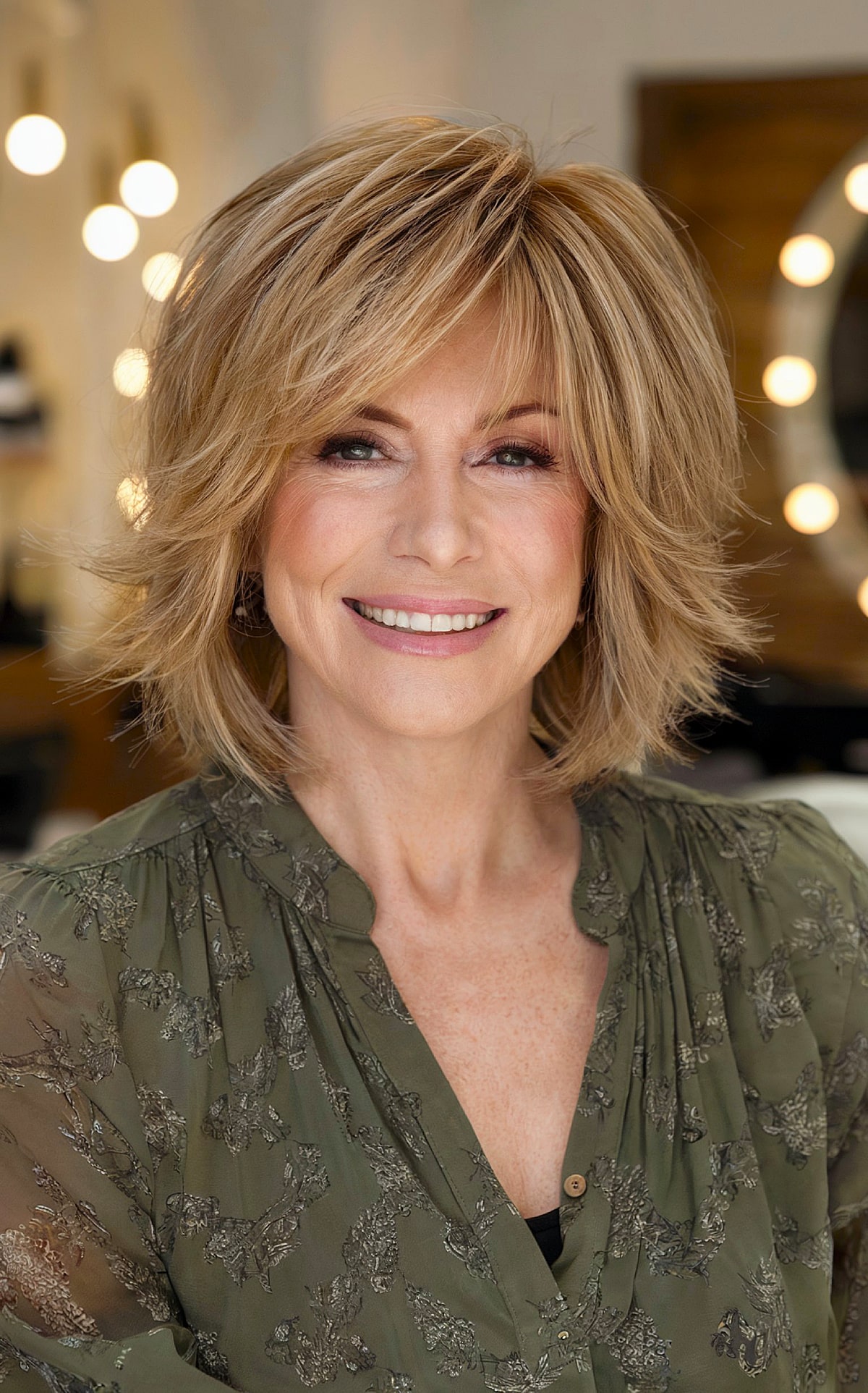
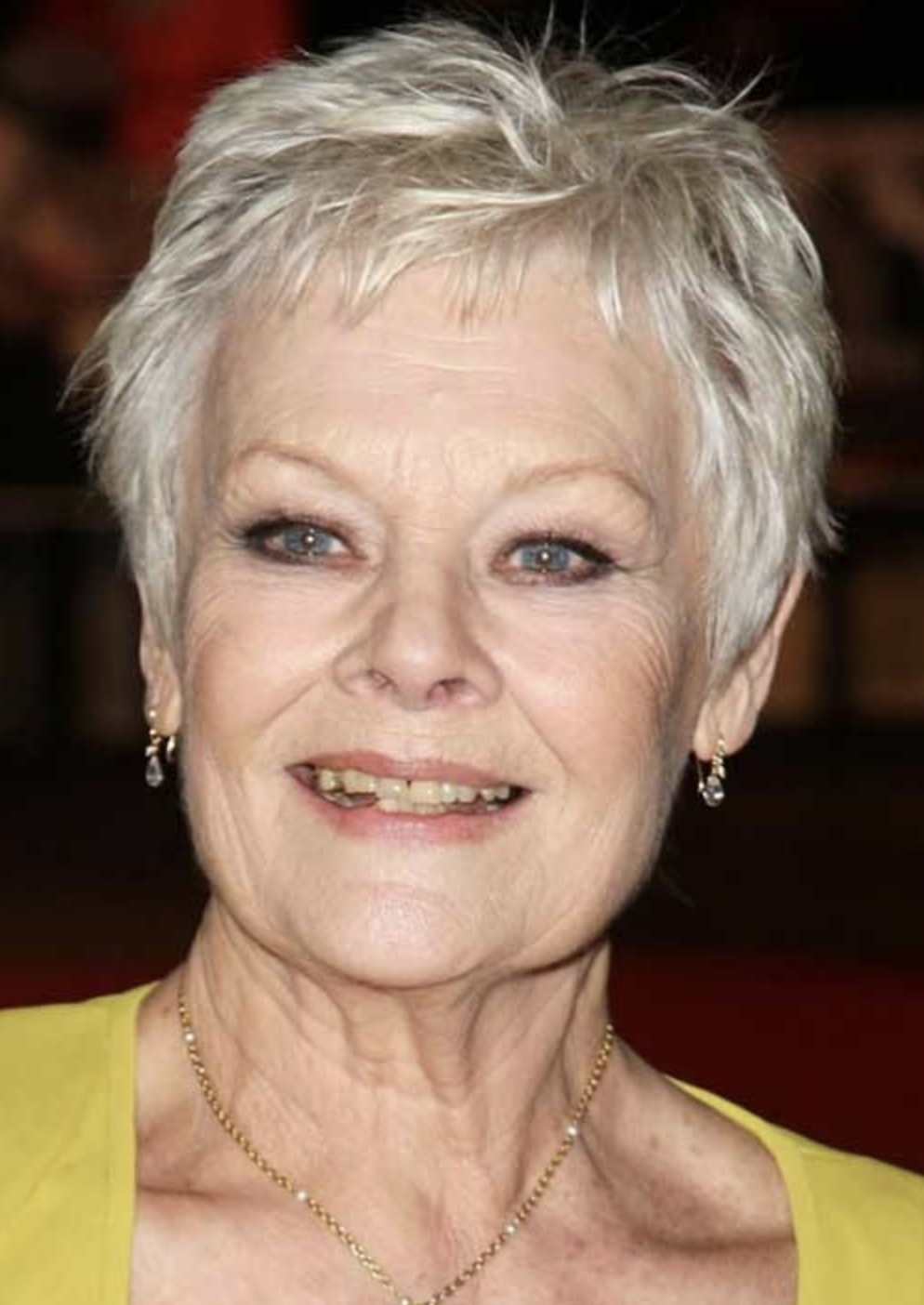
Shoulder-length hair, styled with graduated sections to create volume, texture, and movement, offers a versatile and universally flattering look. This styling technique involves cutting the hair at different lengths, creating a cascade effect that can range from subtle to dramatic. For example, shorter layers around the crown add lift, while longer layers provide flow and shape. The technique can be adapted to suit various hair textures, from fine and straight to thick and curly.
This approach to hairstyling offers numerous advantages. It can add volume to fine hair, create manageable structure for thick hair, and provide a modern, dynamic aesthetic. Historically, layered hairstyles have evolved from simpler, blunt cuts to more intricate and textured styles, reflecting changing fashion trends and improved cutting techniques. Layering allows for personalized shaping and can complement diverse facial features, contributing to a balanced and harmonious overall appearance. It offers low-maintenance styling options, reducing preparation time and effort.
This article will explore various aspects of this styling choice, including suitable face shapes, different layering techniques, maintenance and styling tips, and inspiration from current trends. It will provide a comprehensive guide for those considering this versatile and popular hairstyle.
1. Face Shape
Face shape plays a crucial role in determining the most flattering medium layered hairstyle. The goal is to create balance and harmony, emphasizing positive features while softening or minimizing others. A layered cut can create the illusion of length or width, depending on how it’s implemented. For instance, individuals with round faces often benefit from long, sweeping layers that frame the face and create a more elongated appearance. Shorter layers around the crown can add height, further contributing to this effect. Conversely, those with long or narrow faces might choose layers that add width and fullness, creating a more balanced look. Soft, face-framing layers can soften the angles of a square face, while layers that start below the chin can add fullness to a heart-shaped face. Ignoring face shape can result in a hairstyle that accentuates undesirable features or appears disproportionate.
Understanding one’s face shape enables informed decisions regarding layer placement and length. This knowledge allows stylists to tailor the cut to individual needs, creating a customized look that complements natural features. Consider a person with a diamond-shaped face, characterized by wide cheekbones and a narrow forehead and chin. Layers that add fullness around the jawline can soften the pointed chin, while avoiding excessive volume around the cheekbones maintains balance. Similarly, individuals with oval faces, often considered the most versatile shape, can experiment with various layering styles, as most lengths and placements tend to be flattering. This adaptability provides greater freedom in choosing a style that aligns with personal preferences.
Harmonizing face shape and hairstyle contributes significantly to an aesthetically pleasing and balanced appearance. Careful consideration of facial features, along with an understanding of how layering can enhance or minimize certain aspects, allows for informed decisions about the most suitable medium layered hairstyle. This knowledge empowers individuals to collaborate effectively with stylists, achieving a personalized look that enhances their natural beauty. Neglecting this aspect can lead to a less flattering outcome, emphasizing imbalances rather than creating a harmonious overall appearance.
2. Hair Texture
Hair texture significantly influences the outcome of medium layered hairstyles. Texture encompasses factors such as strand thickness, density, and natural curl pattern. Each texture interacts differently with layering, affecting volume, movement, and overall style. Understanding the relationship between hair texture and layering allows for informed decisions regarding layer placement, length, and styling techniques. For instance, fine hair typically benefits from shorter layers that create the illusion of volume and lift. Conversely, thick hair can appear bulky with excessive layering, often requiring longer, strategically placed layers to remove weight and create shape without sacrificing body.
Curly hair presents unique considerations for layering. Layering curly hair requires careful assessment of the curl pattern and desired volume. Cutting layers too short can result in excessive fullness or an undesirable triangular shape. Longer layers, shaped to work with the natural curl, tend to produce a more balanced and controlled outcome. For example, individuals with loose waves might opt for layers that enhance their natural texture, creating a cascading effect. Those with tighter curls might benefit from layers that reduce bulk and define the curls without compromising their natural shape. Ignoring natural curl patterns can lead to difficult-to-manage styles and an overall unbalanced appearance.
Matching layering techniques to hair texture is crucial for achieving desired results. Fine hair, layered incorrectly, can appear thin and lifeless, while thick hair can become unmanageable and overly voluminous. Curly hair, without proper layering, can lose definition and become frizzy or shapeless. A thorough understanding of hair texture empowers individuals and stylists to make informed choices about layer placement, length, and styling methods, ensuring a harmonious and flattering medium layered hairstyle. This understanding facilitates a collaborative process between stylist and client, leading to a personalized style that complements natural texture and enhances overall appearance.
3. Layer Placement
Strategic layer placement is fundamental to achieving a successful medium layered hairstyle. It dictates the overall shape, volume, and movement of the hair. Careful consideration of layer placement allows stylists to tailor the cut to individual face shapes, hair textures, and desired outcomes. Understanding the nuances of layer placement empowers informed decisions regarding the final look and manageability of the style.
-
Crown Layers:
Layers cut at the crown, the topmost section of the head, add volume and lift. These layers create height and fullness, particularly beneficial for individuals with fine or flat hair. Shorter crown layers create a more dramatic lift, while longer crown layers offer a softer, more subtle effect. Crown layers significantly impact the overall silhouette of the hairstyle, influencing how it frames the face and its overall balance.
-
Face-Framing Layers:
These layers are cut around the face to soften features and create movement. They can range from short, wispy pieces to longer, sweeping layers, depending on the desired effect and face shape. For example, long, face-framing layers can slim a round face, while shorter layers can add a playful touch to an oval face. The length and placement of these layers significantly influence how the hairstyle interacts with facial features.
-
Internal Layers:
Internal layers are cut beneath the surface layer of hair to remove weight and add texture. They are not visible from the exterior but contribute significantly to the movement and flow of the hairstyle. Internal layering can prevent thick hair from appearing bulky and create a more manageable shape. This technique allows for customized shaping and volume control, tailored to individual hair textures and desired outcomes.
-
Graduated Layers:
Graduated layers are progressively shorter towards the top, creating a stacked effect. This technique adds volume and creates a rounded shape, particularly suited for individuals with fine or medium hair. The degree of graduation influences the overall fullness and shape of the hairstyle. For example, a highly graduated cut creates a more dramatic, rounded shape, while a less graduated cut offers a softer, more subtle effect.
The interplay of these layer placement techniques allows for a wide range of customizable medium layered hairstyles. By understanding the impact of each technique, individuals can collaborate effectively with stylists to achieve a personalized look that complements their unique features and desired aesthetic. Precise layer placement is essential for creating a balanced and harmonious hairstyle that enhances natural beauty and offers versatile styling options. This detailed approach to layering ensures a flattering and well-structured outcome, allowing the hairstyle to complement individual features and preferences effectively.
4. Styling Techniques
Styling techniques play a crucial role in maximizing the potential of medium layered hairstyles. The versatility of these hairstyles allows for a diverse range of looks, from sleek and polished to tousled and textured. Appropriate styling techniques enhance the layers, creating movement, volume, and definition. The interplay between cut and styling technique is essential for achieving the desired aesthetic. For instance, a layered cut designed for volume can fall flat without proper styling, while a texturized cut can appear unruly without appropriate product and technique.
Several styling techniques cater specifically to medium layered hair. Blow-drying with a round brush can create volume and curve, enhancing the layers and shaping the hair around the face. Using a diffuser attachment on a blow-dryer can enhance natural curls and waves, creating a voluminous and textured look. Flat ironing can create a sleek and polished finish, emphasizing the layered structure while minimizing volume. Curling irons or wands can add waves or curls, creating a more romantic or glamorous look. Texturizing products, such as mousses, sprays, and pastes, can enhance definition and separation, creating a piecey, textured finish. The choice of styling technique depends on the desired look, hair texture, and the specific layering of the cut. For example, a person with fine, layered hair seeking volume might opt for blow-drying with a round brush, while someone with thick, layered hair seeking a sleek look might choose flat ironing.
Mastering styling techniques specific to medium layered hair allows individuals to achieve a range of looks and adapt their style to various occasions. This understanding ensures the layered cut reaches its full potential, enhancing natural texture and facial features. Selecting appropriate products and tools further contributes to the effectiveness of the styling process, ensuring lasting hold and minimizing damage. Challenges may arise when styling techniques are not adapted to individual hair characteristics or desired outcomes. Overuse of heat styling tools can lead to damage, while incorrect product application can weigh down the hair or create an undesirable texture. Addressing these challenges requires an understanding of hair health, product properties, and appropriate tool usage. Successfully navigating these aspects allows individuals to fully leverage the versatility of medium layered hairstyles, achieving a personalized and polished look that enhances their overall appearance.
5. Maintenance
Maintaining medium layered hairstyles requires consistent effort to preserve their shape, volume, and overall aesthetic. Neglecting regular maintenance can lead to a loss of definition, split ends, and an unkempt appearance. Appropriate maintenance practices ensure the longevity of the style and contribute to healthy, vibrant-looking hair. Understanding the specific needs of layered hair allows individuals to implement effective maintenance routines.
-
Regular Trims:
Regular trims are essential for maintaining the shape and preventing split ends. Layered hair is particularly susceptible to split ends, as the exposed layered sections are more prone to damage. Trimming every 6-8 weeks removes damaged ends, preventing further splitting and preserving the integrity of the layers. Without regular trims, the layers can appear ragged and lose their definition, detracting from the overall polished look of the hairstyle. Consistent trims ensure the layers remain sharp and well-defined, contributing to a healthier and more aesthetically pleasing appearance. For example, neglecting trims can lead to layers blending together, losing the intended shape and volume.
-
Conditioning Treatments:
Conditioning treatments replenish moisture and restore hair health, particularly important for layered hair, which can be more prone to dryness due to the increased surface area exposed to the elements. Regular deep conditioning treatments help maintain the hair’s strength, elasticity, and shine. Hydrated hair is less prone to breakage and frizz, further contributing to the overall polished look of the layered style. Consider a person with color-treated, layered hair; regular conditioning becomes even more crucial to counteract the drying effects of chemical processing, preserving color vibrancy and preventing breakage.
-
Targeted Styling Product Use:
Utilizing appropriate styling products designed for layered hair contributes significantly to maintaining the desired shape and volume. Products such as volumizing mousses, texturizing sprays, and lightweight serums can enhance the layers, create definition, and provide hold without weighing the hair down. Choosing products suited to individual hair texture and desired style ensures optimal results. For instance, applying a volumizing mousse to the roots before blow-drying can create lift and fullness in fine, layered hair, while a texturizing spray can enhance definition and separation in thicker, layered hair. Incorrect product usage, such as applying heavy serums or creams, can result in a greasy or weighed-down appearance, diminishing the impact of the layers.
-
Heat Protection:
Heat styling tools, while effective for shaping and defining layered hair, can also cause damage if used excessively or without proper protection. Applying a heat protectant spray before using tools such as blow-dryers, curling irons, or flat irons creates a barrier against heat damage, minimizing dryness, breakage, and split ends. This protective measure helps preserve the integrity of the layers and maintains the overall health and shine of the hair. Regular use of heat styling tools without protection can lead to brittle, dry hair, compromising the layered structure and diminishing the effectiveness of the styling process.
These maintenance practices collectively contribute to the longevity and aesthetic appeal of medium layered hairstyles. Consistent trims, conditioning treatments, targeted product use, and heat protection ensure the layers remain well-defined, healthy, and vibrant. Integrating these practices into a regular hair care routine helps individuals maintain a polished and stylish look while preserving the overall health and integrity of their hair. Ultimately, proper maintenance maximizes the impact of the layered cut, allowing the style to remain flattering and dynamic over time.
Medium Layered Hairstyles for Women
This exploration of medium layered hairstyles has highlighted the multifaceted nature of this popular choice. From the crucial role of face shape and hair texture to the intricacies of layer placement and styling techniques, achieving a successful and flattering outcome requires careful consideration of various interconnected elements. Maintenance practices, including regular trims, conditioning, and appropriate product use, ensure the longevity and vibrancy of the style. Understanding these key aspects empowers informed decisions, facilitating a collaborative process between individuals and stylists to achieve personalized results.
Ultimately, the enduring appeal of medium layered hairstyles lies in their adaptability and versatility. They offer a dynamic and contemporary aesthetic, adaptable to diverse personal preferences and ever-evolving trends. By understanding the principles outlined herein, individuals can confidently embrace this style, achieving a look that enhances natural beauty and reflects individual style. This knowledge promotes informed decision-making, empowering individuals to achieve a truly personalized and flattering hairstyle that stands the test of time and changing fashion landscapes.