Choosing a flattering haircut for a full, round face shape involves selecting styles that create the illusion of length and definition. These styles often incorporate height at the crown, textured layers, and strategically placed volume to balance facial proportions. For example, a long, layered cut with face-framing pieces can visually slim the face while adding movement and dimension.
The right haircut can significantly enhance one’s overall appearance and boost confidence. Historically, hairstyles have been used to signify social status, cultural identity, and personal style. For individuals with rounder faces, selecting a complementary cut can create a more balanced and harmonious look, highlighting features and minimizing perceived fullness. This can lead to an increased sense of self-assuredness and contribute to a positive self-image.
Understanding the principles of balancing facial proportions is key to choosing a suitable and stylish haircut. The following sections will explore various haircut options, styling techniques, and maintenance tips for those seeking flattering looks for a round face shape.
1. Length
Hair length plays a crucial role in shaping the overall appearance of a round face. Selecting the right length can create the illusion of a longer, slimmer facial structure. The strategic use of length is essential for balancing proportions and achieving a harmonious look.
-
Short Lengths (Pixie Cuts, Cropped Styles)
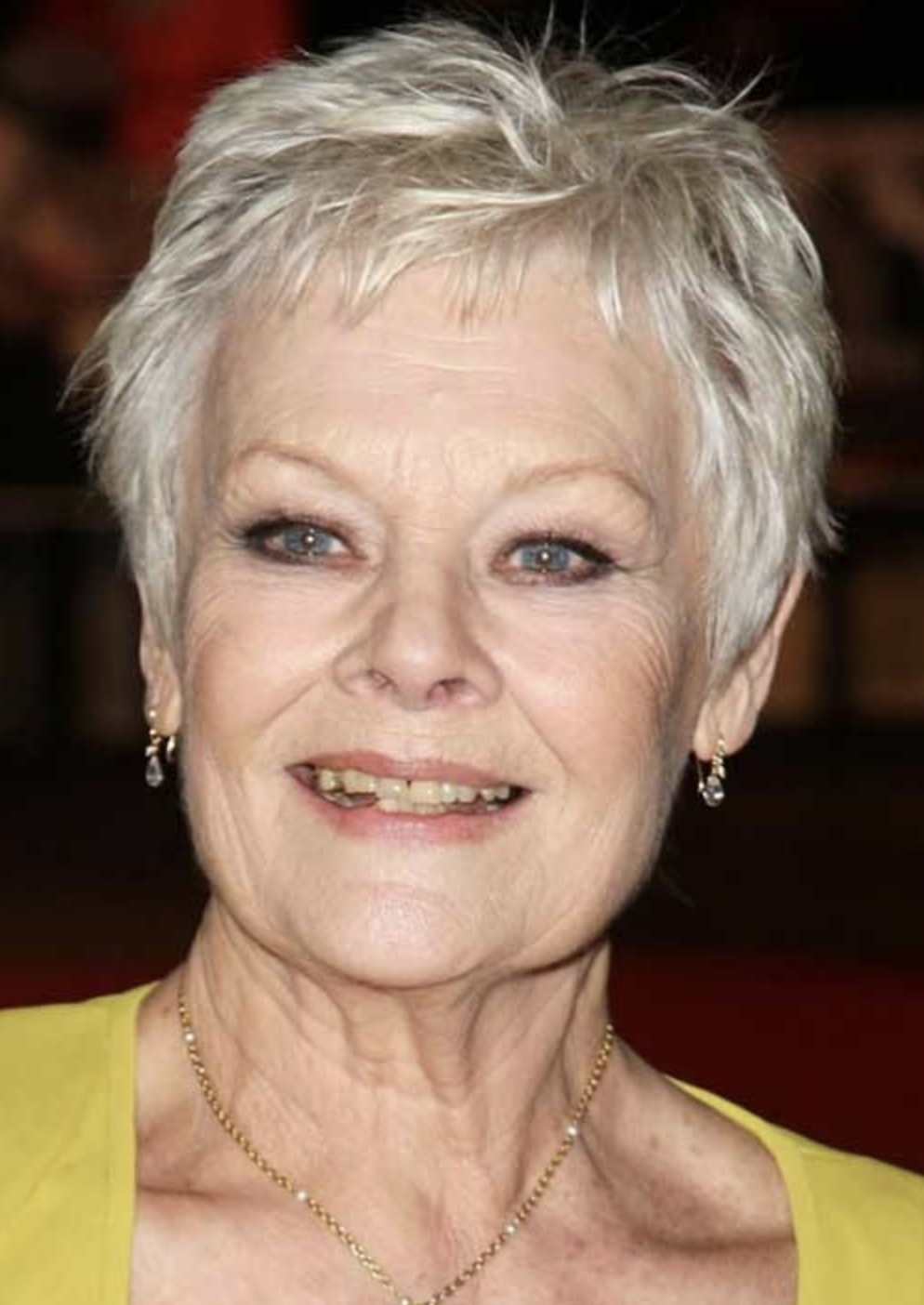
While often perceived as risky for round faces, short cuts can be flattering when styled correctly. A pixie cut with textured layers and volume at the crown can create height and elongation. Short styles should generally avoid excessive volume at the sides, as this can widen the face. Cropped cuts with longer, side-swept bangs can soften the roundness and add a touch of asymmetry.
-
Medium Lengths (Bobs, Lobs)
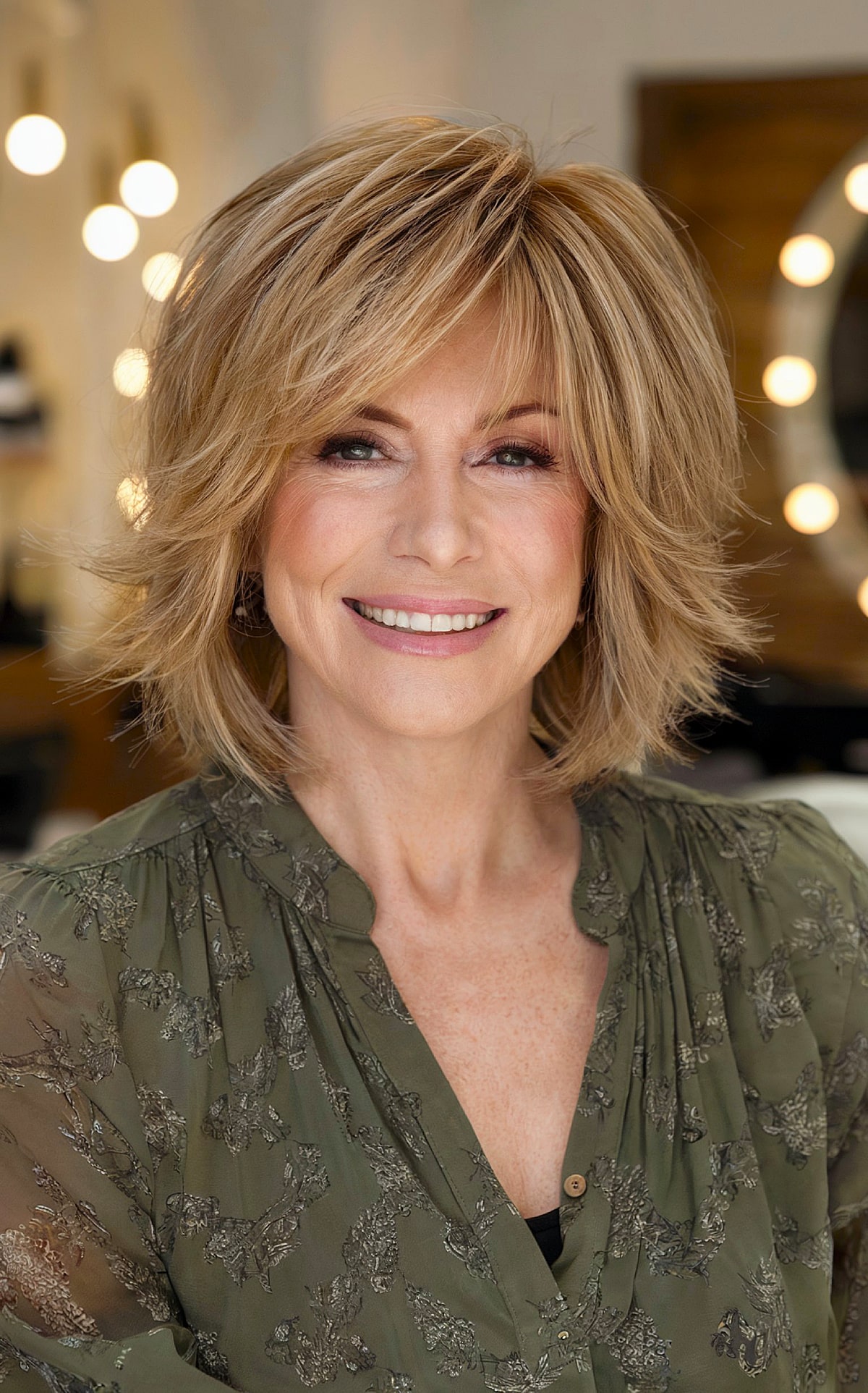
Medium-length styles, such as bobs and lobs (long bobs), offer versatility and can be adapted to suit round faces. A-line bobs, where the hair is slightly longer in the front, create a diagonal line that lengthens the face. Lobs with soft waves or subtle layers around the face can add texture and movement without adding width.
-
Long Lengths (Below the Chin and Longer)
Long hair is generally considered the most flattering for round faces, as it naturally creates vertical lines that elongate the face shape. Adding long layers, starting below the chin or collarbone, can further enhance this effect and prevent the hair from looking too heavy or bulky around the face.
-
Length in Relation to Face Shape
The ideal hair length also depends on other factors, such as the individual’s height and overall body proportions. A very short cut might overwhelm a petite frame, while extremely long hair might appear disproportionate on someone with a shorter stature. Balancing hair length with these factors is crucial for creating a cohesive and flattering look.
Ultimately, the most flattering length depends on individual features and preferences. However, understanding how length interacts with a round face shape provides a foundation for making informed decisions and achieving a balanced and stylish appearance. Consulting with a stylist experienced in working with round faces can provide personalized recommendations tailored to specific needs and desired outcomes.
2. Layers
Layering is a critical element in hairstyles designed to flatter round face shapes. Strategic placement of layers creates movement and texture, disrupting the uniform roundness and adding dimension. This technique directs attention away from the width of the face, creating an illusion of length and definition. For instance, long layers framing the face can soften the jawline and cheekbones, while shorter, textured layers around the crown add height and volume, balancing the overall silhouette. Without layers, hair can appear heavy and bulky, accentuating the roundness rather than minimizing it.
The effectiveness of layers depends on their placement and length. Layers that begin too high on the head can add unwanted volume to the sides, widening the face. Conversely, layers that start too low may not provide enough lift or movement, failing to achieve the desired slimming effect. Optimal placement often involves layers starting below the chin or collarbone for long hair and around the crown for shorter styles. Feathering, a texturizing technique often used in conjunction with layering, adds softness and separation, further enhancing the illusion of length. Examples include feathered layers around the face for long hair, or a feathered pixie cut for shorter hair, both creating texture and height.
Understanding the impact of layers is crucial for achieving a flattering hairstyle for a round face. This technique offers versatility and can be adapted to various lengths and textures, providing customized solutions for individual needs. By strategically incorporating layers, individuals can achieve a balanced, stylish look that complements their facial features and enhances their overall appearance.
3. Volume
Volume plays a significant role in balancing facial proportions for round face shapes. Strategic placement of volume can create the illusion of length and structure, counteracting the roundness. Volume at the crown, achieved through layering, teasing, or styling products, adds height and lift, drawing the eye upward and creating a more oval appearance. Conversely, excessive volume on the sides of the face can exaggerate width, emphasizing the roundness rather than minimizing it. Therefore, understanding the impact of volume placement is crucial. For example, a voluminous, layered bob with height at the crown can lengthen a round face, while a voluminous, curly style without crown lift might broaden it. This illustrates the cause-and-effect relationship between volume placement and perceived facial shape.
The importance of volume as a component of hairstyles for round faces lies in its ability to create balance and harmony. It acts as a counterpoint to the face’s width, adding a vertical dimension. This principle is evident in various hairstyles. A high ponytail or topknot, for example, adds significant volume at the crown, effectively elongating the face. Similarly, a layered cut with voluminous waves, styled away from the face, creates a slimming effect. These practical examples demonstrate how volume manipulation contributes to a more flattering overall appearance.
In summary, volume is a powerful tool in shaping the perception of a round face. Strategic placement, particularly at the crown, creates height and length, effectively balancing facial proportions. Understanding this principle allows for informed choices regarding hairstyles, leading to more flattering and harmonious results. Managing volume effectively is crucial for achieving the desired slimming effect and avoiding styles that might inadvertently accentuate roundness. This understanding empowers individuals with round faces to choose hairstyles that enhance their features and boost their confidence.
4. Texture
Texture is a crucial element in hairstyles designed to flatter round faces. It refers to the surface appearance of the hair, ranging from smooth and straight to coarse and curly. Manipulating texture can create illusions of length and dimension, minimizing the roundness of the face. This involves understanding how different textures interact with light and shadow, affecting the overall perception of facial shape. Strategic use of texture can be a defining factor in a flattering hairstyle.
-
Straight Hair
While straight hair can sometimes emphasize the roundness of a face, it can be adapted with appropriate styling techniques. Adding subtle layers, particularly around the face, can prevent the hair from lying flat against the head and creating a wider appearance. Creating volume at the crown and incorporating a side part can also add height and break up the symmetry, making the face appear longer.
-
Wavy Hair
Waves offer a natural texture that often complements round faces. The curves and movement disrupt the circular shape, creating a more dynamic and less uniform appearance. Loose, beachy waves are particularly effective, adding softness and dimension without creating excessive volume around the face. Styling waves away from the face enhances this slimming effect.
-
Curly Hair
Curly hair can be highly flattering for round faces, provided the curls are styled to enhance rather than exaggerate the face’s width. Volume at the crown is key, lifting the hair and creating a sense of height. Well-defined curls, rather than a frizzy or overly voluminous texture, are preferable. Styling curls to fall below the chin or onto the shoulders creates a lengthening effect.
-
Texturizing Techniques
Various techniques can enhance or create texture in the hair, further optimizing a hairstyle for a round face. These include layering, point cutting, and the use of texturizing products like mousses, sprays, and pastes. Layering adds dimension and movement, while point cutting creates subtle variations in length, adding a piecey, textured look. Texturizing products enhance natural texture or create it where it’s lacking, contributing to a more dynamic and flattering style.
By carefully considering and manipulating hair texture, individuals with round faces can achieve hairstyles that complement their features and create a more balanced and harmonious overall appearance. Understanding the interplay between texture, volume, and length is essential for selecting and styling hair in a way that minimizes roundness and emphasizes desired facial features. The right texture can greatly contribute to a stylish and flattering look, boosting confidence and enhancing one’s overall image.
Conclusion
Choosing flattering hairstyles for rounder faces involves careful consideration of length, layering, volume, and texture. Creating vertical lines and height, while minimizing width, serves as the foundational principle. Longer lengths generally create a slimming effect, enhanced by layers that frame the face and add movement. Volume at the crown adds height and balances facial proportions, while textured styles disrupt the uniform roundness. A successful outcome relies on a synergistic combination of these elements.
Ultimately, achieving a harmonious and flattering look depends on understanding these core principles and adapting them to individual features and preferences. Consulting with a skilled stylist can provide personalized guidance and ensure a tailored approach, maximizing the potential for a confident and stylish outcome. Continual exploration of different styles and techniques allows for ongoing refinement and adaptation to evolving trends and personal preferences.